
Nearly 67% of people who buy sewing supplies quit within their first month, not because sewing is hard, but because they bought the wrong things or spent too much on items they didn’t need yet. A well-planned Complete Beginner Sewing Supply Checklist helps you start with exactly what matters, skip the expensive extras, and actually finish your first projects without frustration or buyer’s remorse.
Key Takeaways
- Start with essentials only: fabric scissors, hand needles, thread, pins, measuring tape, seam ripper, and basic fabric, you can sew many projects with just these seven items
- Budget wisely: a complete beginner setup costs $50-$150 depending on whether you include a sewing machine; hand-sewing-only kits start around $30-$50
- Machine vs. hand sewing: you can hand-sew small projects (pillows, simple bags, repairs) but a machine becomes necessary for garments, quilts, and anything with long seams
- Fabric matters most: cotton quilting fabric is the easiest for beginners, it doesn’t stretch, fray minimally, and forgives mistakes better than knits or slippery synthetics
- Skip these at first: rotary cutters, specialty feet, interfacing, bias tape makers, and fancy storage systems, add them only when a specific project requires them
- Organize small: use a shoebox, pencil case, or small plastic bin to keep supplies together; elaborate storage can wait until you know what you’ll actually use
- Common mistakes: buying too many thread colors upfront, choosing stretchy fabric first, skipping the seam ripper, or purchasing a complicated machine with features you won’t use for months
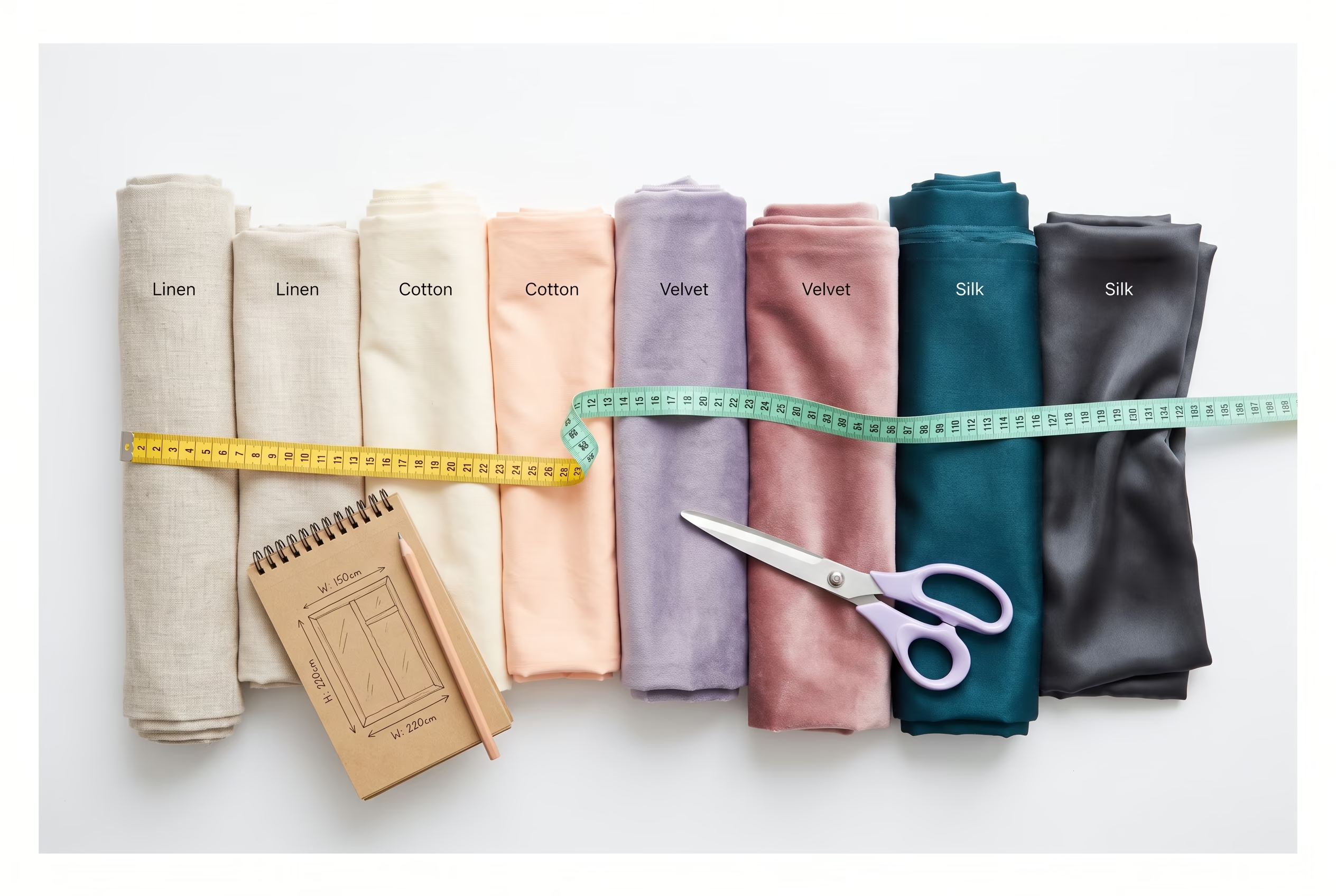
What Basic Supplies Do I Need to Start Sewing as a Complete Beginner?
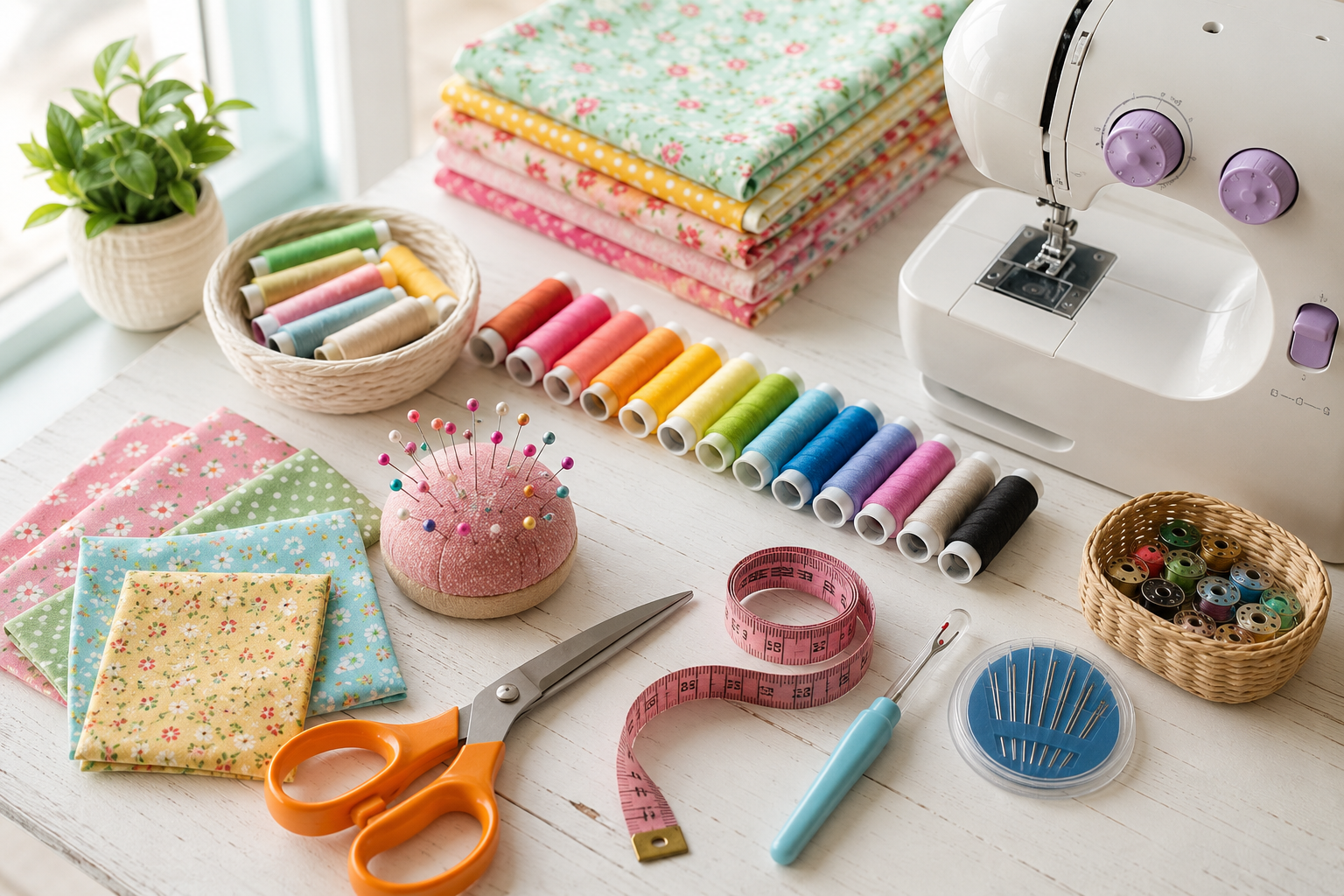
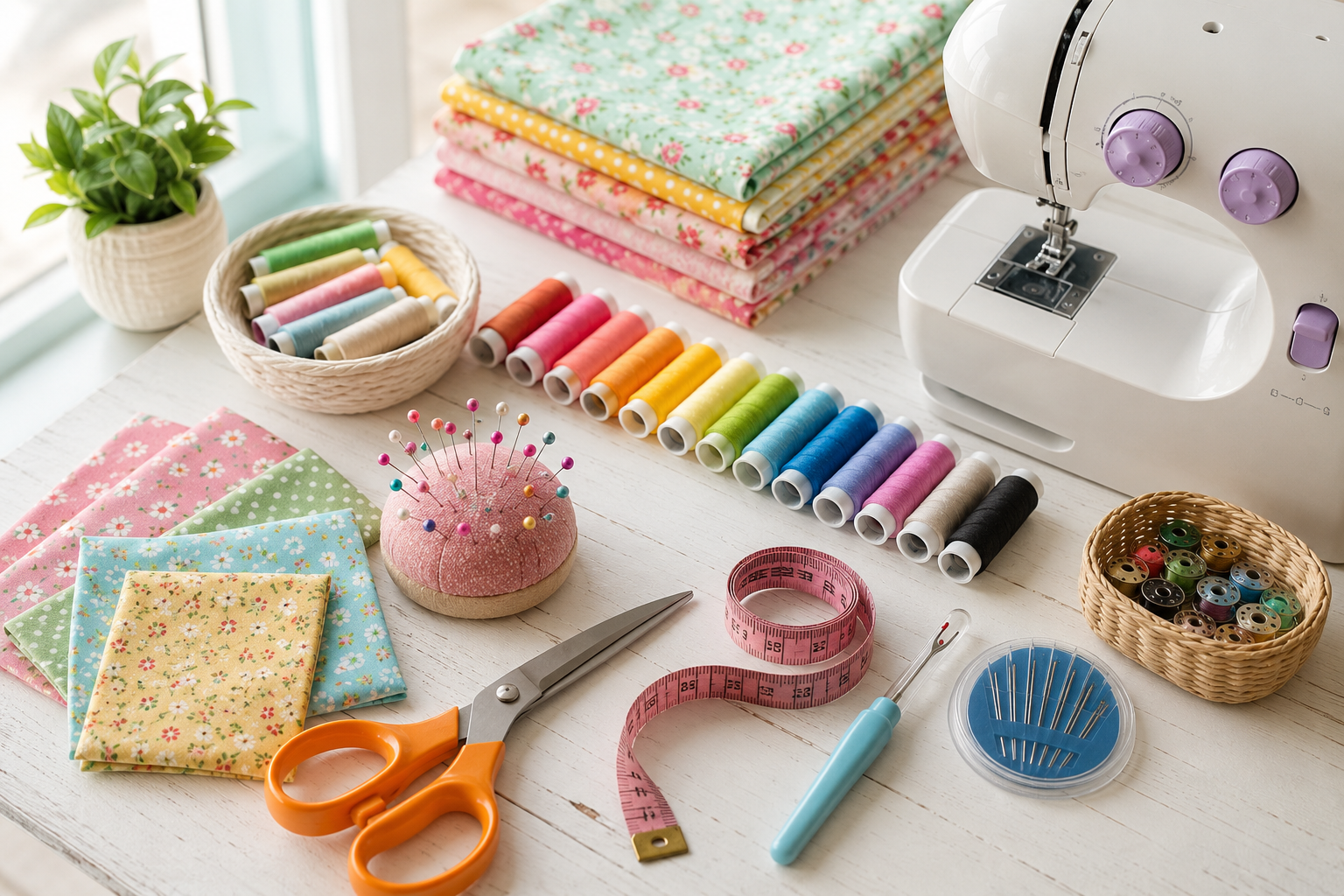
Every beginner needs seven core items: fabric scissors (dedicated to fabric only), hand sewing needles in assorted sizes, all-purpose polyester thread in neutral colors (white, black, gray), straight pins with a pin cushion, a measuring tape, a seam ripper, and 1-2 yards of cotton quilting fabric for practice. These items let you complete hand-sewing projects and learn foundational skills like straight stitching, backstitching, and seam finishing.
The Complete Beginner Sewing Supply Checklist includes:
- Fabric scissors (7-8 inch shears): sharp, dedicated to fabric only, cutting paper dulls them quickly
- Hand sewing needles: a multi-pack with sizes 5-10 covers most beginner projects
- All-purpose thread: polyester in white, black, and one neutral (tan or gray) to start
- Straight pins: 1.5-inch steel pins with glass or plastic heads; 50-100 pins is plenty
- Pin cushion: wrist-style or tomato-style to keep pins organized and safe
- Measuring tape: 60-inch flexible tape for body measurements and fabric layout
- Seam ripper: small tool with a sharp hook to remove stitches without damaging fabric
- Practice fabric: 1-2 yards of cotton quilting fabric in a light color (easier to see stitches)
If you plan to use a sewing machine, add machine needles (universal size 80/12 or 90/14), bobbins that fit your machine model, and a basic understanding of how to thread a sewing machine. Many beginners start with hand sewing to learn stitch mechanics before investing in a machine.
Choose cotton quilting fabric first because it holds its shape, doesn’t stretch, and shows your stitches clearly. Avoid knits, satin, or anything slippery until you’ve completed at least three projects with woven cotton.

✅Newly Upgraded Sewing Kit- Including more than 200pcs sewing accessories in this sewing set -43XL sewing thread ( Extra Black & White threads,5 rainbown threads ,and the length has been upgraded from 120 yards to 150 yards),2 Professional scissors,1 seam ripper ,1 pin cushion,1 tape mesure,30 needles,30 buttons etc.

𝑩𝒊𝒓𝒕𝒉𝒅𝒂𝒚 𝑮𝒊𝒇𝒕𝒔 𝑰𝒅𝒆𝒂𝒔: This sewing kit is terrific gifts for people who travel frequently, mother, grandmother, backpacker, adults, kids and teen girls! The emergency kit is also suitable for both men and women, beginners and professionals alike, and it is definitely something that everyone needs in their life

All In One DIY SEWING KIT - This Travel Sewing Kit contains all the sewing tools you need,including 38 high quality XL thread spools,needles, buttons, pins, hook, thimbles, pencil, threader, buttons, sewing pins, scissors, magnifier, measuring tape etc.With this repair sewing kit, no worry about rips, tears, holes, unraveled hems, missing buttons and other emergency clothes repairs.A best professional sewing set.
How Much Does It Cost to Buy All Beginner Sewing Supplies?
A hand-sewing-only beginner kit costs $30-$50 if you buy quality basics without a machine. Adding a budget sewing machine raises the total to $100-$200, depending on the machine model and whether you buy supplies individually or in a starter bundle. Most craft stores sell beginner sewing kits for $25-$40, but these often include low-quality scissors and thin thread that frustrate beginners.
Budget breakdown for a Complete Beginner Sewing Supply Checklist:
| Item | Hand-Sewing Only | With Sewing Machine |
|---|---|---|
| Fabric scissors | $12-$20 | $12-$20 |
| Hand needles (pack) | $3-$5 | $3-$5 |
| Thread (3 spools) | $6-$10 | $6-$10 |
| Pins + cushion | $5-$8 | $5-$8 |
| Measuring tape | $3-$5 | $3-$5 |
| Seam ripper | $3-$5 | $3-$5 |
| Practice fabric (2 yards) | $8-$16 | $8-$16 |
| Sewing machine | , | $80-$150 |
| Machine needles | , | $4-$6 |
| Bobbins (pack) | , | $3-$5 |
| Total | $40-$74 | $124-$230 |
Where to save money: Buy fabric scissors and a seam ripper at full price (quality matters), but purchase thread, pins, and needles during craft store sales (40-50% off coupons are common). For machines, look for refurbished models from reputable brands or last year’s models on clearance, avoid ultra-cheap machines under $60, which often break within weeks.
Common mistake: Buying a $200+ machine with embroidery features, automatic buttonholes, and 50+ stitch options when you’ll only use straight stitch and zigzag for your first six months. A simple mechanical machine with 10-15 stitches serves beginners better and costs half as much.

Sewing Supplies Accessories:Our sewing kit come with many sewing essentials you need to get the job done, included: colours thread spool,pearly sewing pins, needles, white shirt buttons andblack shirt buttons , seam ripper,measuring tape, silver metal thimble, stainless steel scissors,sewing threader of 130 sewing tools to meet your various sewing needs.

Size: 10-1/4" L x 7-1/2" W x 6" H

ESSENTIAL SEWING SET: Sewing set featuring 4" curved detail scissors with stainless steel blades, 4x 25-yard thread spools, 5' measuring tape, 6x tape strips, 5x hand needles, 15x safety pins, 20x straight pins, 6x buttons, 2x fabric pencils, and needle threader
Difference Between Hand Sewing Needles and Machine Needles for Beginners
Hand sewing needles are thicker, have larger eyes for threading by hand, and come in numbered sizes where higher numbers mean finer needles (size 10 is thin, size 5 is thick). Machine needles are much thinner, have a flat shank that fits into the machine, and use a reverse numbering system where higher numbers mean thicker needles (size 70/10 is thin, size 100/16 is thick). You cannot use hand needles in a machine or machine needles for hand sewing, they’re designed for completely different mechanics.
Hand sewing needle guide for beginners:
- Sharps (size 7-9): general-purpose needles for most woven fabrics
- Embroidery (size 5-7): larger eye for thicker thread or multiple strands
- Betweens (size 8-10): short needles for quilting and precise stitching
Machine needle guide for beginners:
- Universal (80/12 or 90/14): works for most woven cotton, linen, and light denim
- Ballpoint (80/12): rounded tip for knit fabrics, prevents snags and skipped stitches
- Denim/Jeans (100/16): thick, sharp needle for heavy fabrics like denim and canvas
Choose the right needle for your fabric: Using a thin needle (70/10) on denim causes breakage, while using a thick needle (100/16) on silk creates large holes. When starting out, keep universal 80/12 and 90/14 machine needles on hand, they handle 80% of beginner projects. For more details on needle problems, see our guide on why needles keep breaking.
Replace machine needles every 8-10 hours of sewing or after completing 2-3 projects. Dull needles cause skipped stitches, thread breakage, and fabric damage even if they look fine.
Do I Need a Sewing Machine to Start or Can I Hand Sew Everything?
You can hand sew small projects like pillowcases, simple tote bags, cloth napkins, and clothing repairs without a machine, but garments with long seams (pants, dresses, quilts) become impractical because hand sewing is 10-15 times slower than machine sewing. A simple pillowcase takes 30-45 minutes by hand versus 5-10 minutes by machine. If you’re learning sewing to make clothes or home décor regularly, a machine becomes necessary within your first month.
Projects you can complete with hand sewing only:
- Hemming pants, skirts, and curtains
- Repairing torn seams and replacing buttons
- Simple drawstring bags and pouches
- Cloth napkins and placemats
- Decorative embroidery and appliqué
- Small stuffed toys and pincushions
Projects that require a machine (or extreme patience):
- Garments with multiple seams (shirts, pants, dresses)
- Quilts with long straight seams
- Heavy fabrics like denim or canvas
- Projects requiring zigzag or stretch stitches
- Anything with topstitching or decorative machine stitches
Start with hand sewing if: you’re unsure whether you’ll enjoy sewing long-term, your budget is under $50, or you want to learn stitch mechanics before operating a machine. Many beginner sewing courses recommend hand-sewing your first 2-3 projects to understand tension, stitch length, and seam allowances without the distraction of machine controls.
Invest in a machine when: you’ve completed at least two hand-sewn projects and want to make garments, you’re ready to commit $100-$200 to the hobby, or you find hand sewing too slow for your project goals.
What Type of Fabric Is Easiest for Beginner Sewers to Work With?
Cotton quilting fabric is the easiest for beginners because it’s stable (doesn’t stretch), has a medium weight that feeds smoothly through machines, and forgives mistakes like uneven stitching or pin holes. Quilting cotton comes pre-washed in most cases, holds a crease when pressed, and costs $8-$12 per yard at craft stores. Avoid knits, satin, chiffon, or anything slippery until you’ve completed at least five projects with woven cotton.
Best beginner fabrics ranked by ease:
- Cotton quilting fabric: stable, forgiving, widely available, perfect for first projects
- Medium-weight linen: slightly more expensive but easy to sew, natural texture hides imperfect stitches
- Cotton broadcloth: thinner than quilting cotton, good for garments once you’ve mastered basics
- Flannel: soft and stable but can shift slightly, use extra pins
- Lightweight denim (chambray): good for practicing on heavier fabric without full denim thickness
Fabrics to avoid as a beginner:
- Knit fabrics (jersey, rib knit): stretch makes seams wavy and requires special needles and techniques
- Satin, silk, or rayon: slippery fabrics shift while cutting and sewing, causing uneven seams
- Chiffon or organza: sheer fabrics are nearly impossible to handle without experience
- Heavy denim or canvas: too thick for most beginner machines and requires special needles
- Faux fur or fleece: bulk and texture make it hard to see seam lines and feed evenly
Buy light-colored fabric first (white, cream, light gray, or pastel prints) because you can see your stitches clearly, which helps you learn consistent stitch length and straight seams. Dark fabrics hide mistakes but also make it harder to learn proper technique.
Pre-wash your fabric before cutting if the label says it might shrink. Cotton quilting fabric usually shrinks 2-3% in the first wash, so pre-washing prevents your finished project from shrinking later.
Best Budget Sewing Machine for Complete Beginners Under $200
The best budget machines for beginners under $200 are mechanical models with 10-20 built-in stitches, adjustable stitch length and width, a free arm for sewing cuffs and sleeves, and a simple dial or lever interface. Popular models include the Singer Heavy Duty 4452 ($150-$180), Brother XM2701 ($100-$130), and Janome 2212 ($130-$160). These machines handle cotton, linen, and light denim reliably without the complexity of computerized models.
Features every beginner machine should have:
- Straight stitch and zigzag: the two stitches you’ll use for 90% of projects
- Adjustable stitch length: lets you customize seam strength and appearance
- Adjustable stitch width: controls zigzag width for different seam finishes
- Free arm: removable flat bed for sewing tubular items like sleeves and pant legs
- Reverse lever: for backstitching to secure seam ends
- Bobbin winding: automatic or semi-automatic bobbin winder
- Presser foot pressure adjustment: helps with different fabric thicknesses
Nice-to-have but not essential:
- Automatic needle threader (helpful but not critical)
- Built-in buttonhole stitch (you can make buttonholes manually)
- Multiple presser feet (you can buy these separately as needed)
- LED light (improves visibility but not required)
Avoid machines with: fewer than 10 stitches (too limited), more than 50 stitches (overwhelming and expensive), built-in embroidery (adds cost you won’t use), or no-name brands with poor customer support. For detailed comparisons, check our sewing machine comparison guide.
Buy from retailers with good return policies (Joann, Amazon, Walmart) so you can return the machine within 30 days if it doesn’t meet your needs. Test it on scrap fabric immediately, if it skips stitches or jams on cotton, return it.

17 built-in stitches
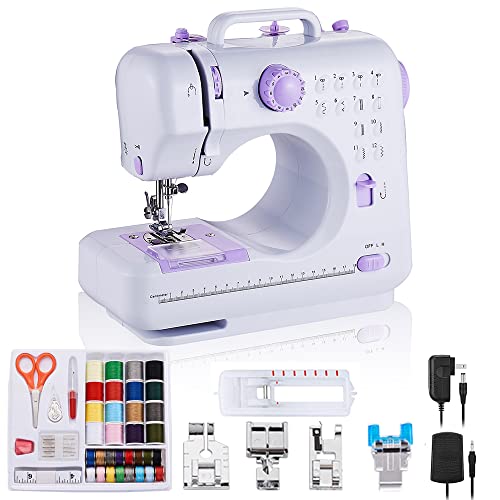
[Size and weight of sewing machine] Net weight of sewing machine: 2.4KG, size: 12.2*5.9*11.8 inches, suitable for household use, such as remodeling clothing, hand-made, sewing home decoration and other sewing needs.

Used Book in Good Condition
What Can I Skip Buying from a Beginner Sewing Supply List?
You can skip rotary cutters and cutting mats (use fabric scissors instead), specialty presser feet beyond the basic foot, interfacing and stabilizers (not needed for first projects), bias tape makers, pattern weights (use pins or household items), fabric markers (use tailor’s chalk or a regular pencil), and elaborate storage systems until you know what supplies you’ll actually use regularly. These items add $50-$100 to your startup cost but aren’t necessary for learning basic sewing skills.
Items to skip initially:
- Rotary cutter + mat: costs $30-$50; fabric scissors work fine for small projects
- Specialty presser feet: zipper foot, buttonhole foot, walking foot, buy only when a project requires them
- Interfacing: stiffening fabric for collars and cuffs, not needed for pillows, bags, or simple garments
- Bias tape maker: tool for making fabric binding, buy pre-made bias tape if a project needs it
- Pattern weights: use cans of soup, large washers, or heavy books instead
- Fabric marking pens: tailor’s chalk ($2) or a regular pencil works for most marking
- Pinking shears: decorative scissors that prevent fraying, zigzag stitch does the same job
- Dress form: costs $80-$200; not needed until you’re drafting custom patterns
- Elaborate storage: rolling carts, thread racks, and organizers, use shoeboxes and plastic bins first
Buy these items only when a specific project requires them. For example, purchase a zipper foot when you’re ready to install your first zipper, not six months before you need it. This approach keeps your initial investment low and prevents buying tools you’ll never use.
Common beginner mistake: Buying a “complete” sewing kit with 100+ pieces for $50-$80. These kits include low-quality scissors, thin thread, and tools you won’t use (like a thimble, needle threader, and multiple tape measures). Build your own kit with quality basics instead.
Common Mistakes Beginners Make When Buying First Sewing Supplies
The most common mistakes are buying too many thread colors upfront (you only need 3-5 to start), choosing stretchy or slippery fabric for first projects, skipping the seam ripper (thinking they won’t make mistakes), purchasing a complicated machine with features they won’t use for months, and buying cheap scissors that dull quickly. These mistakes waste money and create frustration that makes beginners quit before finishing their first project.
Top 8 beginner buying mistakes:
- Buying 20+ thread colors: Start with white, black, and 2-3 neutrals, you can match thread to fabric as you go
- Choosing knit or satin fabric first: These fabrics require experience; start with cotton quilting fabric
- Skipping the seam ripper: Every beginner makes mistakes, a seam ripper saves projects instead of throwing them away
- Buying the cheapest scissors: $5 scissors dull after one project; invest $12-$20 in quality fabric shears
- Purchasing a complex machine: Computerized machines with 100+ stitches overwhelm beginners, stick to mechanical models with 10-20 stitches
- Not testing the machine before buying: Always sew on scrap fabric in-store or test immediately after purchase to ensure it works properly
- Buying patterns that are too advanced: Start with projects rated “easy” or “beginner”, intermediate patterns assume you know techniques you haven’t learned yet
- Investing in expensive storage before knowing what you need: Use household containers until you know which supplies you use most
How to avoid these mistakes: Follow a Complete Beginner Sewing Supply Checklist that prioritizes quality basics over quantity, choose simple projects that match your skill level, and add tools only when specific projects require them. If you encounter issues like thread bunching or fabric not feeding, troubleshoot before buying new equipment, often the problem is technique, not missing supplies.
Test before you invest: Borrow a friend’s machine or take a one-day class at a fabric store to try sewing before spending $150+ on equipment. Many people discover they prefer hand sewing or quilting over garment construction, which changes what supplies they need.
Is a Seam Ripper Really Necessary for Beginner Sewing Projects?
Yes, a seam ripper is essential because every beginner makes stitching mistakes, crooked seams, wrong sides sewn together, or stitches that need adjusting. A seam ripper removes stitches cleanly without damaging fabric, while trying to pull out stitches with scissors or your fingers creates holes and fraying. This $3-$5 tool saves projects that would otherwise be ruined and builds confidence by making mistakes fixable instead of permanent.
What a seam ripper does:
- Removes machine stitches quickly by sliding the sharp hook under threads
- Cuts through backstitching at seam ends
- Opens buttonholes without cutting the fabric
- Removes decorative stitching or embroidery
- Fixes seams sewn with the wrong seam allowance
How to use a seam ripper safely:
- Slide the small hook under one stitch at a time (not multiple stitches, this can tear fabric)
- Cut every 3-4 stitches on one side of the seam
- Flip the fabric over and pull the continuous thread from the other side
- Use the ball end to push out remaining thread bits without scratching fabric
- Press the seam area with an iron to smooth out stitch holes
Common mistake: Trying to rip out an entire seam by pulling the fabric apart after cutting a few stitches. This tears the fabric and creates permanent damage. Always cut stitches methodically, then pull threads gently.
Choose a seam ripper with a comfortable handle (rubber or ergonomic grip) and a protective cap to prevent accidental pokes when stored. Replace your seam ripper when the hook becomes dull, a sharp ripper cuts threads cleanly, while a dull one pulls and damages fabric.
Sewing Supplies for Kids vs Adults Learning to Sew
Kids learning to sew need larger needles (size 5-7 hand needles or 90/14 machine needles), thicker thread that’s easier to see and handle, blunt-tip scissors for safety, and simple projects with fewer steps (like felt ornaments or drawstring bags). Adults can use standard supplies but benefit from ergonomic tools if they have arthritis or vision issues. The main difference is safety features and project complexity, not the fundamental supplies needed.
Kid-specific supply modifications:
- Safety scissors: spring-loaded or blunt-tip fabric scissors for ages 6-10
- Larger needles: size 5-7 hand needles with bigger eyes for easier threading
- Thicker thread: embroidery floss or topstitching thread is easier for small hands to grip
- Plastic needles: for very young children (ages 4-6) learning on felt or burlap
- Simple patterns: projects with 3-5 steps maximum, like pillows or simple bags
- Bright fabrics: colorful prints keep kids engaged better than neutral tones
Adult beginner supplies (standard list): size 7-9 hand needles, 80/12 or 90/14 machine needles, all-purpose polyester thread, sharp fabric scissors, and projects at any complexity level based on interest.
Adaptive supplies for adults with special needs:
- Needle threaders: metal or automatic threaders for vision difficulties
- Ergonomic scissors: spring-loaded or loop-handle scissors for arthritis
- Magnifying lamp: clip-on or standing lamp for close work
- Thimbles: leather or metal thimbles protect fingers during hand sewing
Supervision requirements: Children under 10 should use sewing machines only with direct adult supervision. Hand sewing can be done independently once they understand needle safety (ages 7-8 typically). For more guidance on sewing for beginners, explore age-appropriate project ideas and safety tips.
Start kids with hand sewing for 2-3 projects before introducing a machine. This builds fine motor skills and stitch understanding without the complexity of machine controls.

Where to Buy Beginner Sewing Supplies Cheaply
Buy fabric scissors, seam rippers, and measuring tapes at full price from craft stores (Joann, Michaels, Hobby Lobby) using their 40-50% off single-item coupons, which are available weekly. Purchase thread, pins, and needles during sales or from discount retailers like Walmart or Amazon. Buy fabric from the clearance section (often $3-$5 per yard) or online from fabric wholesalers like Fabric Wholesale Direct or Fashion Fabrics Club for 30-50% less than retail.
Best places to buy each supply type:
| Supply Type | Best Retailer | Money-Saving Tip |
|---|---|---|
| Fabric scissors | Joann, Michaels | Use 40% off coupon on Gingher or Fiskars brand |
| Thread | Walmart, Amazon | Buy 3-packs of Coats & Clark or Gutermann |
| Needles (hand/machine) | Amazon, Joann | Buy multi-packs (50-100 needles) for bulk discount |
| Pins | Walmart, Dollar Tree | Generic brands work fine; avoid ultra-cheap that rust |
| Fabric | Joann clearance, online wholesalers | Check clearance racks first; buy 2+ yards for free shipping online |
| Sewing machine | Amazon, Walmart, refurbished from manufacturer | Buy last year’s model or refurbished with warranty |
| Seam ripper | Joann, Amazon | Generic brands ($3) work as well as name brands ($8) |
Online fabric sources for beginners:
- Fabric Wholesale Direct: $3-$8 per yard, free shipping over $50
- Fashion Fabrics Club: frequent sales, good for cotton and linen
- Joann.com: use online coupons, free shipping over $49
- Etsy fabric shops: good for small quantities (fat quarters) and unique prints
Thrift store and secondhand options:
- Thrift stores: check for vintage scissors, measuring tapes, and pin cushions (often $1-$3)
- Estate sales: sometimes have complete sewing supply collections for $10-$20
- Facebook Marketplace or Craigslist: used sewing machines often sell for 50-70% off retail
- Freecycle or Buy Nothing groups: free fabric scraps and supplies from people decluttering
Avoid buying: “complete sewing kits” from big-box stores (usually low quality), scissors from dollar stores (dull immediately), or thread from unknown brands (breaks easily). Invest in quality for tools you’ll use repeatedly (scissors, seam ripper, measuring tape) and save money on consumables (pins, needles, thread).
Timing your purchases: Shop during back-to-school sales (July-August) and Black Friday (November) for 50-70% off sewing machines and supplies. Joann and Michaels run weekly 40-50% off coupons year-round, never pay full price for single items.
How to Organize Sewing Supplies When You Have Limited Space
Use a shoebox, small plastic bin, or pencil case to store hand-sewing supplies (needles, thread, pins, seam ripper, measuring tape) in one portable container. For machine sewing, keep the machine on a small desk or table and store fabric in a single under-bed storage box or closet shelf. Vertical storage (pegboards, wall-mounted shelves, or over-door organizers) maximizes space in small apartments or shared rooms.
Small-space storage solutions:
- Shoebox or plastic bin: holds all hand-sewing supplies in one portable container
- Pencil case or makeup bag: keeps needles, thread, and small tools organized in a drawer
- Over-door shoe organizer: clear pockets hold thread spools, scissors, and notions
- Pegboard (2×3 feet): mount on wall to hang scissors, measuring tape, and rulers
- Under-bed storage box: flat plastic bins hold fabric and larger supplies
- Rolling cart (3-tier): fits in closet or under desk, holds machine and supplies
- Magazine holders: store fabric bolts vertically on a bookshelf
Organizing by project type:
- Keep supplies for your current project in a gallon-size ziplock bag (fabric, thread, pattern, notions)
- Store completed project supplies separately from general supplies
- Use small jars or containers for buttons, snaps, and small notions
Portable sewing kit for small spaces:
- Small plastic bin (shoebox size) with lid
- Hand needles in a needle case
- 3-5 spools of thread
- Pins in a small cushion
- Seam ripper
- Measuring tape
- Small scissors (5-inch embroidery scissors)
- Current project fabric and pattern
This kit fits in a closet, under a bed, or on a bookshelf and contains everything needed for hand sewing or small machine projects. For more tips on maintaining your machine in small spaces, see our guide on sewing machine maintenance.
Declutter regularly: Every 3-6 months, remove supplies you haven’t used. Donate extra fabric, thread, and notions to schools, community centers, or other sewers to keep your space manageable.
What Thread Weight Should Beginners Use for General Sewing?
Beginners should use all-purpose polyester thread in weight 50 (also labeled as “50wt” or “50/3”), which works for most woven fabrics including cotton, linen, and lightweight denim. This thread weight is strong enough for seams but thin enough to avoid bulk, and it works in both hand sewing and machine sewing. Avoid specialty threads (embroidery, topstitching, or invisible thread) until you’ve completed at least five projects with standard all-purpose thread.
Thread weight explained:
- Weight 50 (all-purpose): standard for 90% of sewing projects, cotton, linen, quilting, garments
- Weight 40 (topstitching): thicker thread for decorative stitching or heavy fabrics
- Weight 60-80 (lightweight): thin thread for delicate fabrics like silk or chiffon
- Weight 30 (heavy-duty): thick thread for upholstery, canvas, or outdoor fabrics
The number indicates thread thickness: Higher numbers mean thinner thread. Weight 50 is the “Goldilocks” weight, not too thick, not too thin, just right for beginners learning on cotton and linen.
Polyester vs. cotton thread for beginners:
- Polyester (recommended): stronger, doesn’t shrink, works on all fabrics, costs $2-$3 per spool
- Cotton: natural fiber, good for quilting, can shrink slightly, costs $3-$4 per spool
- Polyester-cotton blend: combines benefits of both but harder to find
Start with polyester all-purpose thread in these colors:
- White (for light fabrics)
- Black (for dark fabrics)
- Gray or tan (neutral that blends with many colors)
Add more colors as specific projects require them. You don’t need to match thread color exactly, choose a shade slightly darker than your fabric, as thread appears lighter when sewn.
Common mistake: Buying cheap thread (under $1 per spool) that breaks frequently or leaves lint in your machine. Quality brands like Coats & Clark, Gutermann, or Mettler cost $2-$3 per spool and sew smoothly without constant breakage.
Do I Need Special Scissors Just for Fabric Cutting?
Yes, you need fabric scissors (also called fabric shears) dedicated only to cutting fabric because cutting paper, cardboard, or plastic dulls the blades quickly, making them useless for fabric. Dull scissors crush fabric edges instead of cutting cleanly, creating frayed edges and uneven cuts that ruin projects. Quality fabric scissors cost $12-$20 and last for years if used only on fabric, while scissors used on paper dull within weeks.
Why fabric scissors must be fabric-only:
- Paper contains silica and other minerals that dull blades 10x faster than fabric
- Dull scissors crush fabric fibers instead of cutting them cleanly
- Crushed edges fray more and create uneven seams
- Re-sharpening scissors costs $8-$12, nearly the price of new ones
Features of good beginner fabric scissors:
- 7-8 inch blade length: long enough for cutting fabric layers but not too heavy
- Bent handle design: keeps fabric flat on the table while cutting
- Sharp to the tip: allows precise cutting in corners and curves
- Comfortable grip: rubber or ergonomic handles reduce hand fatigue
- Stainless steel blades: resist rust and stay sharp longer
Recommended brands for beginners:
- Gingher 8-inch shears: $18-$25, professional quality, lifetime warranty
- Fiskars 8-inch fabric scissors: $12-$18, good quality, widely available
- Kai 7-inch scissors: $15-$20, lightweight, very sharp
Scissors care:
- Store in a protective case or sleeve to prevent blade damage
- Clean blades with rubbing alcohol to remove adhesive residue from fabric
- Never lend your fabric scissors to anyone (they will cut paper)
- Sharpen every 1-2 years or when you notice dragging instead of clean cuts
Alternative for tight budgets: Buy one pair of fabric scissors ($12-$20) and use household scissors for cutting patterns and paper. This protects your fabric scissors while keeping costs low.
Mark your fabric scissors with colored tape or a label so family members don’t accidentally use them on paper. Many sewers hide their fabric scissors to prevent misuse.
Frequently Asked Questions
Can I start sewing without any experience or classes?
Yes, you can teach yourself sewing using free online tutorials, YouTube videos, and beginner patterns with detailed instructions. Start with simple projects like pillowcases or drawstring bags that use only straight seams, then progress to more complex projects as you build skills.
How long does it take to learn basic sewing skills?
Most beginners can complete their first simple project (pillowcase or tote bag) within 2-4 hours of practice. Learning foundational skills like straight stitching, backstitching, and seam finishing takes 10-20 hours of practice across 3-5 projects, typically 2-4 weeks if you sew a few hours per week.
Should I buy a new or used sewing machine as a beginner?
A used mechanical sewing machine from a reputable brand (Singer, Brother, Janome) in good working condition offers excellent value for beginners, often costing 50-70% less than new. Test it thoroughly before buying and ensure it comes with the manual, foot pedal, and basic presser feet.
What’s the difference between a mechanical and computerized sewing machine?
Mechanical machines use dials and levers to select stitches and adjust settings, while computerized machines use buttons and digital displays. Mechanical machines are simpler, more durable, and easier for beginners to understand, while computerized machines offer more stitch options and automatic features at higher prices.
How do I know what size seam allowance to use?
Most patterns specify the seam allowance (usually 5/8 inch for garments or 1/4 inch for quilting). If no seam allowance is specified, use 5/8 inch as the standard. Your sewing machine’s throat plate usually has seam allowance guides marked to help you sew straight.
Can I sew clothes without using patterns?
Beginners should use patterns for their first 5-10 garments to learn how pieces fit together, where seams go, and how to add features like sleeves or collars. After mastering pattern-based sewing, you can learn pattern drafting or free-form sewing for custom designs.
What’s the best first project for an absolute beginner?
A simple pillowcase is the best first project because it requires only straight seams, uses minimal fabric (1 yard), teaches basic measuring and cutting, and results in a useful finished item. Other good first projects include cloth napkins, simple tote bags, or drawstring pouches.
How often should I clean my sewing machine?
Clean lint from the bobbin area after every 4-8 hours of sewing or after completing each project. Oil your machine (if it requires oiling) every 8-10 hours of use. For detailed maintenance schedules, see our guide on how often to service a sewing machine.
Why does my thread keep breaking when I sew?
Thread breaks due to incorrect threading, using old or cheap thread, wrong needle size for the fabric, or excessive tension. Check that your machine is threaded correctly, use quality thread, match needle size to fabric weight, and adjust tension if needed. See our sewing troubleshooting guide for more solutions.
Do I need to pre-wash fabric before sewing?
Pre-wash cotton, linen, and other natural fibers that may shrink (usually 2-3% in the first wash). This prevents your finished project from shrinking later. Skip pre-washing for fabrics labeled “pre-shrunk” or synthetic fabrics like polyester that don’t shrink.
What’s the difference between a seam allowance and a hem allowance?
A seam allowance is the fabric between the stitching line and the raw edge where two pieces are sewn together (typically 5/8 inch). A hem allowance is extra fabric at the bottom edge of a garment that’s folded up and stitched to create a finished edge (typically 1-2 inches).
Can I use hand sewing thread in a sewing machine?
No, hand sewing thread is often thicker and not designed for the high speed and tension of machine sewing. Always use thread labeled “all-purpose” or “machine sewing” in your sewing machine to prevent breakage and tension problems.
Conclusion
A Complete Beginner Sewing Supply Checklist focuses on seven essential items, fabric scissors, hand needles, all-purpose thread, pins, measuring tape, seam ripper, and cotton practice fabric, that let you start sewing immediately without overspending or buying tools you won’t use. Whether you begin with hand sewing (total cost $30-$50) or add a basic sewing machine (total cost $100-$200), prioritizing quality basics over quantity sets you up for success and prevents the frustration that makes many beginners quit.
Your next steps:
- Buy the seven core supplies listed in this guide, starting with fabric scissors and a seam ripper
- Choose 1-2 yards of cotton quilting fabric in a light color for your first practice project
- Complete a simple pillowcase or tote bag to learn straight stitching and seam finishing
- Add supplies only when specific projects require them,don’t buy everything at once
- Join online sewing communities (Reddit’s r/sewing, Facebook groups) for support and project ideas
Start small, practice consistently, and add tools as your skills and project complexity grow. The most successful sewers aren’t those who buy the most supplies upfront, they’re the ones who master the basics with quality essentials and build their toolkit thoughtfully over time. For more guidance on your sewing journey, explore our beginner sewing resources and troubleshooting guides.


