
Quick Answer
Woven fabrics are made by interlacing threads at right angles on a loom, creating stable, non-stretchy material like denim and cotton shirting. Knit fabrics are constructed by looping yarn together, producing stretchy, flexible material like jersey and ribbing. The key difference lies in construction method: woven fabrics offer structure and durability for tailored projects, while knit fabrics provide comfort and stretch for casual garments.
Key Takeaways
- Woven fabrics are created by interlacing perpendicular threads and don’t stretch, making them ideal for structured garments like button-up shirts, pants, and bags
- Knit fabrics are made from interlocking loops that allow stretch in at least one direction, perfect for t-shirts, leggings, and sweaters
- You can identify fabric type by pulling it: woven fabric won’t stretch (or stretches minimally on the bias), while knit fabric stretches significantly
- Knit fabrics require different tools: ballpoint or stretch needles prevent skipped stitches, and a serger helps but isn’t mandatory
- Common beginner mistake: using universal needles on knits causes skipped stitches and fabric damage
- Woven fabrics are generally more durable and easier for beginners to sew because they don’t shift or curl
- Denim, canvas, and cotton shirting are woven; jersey, interlock, and ribbing are knit
- Edge finishing differs: woven edges fray and need finishing, knit edges curl but don’t unravel
What Is the Difference Between Woven and Knit Fabric?
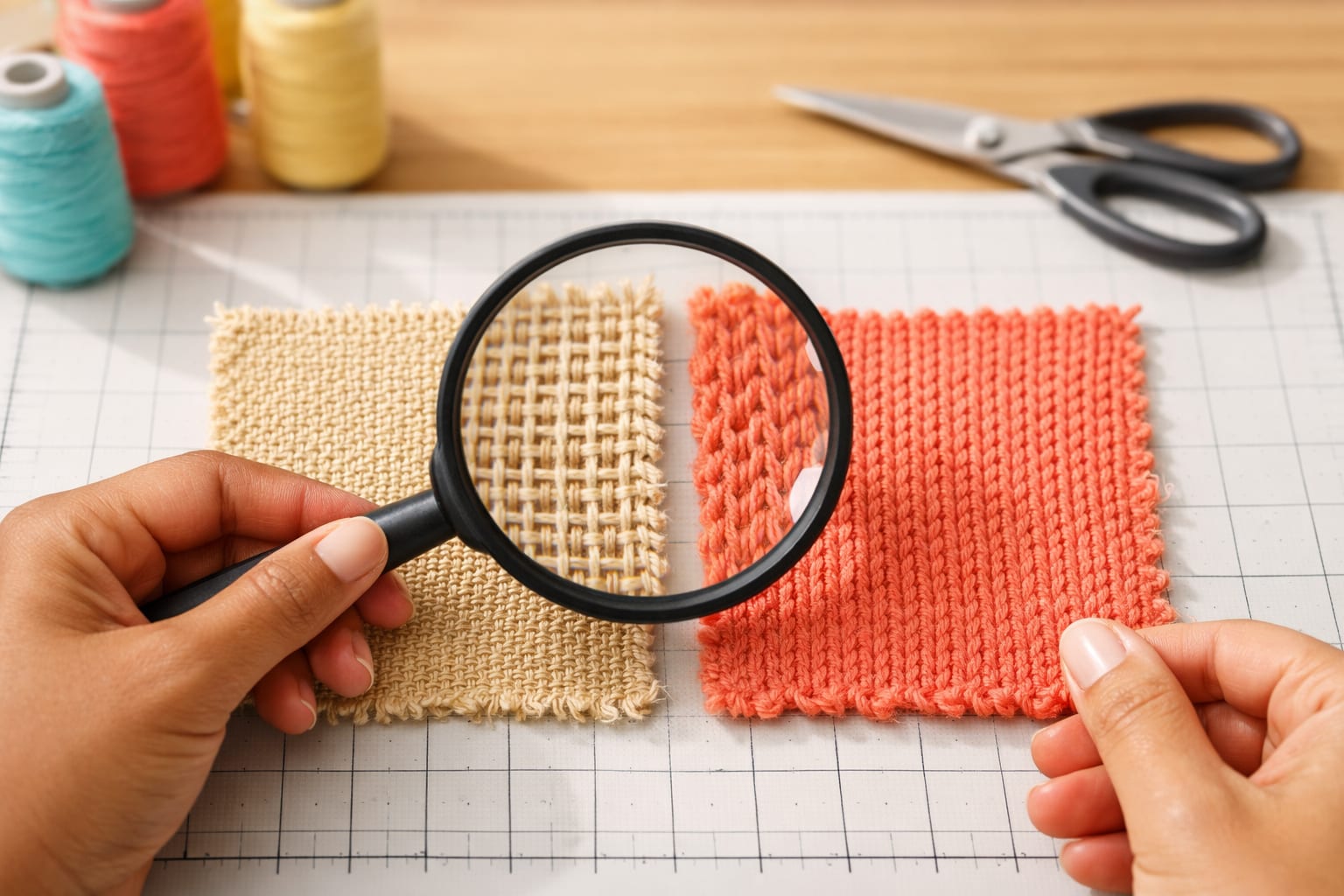
Woven fabric is constructed by interlacing two sets of threads (warp and weft) at right angles on a loom, creating a stable grid structure. Knit fabric is made by looping a single yarn in connected rows, similar to hand knitting, which allows the fabric to stretch and recover.
The construction method determines every other characteristic:
Woven Fabric Characteristics:
- Created on a loom with perpendicular threads
- Minimal to no stretch (except on the bias, which is a 45-degree angle)
- Frays when cut because threads can pull apart
- Holds creases well and maintains sharp edges
- More structured and stable
- Examples: denim, cotton poplin, canvas, linen, silk charmeuse
Knit Fabric Characteristics:
- Created by interlocking loops of yarn
- Stretches in at least one direction (crosswise), sometimes both
- Doesn’t fray but edges curl toward the right side
- Drapes softly and conforms to body shape
- More flexible and comfortable
- Examples: jersey, interlock, ribbing, French terry, ponte
The fundamental difference affects how you cut, sew, press, and care for each fabric type. Woven fabrics behave predictably and hold their shape, while knit fabrics require techniques that accommodate their stretch and recovery properties.
How Can I Tell If Fabric Is Woven or Knit?
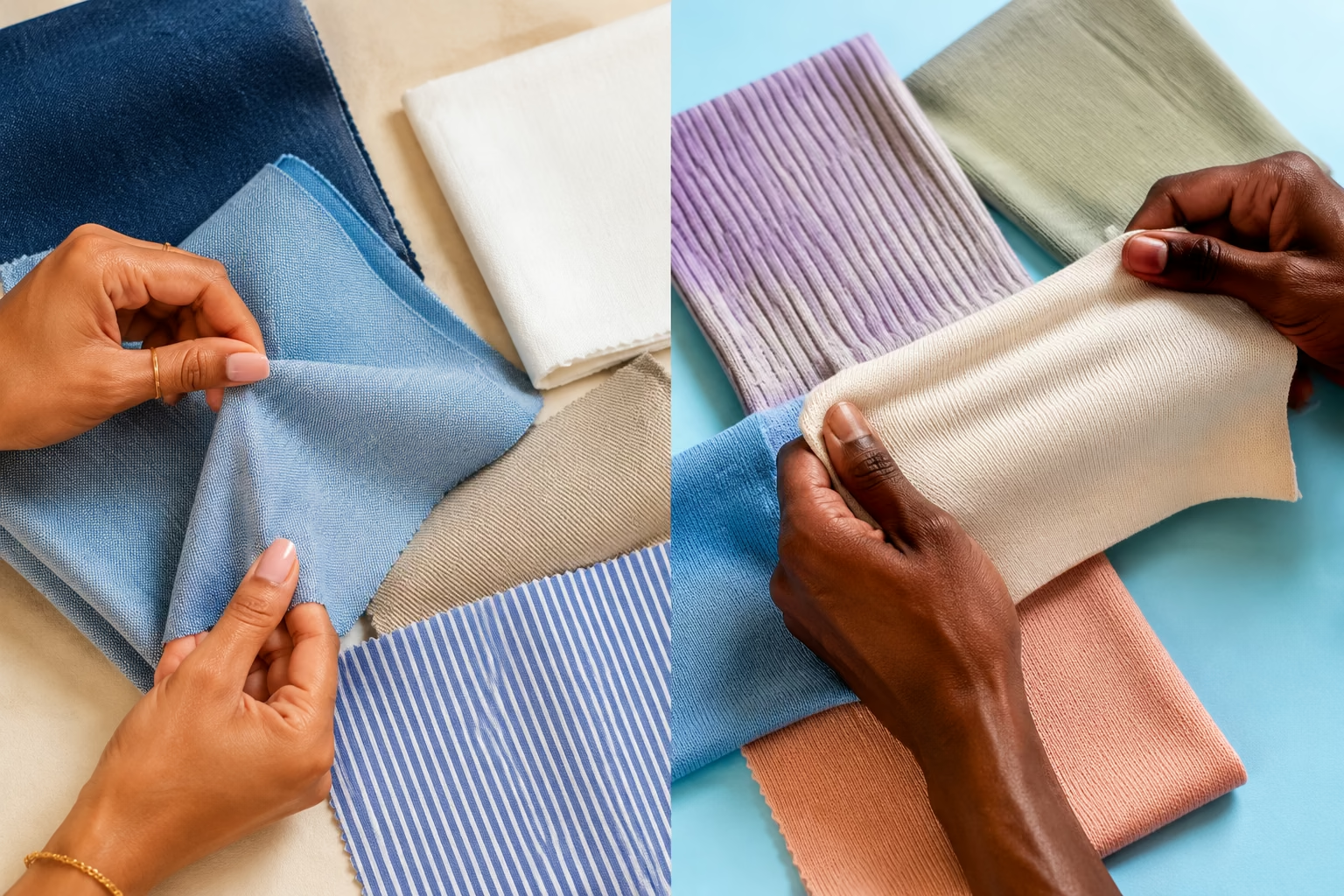
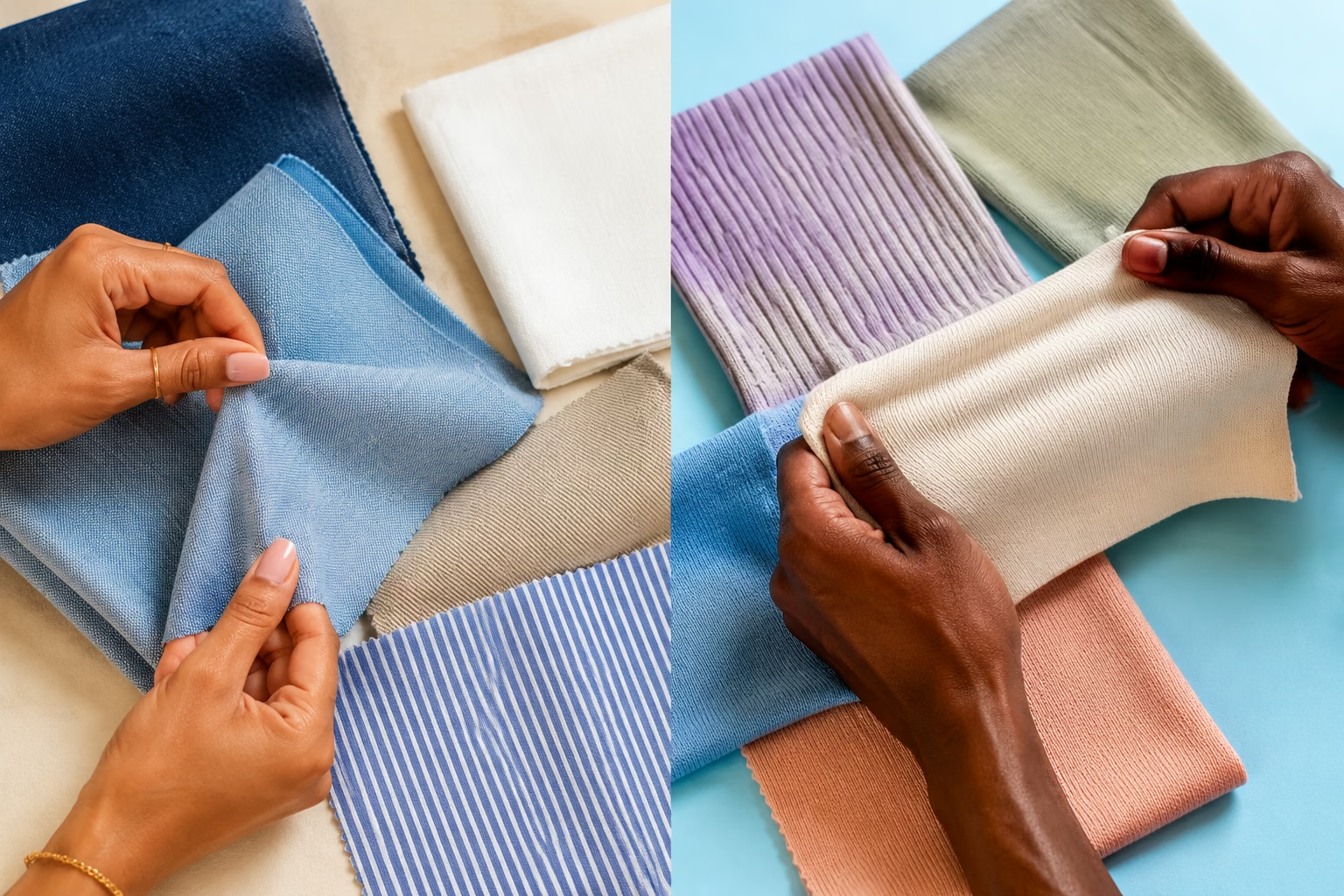
Pull the fabric gently in both directions: if it doesn’t stretch or stretches only slightly at a diagonal, it’s woven; if it stretches significantly in at least one direction, it’s knit. This stretch test is the fastest and most reliable identification method for beginners.
Additional Identification Methods:
Visual inspection:
- Hold fabric up to light and look closely at the structure
- Woven fabric shows a clear grid of perpendicular threads
- Knit fabric shows tiny loops or V-shaped patterns (especially visible on jersey)
Edge examination:
- Cut a small edge and observe what happens
- Woven edges fray with loose threads pulling away
- Knit edges curl but don’t unravel into individual threads
Drape test:
- Hold fabric by one corner and let it hang
- Woven fabric hangs with more structure and defined folds
- Knit fabric drapes softly and conforms to curves
Recovery test:
- Stretch fabric and release it
- Woven fabric stays stretched or returns slowly
- Knit fabric snaps back to original shape quickly
When shopping online, fabric descriptions should specify “woven” or “knit.” If unclear, check the fiber content and fabric name: terms like “poplin,” “twill,” and “canvas” indicate woven, while “jersey,” “interlock,” and “rib knit” indicate knit construction. For more guidance on fabric sewing techniques, explore beginner-friendly resources.
Which Is Better for Beginners: Woven or Knit Fabric?
Woven fabric is generally better for absolute beginners because it’s more stable, doesn’t shift during cutting and sewing, and works with basic machine settings and universal needles. Knit fabric requires specialized needles, adjusted tension, and techniques to prevent stretching, making it slightly more challenging for first projects.
Start with Woven Fabric If You:
- Are sewing your first garment or project
- Want predictable, stable fabric that doesn’t shift
- Plan to make structured items (bags, button-up shirts, aprons)
- Have a basic sewing machine without stretch stitch options
- Prefer crisp, tailored results
Good Beginner Woven Projects:
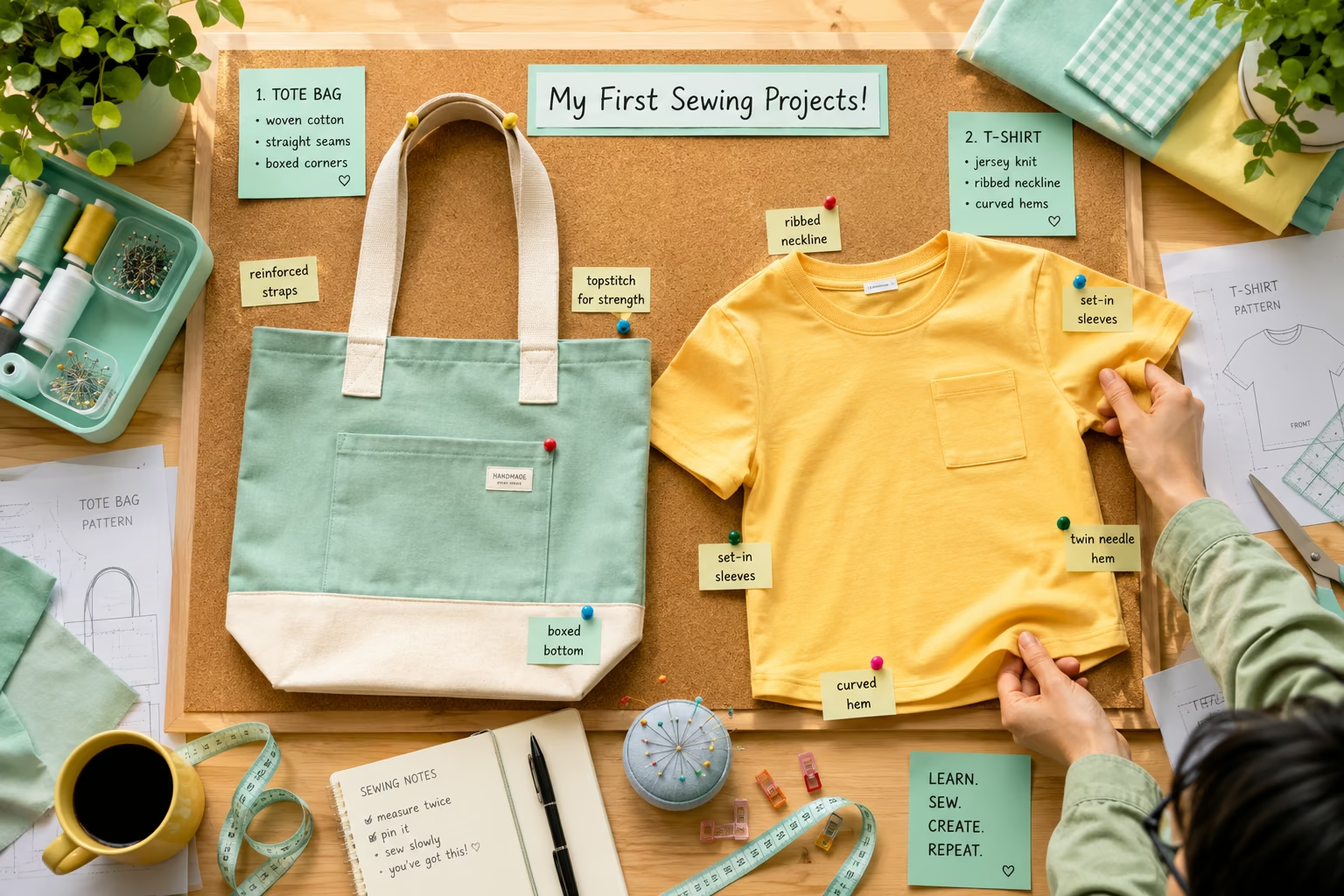
- Simple tote bags
- Pillowcases
- Aprons
- Elastic-waist skirts
- Button-up shirts (intermediate beginner)
Move to Knit Fabric When You:
- Feel comfortable with basic straight stitching
- Understand how to adjust machine tension
- Have ballpoint or stretch needles available
- Want to make comfortable, casual garments
- Are ready to learn new techniques
Good Beginner Knit Projects:
- Basic t-shirts
- Infinity scarves
- Simple leggings
- Baby clothes
- Headbands
The learning curve for knits isn’t steep, but starting with woven fabric builds foundational skills without the added complexity of managing stretch. Many beginner sewing courses start with woven cotton for this reason.

【Premium 100% White Combed Cotton】: Each fabric roll measures 59 inches in width and comes in a 1-yard length, providing ample material for your projects

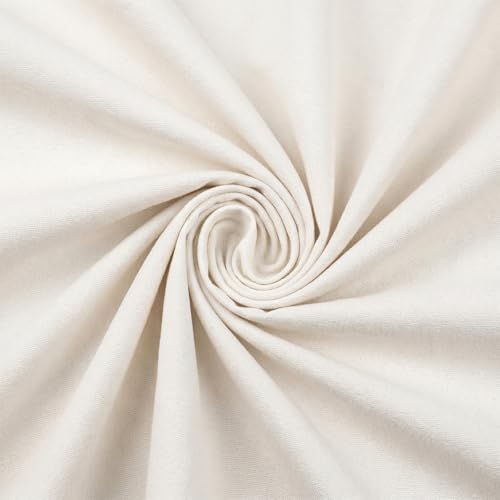
PREMIUM 100% COTTON POPLIN - 3 yards of 58-inch wide, 110 GSM pure cotton poplin fabric. Medium-weight woven material with a smooth, crisp hand feel that drapes beautifully for shirts, blouses and dresses without being sheer or stiff.
Does Knit Fabric Stretch More Than Woven?
Yes, knit fabric stretches significantly more than woven fabric because its looped construction allows the fabric to expand and contract. Most knit fabrics stretch 25-100% in the crosswise direction, while woven fabrics have minimal stretch except on the bias (diagonal), where they may stretch 10-15%.
Knit Fabric Stretch Categories:
Stable knits (25-30% stretch):
- Interlock
- Ponte
- Double knit
- Best for: structured knit garments, pants, blazers
Moderate stretch knits (40-60% stretch):
- Jersey
- French terry
- Cotton lycra blends
- Best for: t-shirts, casual dresses, loungewear
High stretch knits (75-100% stretch):
- Ribbing
- Spandex blends
- Athletic knits
- Best for: activewear, leggings, fitted garments
Woven Fabric Stretch:
- Straight grain (lengthwise and crosswise): 0-5% stretch
- Bias grain (45-degree diagonal): 10-15% stretch
- Stretch woven (with elastane): 10-20% stretch in one direction
Understanding stretch percentage helps you choose appropriate fabric for patterns. Pattern envelopes specify required stretch: hold a 10cm section of fabric and pull; if it stretches to the measurement indicated on the pattern (usually 12-14cm for moderate stretch), the fabric is suitable.
The stretch direction matters too. Most knits stretch more across the grain (selvage to selvage) than lengthwise. Always test stretch before cutting to ensure your fabric matches pattern requirements.
What Are Common Mistakes When Sewing Knit vs Woven Fabric?
The most common mistake when sewing knits is using a universal needle instead of a ballpoint or stretch needle, which causes skipped stitches and fabric damage. For woven fabrics, beginners often forget to finish seam edges, leading to fraying and weakened seams over time.
Common Knit Fabric Mistakes:
Using the wrong needle:
- Universal needles have sharp points that pierce knit loops
- This damages the fabric structure and causes runs
- Solution: Use ballpoint (rounded tip) or stretch needles
Stretching fabric while sewing:
- Pulling fabric through the machine distorts seams
- Creates wavy, stretched-out seams that won’t lie flat
- Solution: Let feed dogs move fabric naturally, use walking foot if needed
Wrong stitch selection:
- Straight stitches on knits break when fabric stretches
- Solution: Use narrow zigzag, stretch stitch, or serger
Skipping stabilization:
- Shoulders and necklines stretch out without reinforcement
- Solution: Use clear elastic or stay tape on seams that shouldn’t stretch
Common Woven Fabric Mistakes:
Not finishing seam allowances:
- Raw edges fray in the wash
- Seams weaken and eventually fail
- Solution: Zigzag, pink, or serge raw edges
Ignoring grain lines:
- Cutting off-grain causes garments to twist and hang poorly
- Solution: Align pattern pieces with fabric grain carefully
Using dull needles:
- Creates skipped stitches and puckered seams
- Damages fabric fibers
- Solution: Change needles every 8 hours of sewing or per project
Wrong iron temperature:
- Too hot melts synthetic fibers, too cool doesn’t set seams
- Solution: Test on fabric scrap first, use pressing cloth for delicates
If you’re experiencing fabric feeding issues with either fabric type, check your presser foot pressure and feed dog settings.
Can You Use the Same Needle for Woven and Knit Fabrics?
No, you should not use the same needle for both fabric types. Woven fabrics work best with sharp or universal needles that pierce cleanly between threads, while knit fabrics require ballpoint or stretch needles with rounded tips that slide between loops without breaking them.
Needle Types Explained:
Universal needles:
- Slightly rounded point
- Work for most woven fabrics and some stable knits
- Size 80/12 or 90/14 for medium-weight fabrics
- Not ideal for delicate knits or very tight weaves
Sharp (Microtex) needles:
- Very sharp, thin point
- Best for: tightly woven fabrics, silk, microfiber
- Create precise, clean holes
- Will damage knit fabric structure
Ballpoint needles:
- Rounded tip slides between knit loops
- Best for: jersey, interlock, most knit fabrics
- Prevents skipped stitches and runs
- Size 80/12 for medium-weight knits
Stretch needles:
- Special scarf design prevents skipped stitches
- Best for: high-stretch knits, swimwear, activewear
- Has a deeper scarf than ballpoint needles
When to Change Needles:
Change your needle when switching between woven and knit projects, or at minimum:
- Every 8 hours of sewing time
- When you hear a popping sound (needle hitting the throat plate)
- When stitches become irregular or skip
- At the start of each new garment project
Keep a needle log or mark your machine with tape noting when you last changed the needle. This simple habit prevents most stitch quality problems. For more details, see our guide on needle selection.
Is Denim a Woven or Knit Fabric?
Denim is a woven fabric created by interlacing warp and weft threads in a twill weave pattern, which creates its characteristic diagonal ribbing. The tight weave and heavy cotton construction make denim one of the most durable woven fabrics available.
Denim Characteristics:
Construction:
- Twill weave (warp threads pass over two or more weft threads)
- Creates diagonal lines visible on the fabric surface
- Traditionally uses indigo-dyed warp and white weft threads
- This creates the blue face and white reverse side
Weight and durability:
- Ranges from 8 oz (lightweight) to 16+ oz (heavyweight) per square yard
- Heavier than most quilting cotton or shirting
- Extremely durable and long-lasting
- Softens with wear and washing
Sewing considerations:
- Requires heavy-duty needles (90/14 or 100/16)
- Use denim or jeans needles with sharp points
- Topstitching thread creates professional finish
- May need to reduce layers at seam intersections (grading)
Common Confusion:
Some people mistake stretch denim for knit fabric because it contains elastane (spandex) and stretches. However, stretch denim is still a woven fabric with added stretch fibers woven into the structure. You can identify it as woven by examining the perpendicular thread structure and the fact that cut edges fray.
Other Common Woven Fabrics:
- Canvas and duck cloth
- Cotton poplin and broadcloth
- Linen
- Silk charmeuse and dupioni
- Wool suiting and flannel
Understanding fabric construction helps you choose appropriate needles, thread, and techniques for successful projects.
What Projects Are Best for Woven Fabric vs Knit?
Woven fabrics are best for structured projects that need to hold their shape: button-up shirts, tailored pants, bags, home decor items, and quilts. Knit fabrics excel in projects requiring comfort and stretch: t-shirts, leggings, activewear, baby clothes, and draped garments.
Best Woven Fabric Projects:
Beginner-friendly:
- Tote bags and pouches
- Pillowcases and cushion covers
- Table runners and napkins
- Simple aprons
- Elastic-waist skirts
Intermediate:
- Button-up shirts and blouses
- Tailored pants and shorts
- Structured dresses
- Lined jackets
- Quilts
Why woven works:
- Holds shape without stretching out
- Creates crisp edges and defined silhouettes
- Supports buttons, zippers, and structured closures
- Doesn’t require special stitches or equipment
Best Knit Fabric Projects:
Beginner-friendly:
- Basic t-shirts
- Infinity scarves
- Simple headbands
- Baby hats and mittens
- Lounge pants with elastic waist
Intermediate:
- Fitted t-shirts with binding
- Leggings and yoga pants
- Hoodies and sweatshirts
- Knit dresses
- Activewear
Why knit works:
- Comfortable and moves with the body
- Doesn’t require closures (can pull over head)
- Forgiving fit (stretch accommodates sizing variations)
- Soft and cozy for loungewear
Fabric-Specific Considerations:
Choose stable knits (ponte, interlock) for structured knit garments like blazers or work pants. Choose drapey wovens (rayon challis, silk) for flowing dresses and blouses. Match fabric weight and drape to your pattern’s recommended fabrics for best results.
Many sewing for beginners resources recommend starting with woven cotton projects before progressing to knits.
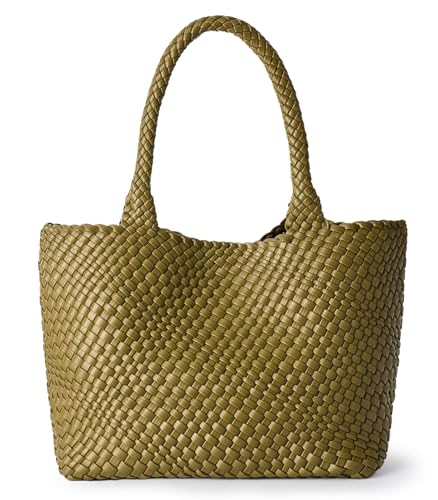
【JOTOFIT Top Handle Shoulder Tote Bag】This woven bag is made of vegan leather and no animals are harmed, it is a hand-woven tote bag and very comfortable to the touch. It is a so soft gorgeous cute stylish woven tote bag you need to carry for daily leisure, relaxing travel. Super versatile. Easy to carry, fits all!

【Origin and packaging】MIDE IN CHINA、ENBEI Gift Box

Stands Up & Stays Open: Making shopping so much easier! With a rigid box structure, our reusable bags are super easy to load & unload compared to ordinary floppy bags – Long handles let you carry tall items or sling a tote bag over your shoulder
Why Does My Knit Fabric Curl at the Edges?
Knit fabric curls at the edges because the cut disrupts the balanced tension in the looped structure, causing the edge loops to roll toward the right (face) side of the fabric. This is a natural property of knit construction, not a defect, and happens most noticeably with single knits like jersey.
Why Curling Happens:
Structural tension:
- Knit loops are under tension in the fabric
- Cutting releases this tension on one side
- The unbalanced tension causes rolling
- More pronounced in lightweight, stretchy knits
Fabric types that curl most:
- Jersey (single knit)
- Lightweight cotton knits
- Rayon and modal knits
- T-shirt knits
Fabric types that curl less:
- Interlock (double knit structure)
- Ponte (stable, dense knit)
- Ribbing (balanced structure)
- French terry (heavier weight)
How to Manage Curling:
During cutting:
- Use pattern weights instead of pins (less distortion)
- Cut with sharp rotary cutter or scissors
- Don’t let fabric hang off table edge
- Work on smaller sections if needed
During sewing:
- Press edges flat with steam before sewing
- Use spray starch to temporarily stabilize edges
- Pin perpendicular to edge, not parallel
- Let feed dogs move fabric without pulling
Permanent solutions:
- Serge or zigzag edges immediately after cutting
- Use binding or bands on necklines and hems
- Choose interlock or ponte for less curling
- Accept that some curl is normal and will be enclosed in seams
The curling actually helps identify the right side of the fabric: edges curl toward the face side. Once seams are sewn and edges are finished with hems or binding, curling is no longer visible or problematic.
Do I Need a Serger for Knit Fabric?
No, you don’t need a serger to sew knit fabric successfully. A regular sewing machine with a zigzag stitch or stretch stitch can handle knit fabrics, though a serger makes the process faster and produces more professional-looking seams with built-in edge finishing.
Sewing Knits Without a Serger:
Essential techniques:
- Use ballpoint or stretch needles
- Select narrow zigzag stitch (width 1.5-2.0, length 2.5)
- Or use built-in stretch stitch if your machine has one
- Reduce presser foot pressure slightly
- Use polyester or poly-cotton thread (has more give than 100% cotton)
Seam finishing options:
- Zigzag raw edges after sewing seam
- Use mock flat-fell seam (fold seam allowance together, topstitch)
- Bind edges with tricot or self-fabric strips
- Use twin needle for hems (creates professional stretch hem)
When a serger helps:
- Sewing large quantities of knit garments
- Creating activewear or swimwear
- Achieving ready-to-wear finish quality
- Saving time (serger sews, trims, and finishes in one pass)
Serger advantages:
- Sews stretchy seams that won’t break
- Trims and finishes edges simultaneously
- Creates professional rolled hems
- Handles very stretchy fabrics more easily
- Faster than zigzag finishing
Regular machine advantages:
- Lower cost (no additional equipment needed)
- Simpler threading and tension adjustment
- Can backstitch (sergers cannot)
- Adequate for occasional knit projects
- Less intimidating for beginners
Many experienced sewists sew knit seams on a regular machine and finish edges with a serger, or use a serger for seams and regular machine for topstitching. Start with your regular machine and invest in a serger only if you sew knits frequently. If you’re having trouble with knit fabric sewing, check your needle and stitch settings first.
Which Fabric Is More Durable: Woven or Knit?
Woven fabrics are generally more durable than knit fabrics because their interlaced thread structure resists tearing, abrasion, and wear better than knit loops. However, durability depends on fiber content, fabric weight, and construction quality, not just weave type.
Woven Fabric Durability:
Strengths:
- Threads locked in perpendicular grid resist pulling apart
- Doesn’t develop runs or holes from single broken thread
- Maintains shape through repeated wear and washing
- Resists abrasion better (important for upholstery, bags)
- Holds up to high heat pressing without distortion
Weaknesses:
- Can tear along grain lines if stressed
- Frays at cut edges
- Less forgiving of stress (doesn’t stretch to accommodate movement)
Most durable woven fabrics:
- Denim (twill weave, heavy weight)
- Canvas and duck cloth
- Ripstop nylon (reinforced weave)
- Upholstery-weight fabrics
- Tightly woven cotton drill
Knit Fabric Durability:
Strengths:
- Stretches to accommodate stress instead of tearing
- Comfortable for active wear (moves with body)
- Doesn’t fray at edges
- Recovers from wrinkles easily
Weaknesses:
- Can develop runs if loop breaks
- Stretches out over time (especially at knees, elbows)
- Pills more easily from friction
- Can snag on rough surfaces
- Loses shape if overstretched
Most durable knit fabrics:
- Ponte (dense double knit)
- Interlock (stable structure)
- Merino wool knits (naturally resilient)
- Nylon/spandex athletic knits
- Heavy French terry
Choosing for Durability:
Select woven fabrics for:
- Items that need structure (bags, upholstery)
- High-abrasion areas (work pants, aprons)
- Items washed frequently at high temperatures
- Projects requiring crisp, lasting shape
Select knit fabrics for:
- Active wear that needs flexibility
- Comfortable everyday clothing
- Items that need to stretch (fitted garments)
- Baby and children’s clothes (comfort priority)
Fiber content matters as much as construction: a heavyweight cotton knit outlasts a lightweight cotton voile (woven). Consider both fabric type and weight when durability is a priority.
What Is Interlock Knit vs Jersey Knit?
Interlock knit is a double-knit fabric with two layers of loops interlocked together, creating a thicker, more stable fabric that looks the same on both sides. Jersey knit is a single-knit fabric with one layer of loops, creating a lighter fabric with a distinct right side (smooth) and wrong side (slightly textured).
Jersey Knit Characteristics:
Structure:
- Single layer of interlocking loops
- Right side shows smooth V-shaped pattern
- Wrong side shows horizontal loops (purl side)
- Stretches more than interlock (less stable)
Properties:
- Lightweight and breathable
- Curls significantly at cut edges
- Drapes softly
- 40-60% stretch crosswise
- Most common t-shirt fabric
Best uses:
- T-shirts and tops
- Lightweight dresses
- Baby clothes
- Pajamas
- Linings
Interlock Knit Characteristics:
Structure:
- Double layer of loops interlocked
- Both sides look identical (smooth on both)
- Thicker and heavier than jersey
- More stable with less stretch
Properties:
- Medium weight
- Curls less at edges
- Holds shape better than jersey
- 25-40% stretch crosswise
- More opaque than jersey
Best uses:
- Structured knit tops
- Children’s clothes (more durable)
- Knit pants and leggings
- Dresses that need more body
- Activewear
Quick Comparison:
| Feature | Jersey Knit | Interlock Knit |
|---|---|---|
| Layers | Single | Double |
| Weight | Lightweight | Medium weight |
| Stretch | More stretch | Less stretch |
| Stability | Less stable | More stable |
| Edge curl | Significant | Moderate |
| Sides | Different | Identical |
| Opacity | More sheer | More opaque |
Other Common Knit Types:
Ribbing:
- Vertical ridges (alternating knit and purl)
- Stretches significantly in both directions
- Used for cuffs, waistbands, necklines
French terry:
- Smooth face, looped back
- Medium to heavyweight
- Used for sweatshirts, loungewear
Ponte:
- Dense double knit
- Very stable, minimal stretch
- Used for pants, blazers, structured garments
Understanding knit types helps you choose appropriate fabric for your pattern and predict how it will behave during sewing and wear.
Can You Make T-Shirts with Woven Fabric?
You cannot make comfortable, traditional t-shirts with woven fabric because woven fabric lacks the stretch needed to pull over your head and move comfortably with your body. T-shirts require knit fabric (typically jersey) that stretches at least 40% to function properly without closures.
Why Woven Doesn’t Work for T-Shirts:
Lack of stretch:
- Woven fabric doesn’t stretch enough to pull over head
- Restricts arm and torso movement
- Uncomfortable for casual, active wear
- Would require closures (buttons, zippers) to get on and off
Structural differences:
- Woven creates stiff, structured garments
- T-shirts need soft drape and body-conforming fit
- Woven necklines don’t have the give needed for comfort
- Seams would break under stress without stretch
What You Can Make with Woven Fabric:
Similar garments that work:
- Button-up shirts (classic woven garment)
- Camp shirts and bowling shirts
- Woven tank tops with wide armholes
- Tunics with loose fit
- Sleeveless shells (fitted with darts, not stretch)
Woven vs Knit Shirt Comparison:
Knit t-shirt features:
- Pulls over head (no closures needed)
- Stretches with movement
- Ribbed or bound neckline
- Comfortable, casual fit
- Soft, drapey fabric
Woven shirt features:
- Button or zip closure required
- Structured, tailored fit
- Collar and placket
- More formal appearance
- Crisp, stable fabric
Exception: Woven T-Shirt Style:
Some patterns create “woven tees” that mimic t-shirt styling but use woven fabric with these modifications:
- Very loose, oversized fit (no stretch needed)
- Wide neckline that fits over head without stretch
- Dropped shoulders and wide armholes
- Casual, boxy silhouette
- Often called “linen tees” or “woven tops”
These aren’t true t-shirts but borrow the casual aesthetic while accommodating woven fabric’s limitations. For authentic t-shirt comfort and function, always use knit fabric, preferably jersey or similar single knit.
Where to Buy Beginner-Friendly Woven and Knit Fabrics
Beginner-friendly woven and knit fabrics are widely available at fabric chain stores (Joann, Hobby Lobby), online retailers (Fabric.com, Mood Fabrics), and local independent fabric shops. For first projects, choose quilting cotton (woven) or cotton jersey (knit) because they’re affordable, easy to sew, and forgiving of mistakes.
Best Fabric Sources for Beginners:
Chain fabric stores:
- Joann Fabric and Craft Stores
- Hobby Lobby
- Michaels (limited selection)
- Pros: Physical stores to touch fabric, frequent coupons, beginner-friendly staff
- Cons: Variable quality, can be overwhelming
Online fabric retailers:
- Fabric.com (wide selection, good descriptions)
- Mood Fabrics (designer quality, higher prices)
- Spoonflower (custom prints, good for small projects)
- Etsy (independent sellers, unique fabrics)
- Pros: Larger selection, detailed specifications, customer reviews
- Cons: Can’t touch before buying, shipping costs, color variations
Local independent fabric shops:
- Search “fabric store near me”
- Often specialize in quilting or garment fabrics
- Pros: Expert advice, curated selection, support local business
- Cons: Higher prices, limited hours, smaller selection
Beginner-Friendly Fabric Recommendations:
Best woven fabrics to start:
- Quilting cotton: Stable, easy to sew, affordable, huge variety
- Cotton poplin: Lightweight, crisp, good for shirts and dresses
- Linen blends: Easier to sew than 100% linen, beautiful drape
- Cotton canvas: Sturdy for bags and home decor
Best knit fabrics to start:
- Cotton jersey: Most common t-shirt fabric, moderate stretch
- Cotton interlock: More stable than jersey, less curling
- French terry: Heavier, easier to handle than lightweight knits
- Ponte: Very stable, sews almost like woven
What to Avoid as a Beginner:
Challenging wovens:
- Slippery fabrics (silk, satin, rayon challis)
- Very sheer fabrics (chiffon, organza)
- Heavily textured fabrics (boucle, tweed)
- Expensive fabrics (save for when you’re confident)
Challenging knits:
- Very stretchy fabrics (spandex blends over 75% stretch)
- Lightweight jerseys (too much curl and shift)
- Velour and velvet knits (nap direction complications)
- Swimwear fabrics (require specialized equipment)
Shopping Tips:
- Buy extra: Add 0.5 yards to pattern requirements for mistakes
- Pre-wash: Wash fabric before cutting to prevent shrinkage later
- Check fabric width: Patterns assume 44-45″ wide fabric; adjust if different
- Read reviews: Online reviews reveal if fabric is beginner-friendly
- Start affordable: Practice on inexpensive fabric before using premium materials
Many beginner sewing projects work beautifully with basic quilting cotton, which costs $8-12 per yard and is available everywhere.

Pre-cut quilting fabric were made of 100% cotton with a sateen weave.200-thread count

Fat Quarter Quilting Fabric Bundles

Features: Unique designs pre-cut quilting fabric
Conclusion
Understanding the difference between woven and knit fabric is fundamental to successful sewing projects. Woven fabrics, constructed by interlacing perpendicular threads, offer structure, stability, and durability, making them ideal for tailored garments, bags, and home decor. Knit fabrics, created from interlocking loops, provide stretch, comfort, and flexibility, perfect for casual clothing and activewear.
As a beginner, start with woven fabrics like quilting cotton to build foundational skills without managing stretch complications. Once comfortable with basic techniques, progress to stable knits like interlock or ponte before tackling stretchier jerseys. Remember that fabric type determines everything: needle selection, stitch choice, seam finishing, and pressing techniques.
Your Next Steps:
- Identify fabrics in your stash: Use the stretch test and visual inspection to categorize what you already own
- Choose your first project: Select a simple woven project (tote bag, pillowcase) or stable knit project (infinity scarf)
- Gather appropriate supplies: Stock ballpoint needles for knits, universal needles for wovens
- Practice on scraps: Test stitches, tension, and techniques on fabric scraps before cutting your project
- Join a community: Connect with other sewing enthusiasts online or locally for support and inspiration
The woven vs knit distinction becomes second nature with practice. Soon you’ll automatically reach for the right needle, select appropriate stitches, and choose fabrics that match your project vision. Every successful project builds confidence and expands your fabric knowledge, opening up endless creative possibilities.
FAQ
Can I use regular thread for both woven and knit fabrics? Yes, all-purpose polyester thread works for both woven and knit fabrics. Polyester has slight stretch that accommodates knit fabric movement better than 100% cotton thread, which can break when knits stretch.
Why do my stitches skip when sewing knit fabric? Skipped stitches on knits usually mean you’re using a universal or sharp needle instead of a ballpoint or stretch needle. The sharp point damages knit loops instead of sliding between them. Switch to a ballpoint needle size 80/12 or 90/14.
Do I need to pre-wash woven and knit fabrics? Yes, pre-wash both fabric types before cutting to prevent shrinkage after your project is complete. Knits may shrink 3-5% and wovens 2-3%, which can ruin fit. Wash in the same temperature and method you’ll use for the finished garment.
Can you mix woven and knit fabrics in one project? You can combine woven and knit fabrics in a single project, but use woven fabric for structured areas (collars, cuffs, waistbands) and knit for body areas needing stretch. Interface the woven sections and use appropriate needles for each fabric type.
What does “cut on the bias” mean for woven fabric? Cutting on the bias means cutting at a 45-degree angle to the fabric grain. This gives woven fabric stretch and drape similar to knit fabric, useful for binding edges or creating flowing garments. Bias-cut woven fabric stretches 10-15%.
How do I stop my sewing machine from stretching knit fabric? Reduce presser foot pressure, use a walking foot or even-feed foot, and let the feed dogs move the fabric without pulling or pushing. You can also place tissue paper under the fabric while sewing, then tear it away afterward.
Is fleece a woven or knit fabric? Fleece is a knit fabric, though its thick, fuzzy texture makes this less obvious. You can confirm by checking if it stretches (it does) and if cut edges curl (they do slightly). Use ballpoint needles and stretch stitches when sewing fleece.
What’s the difference between cotton and polyester knit fabric? Cotton knit is natural, breathable, and comfortable but wrinkles easily and may shrink. Polyester knit is synthetic, wrinkle-resistant, and holds shape better but is less breathable and can feel less comfortable against skin. Many knits blend both fibers.
Can you iron knit fabric? Yes, you can iron knit fabric, but use lower heat than for woven fabrics and avoid stretching while pressing. Use steam and press gently rather than sliding the iron. Let knit fabric cool completely before moving it to prevent stretching.
Why does my woven fabric pucker when I sew it? Puckering in woven fabric usually indicates thread tension is too tight, you’re pulling fabric through the machine, or your needle is dull. Check tension settings, let feed dogs move fabric naturally, and change to a fresh needle.
Do knit fabrics fray like woven fabrics? No, knit fabrics don’t fray because the loops are interconnected and don’t pull apart into individual threads. However, knit edges do curl, which can be annoying during construction. Woven fabrics fray but don’t curl.
What is the best stitch length for woven vs knit fabric? For woven fabric, use a stitch length of 2.5-3.0mm for regular seams. For knit fabric, use a slightly longer stitch (3.0-3.5mm) with a narrow zigzag or stretch stitch to allow the seam to stretch with the fabric.


