
Quick Answer
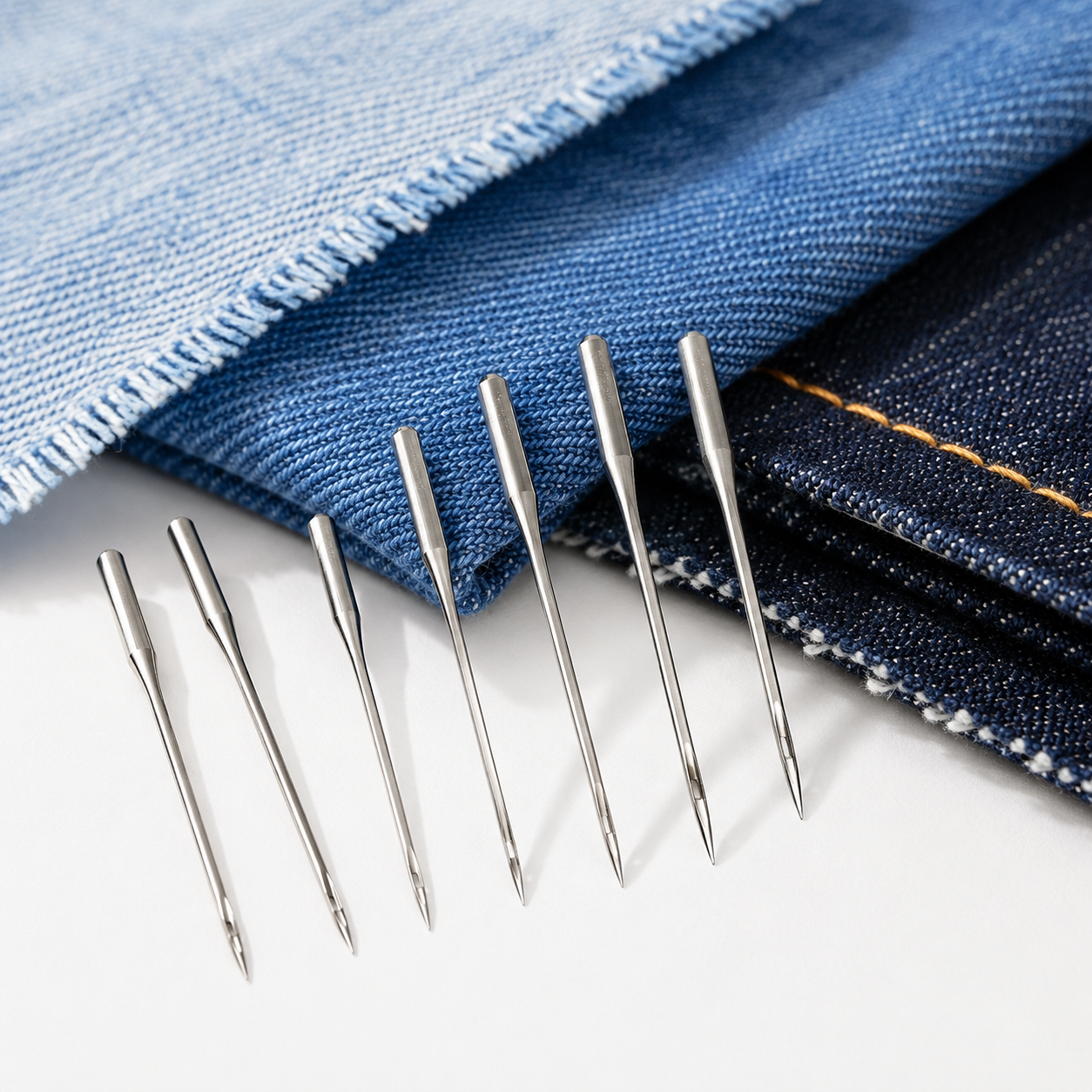
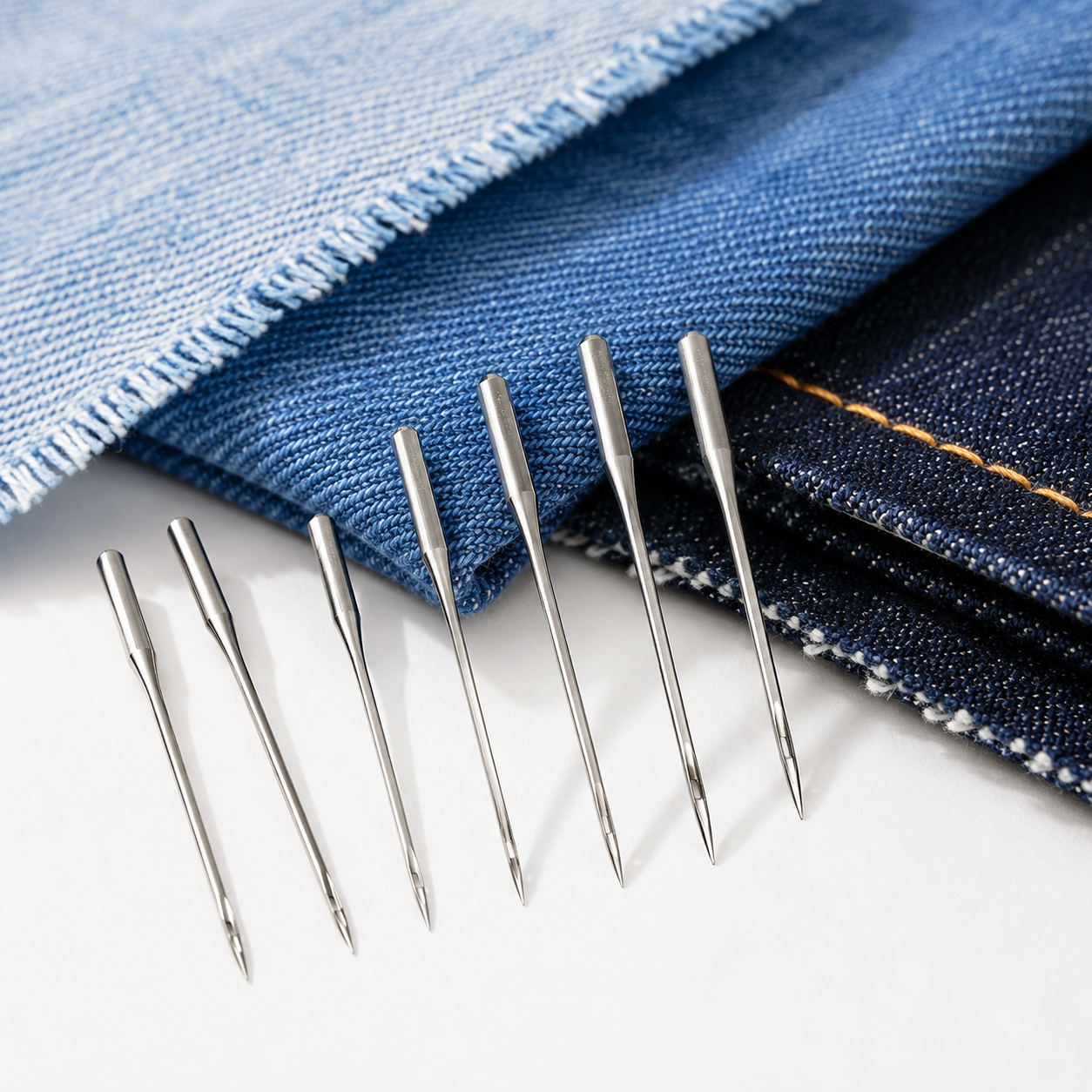
For most denim projects on a regular sewing machine, you need a size 90/14 or 100/16 denim needle (also called a jeans needle). Lightweight denim and chambray work fine with a size 80/12 or 90/14, while heavyweight denim requires a 100/16 or 110/18. Denim needles have a sharp point and stronger shaft designed to pierce tightly woven fabrics without breaking or skipping stitches.
Key Takeaways
- Size 90/14 denim needles work for most medium-weight denim projects on home sewing machines
- Size 100/16 or 110/18 are essential for thick denim, multiple layers, and jeans hems
- Denim needles have sharper points and stronger shafts than universal needles, preventing breakage
- Regular universal needles will often break or skip stitches when sewing denim due to the tight weave
- Jeans needles and denim needles are the same thing, just different names for the same specialty needle
- Change your needle every 6-8 hours of sewing time or after each denim project to prevent breakage
- Hand-sewing denim requires a sharp, sturdy needle like a size 7 or 8 embroidery or sharps needle
- Sergers can use regular serger needles for lightweight denim but benefit from denim needles for heavier weights
- Leather needles can work on denim but aren't ideal because their wedge point is designed for different fabric structures
What Size Needle Do You Need to Sew Denim on a Regular Sewing Machine?
For a regular home sewing machine, use a size 90/14 denim needle for medium-weight denim and a size 100/16 for heavyweight denim. The first number (90, 100) is the European sizing system, while the second number (14, 16) is the American equivalent, they refer to the same needle.
Here's how to match needle size to your denim project:
- Size 80/12: Lightweight denim, chambray, thin denim shirts
- Size 90/14: Standard jeans fabric, most denim projects, single to double layers
- Size 100/16: Heavyweight denim, multiple layers (3-4), thick seams, jeans hems
- Size 110/18: Extra-heavy denim, 4+ layers, industrial-weight fabric
The number indicates the needle's diameter in hundredths of a millimeter. A 90/14 needle is 0.9mm thick, while a 100/16 is 1.0mm. Thicker needles can pierce through dense fabric without bending or breaking.
Choose a 90/14 if you're sewing a single layer of denim or making a simple tote bag. Choose a 100/16 if you're hemming jeans (which creates 4-6 layers at the side seam) or working with raw, unwashed selvedge denim.
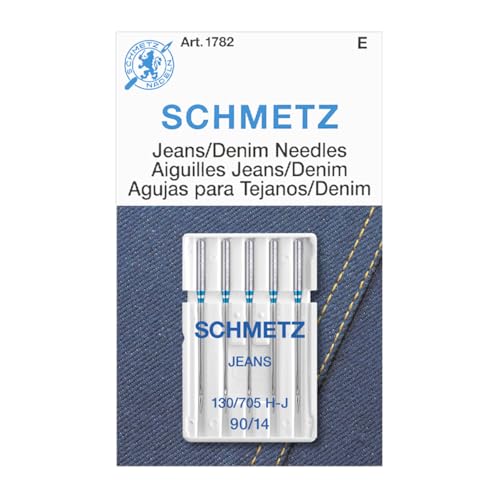
MASTER EVERY STITCH: Compatible with all home sewing machines, SCHMETZ Jean & Denim Needles handle thick fabric like denim, twill, and quilts for smooth, precise stitching that keeps your projects on track

Value Package: You will receive 50pcs, Pack of 10, Each pack is 10pcs. The quantity is adequate for you to replace.

30PCS Universal Sewing Machine Needles - Sizes 90/14 100/16 110/18 Heavy Duty Sewing Machine Needle for Thick Fabric Including Canvas Leather Embroidery Jeans
What's the Difference Between a Denim Needle and a Universal Needle?
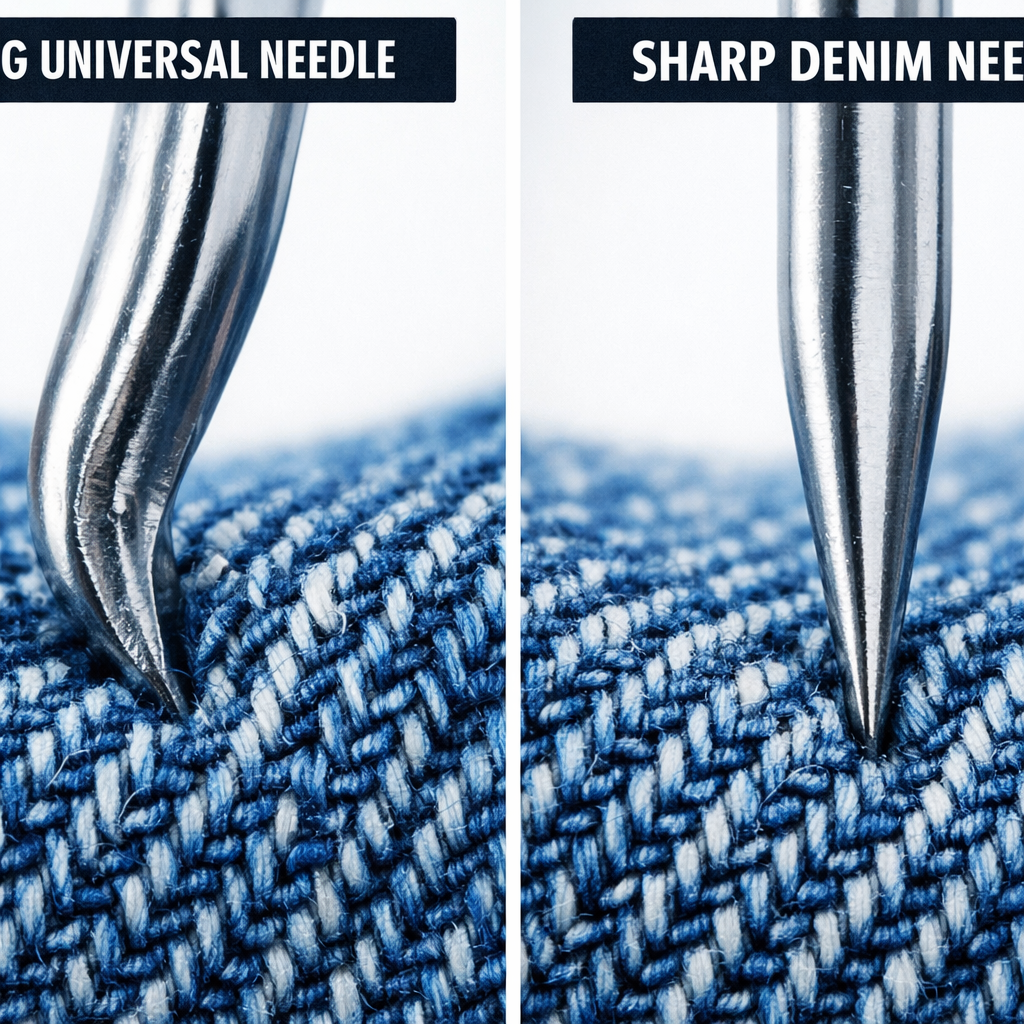
A denim needle has a sharper point, a stronger shaft, and a slightly different scarf (the indentation above the eye) compared to a universal needle. These design features help it penetrate tightly woven fabrics like denim without deflecting or breaking.
Key differences:
| Feature | Denim Needle | Universal Needle |
|---|---|---|
| Point shape | Sharp, acute point | Slightly rounded point |
| Shaft strength | Reinforced, thicker | Standard thickness |
| Best for | Dense, tightly woven fabrics | Woven and knit fabrics |
| Penetration | Pierces between fibers cleanly | Pushes fibers aside gently |
Universal needles have a slightly rounded point designed to work on both woven and knit fabrics. This rounded tip can deflect when it hits the tight weave of denim, causing skipped stitches or needle breakage. The denim needle's sharp point cuts through the weave more effectively.
The reinforced shaft on a denim needle also resists bending when pushing through multiple layers. Universal needles can flex or snap when they encounter the resistance of thick denim, especially at intersecting seams.
Common mistake: Using a universal needle because "it's just one layer of denim." Even single-layer denim is more tightly woven than quilting cotton or broadcloth, and the sharp point makes a noticeable difference in stitch quality.
Can You Use a Regular Needle for Denim or Will It Break?
You can sometimes use a regular universal needle for very lightweight denim or a single layer of thin chambray, but it will likely break, bend, or cause skipped stitches on medium to heavyweight denim. The risk increases dramatically when sewing multiple layers or thick seams.
What happens when you use the wrong needle:
- Skipped stitches: The needle deflects instead of piercing cleanly, causing the bobbin hook to miss the thread loop
- Broken needles: The shaft bends under pressure and snaps, sometimes mid-seam
- Puckered seams: The needle pushes fabric down into the throat plate instead of piercing through
- Thread shredding: A dull or bent needle frays thread as it passes through the eye
- Damaged fabric: A deflecting needle can snag or pull threads in the denim weave
If you're in a pinch and only have universal needles, use the largest size you have (90/14 or 100/16) and sew slowly. Reduce your stitch length slightly and avoid backstitching over thick seams. But for any serious denim project, invest in proper denim needles, they cost about the same as universal needles and prevent frustration.
Edge case: Some sewers successfully use universal needles on pre-washed, softened denim that's been worn and laundered multiple times. The fabric relaxes and becomes easier to penetrate. But for new, stiff denim, a denim needle is non-negotiable.
What's the Best Needle Size for Thick Denim vs Lightweight Denim?
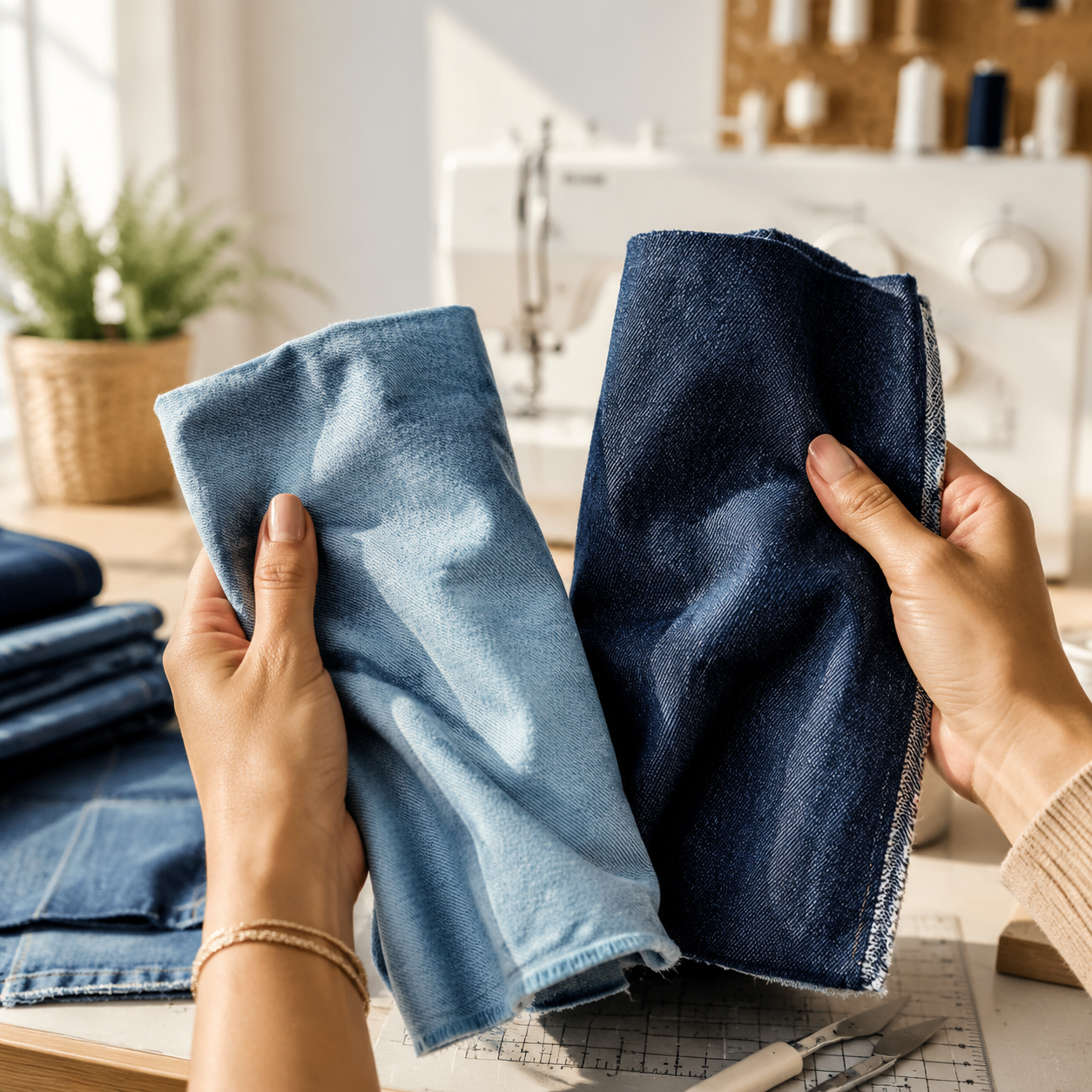
For thick denim (12+ oz per square yard), use a size 100/16 or 110/18 denim needle. For lightweight denim (under 10 oz per square yard) or chambray, use a size 80/12 or 90/14 denim needle.
Denim weight guide:
- Lightweight (6-9 oz): Chambray, denim shirts, summer dresses, use 80/12 or 90/14
- Medium-weight (10-13 oz): Standard jeans, jackets, bags, use 90/14 or 100/16
- Heavyweight (14-16 oz): Raw selvedge denim, workwear, upholstery, use 100/16 or 110/18
- Extra-heavy (16+ oz): Industrial denim, heavy workwear, use 110/18
The ounce measurement refers to the weight of one square yard of fabric. You can usually find this information on the fabric bolt or in the product description when buying online. If you're unsure, hold the fabric up to light, if you can see through it easily, it's lightweight. If it's completely opaque and stiff, it's heavyweight.
Decision rule: When in doubt, size up. A needle that's slightly too large will still sew cleanly, but a needle that's too small will break or skip stitches. The only downside of an oversized needle is slightly larger holes in the fabric, which are rarely visible in denim's textured weave.
Practical tip: Keep a variety pack of denim needles (sizes 90/14, 100/16, and 110/18) in your sewing kit. This costs around $8-12 and covers all your denim projects for months.
Do You Need a Special Needle for Sewing Jeans Hems?
Yes, you need a size 100/16 or 110/18 denim needle for hemming jeans because the hem creates 4-6 layers of fabric where the side seam intersects. This is one of the thickest areas you'll encounter in home sewing, and a smaller needle will break.
Why jeans hems are challenging:
- The original hem (2 layers) + new hem (2 layers) + side seam (2 layers) = 6 total layers
- The side seam is often flat-felled, adding extra bulk
- The fabric is compressed and stiff at the original hem crease
- You're sewing through thread from the original construction
Techniques to make hemming easier:
- Use a size 100/16 or 110/18 denim needle, non-negotiable for thick seams
- Hammer the seam intersection before sewing to flatten the layers
- Sew slowly when approaching the side seam, using the hand wheel if needed
- Use a hump jumper (a small wedge) to keep the presser foot level when climbing over the seam
- Increase stitch length to 3.0-3.5mm for thick areas to reduce needle penetrations
- Use topstitching thread (heavier weight) for a professional look and stronger seam
Some sewers switch to a 110/18 needle just for the side seam area, then switch back to a 100/16 for the rest of the hem. This prevents unnecessary wear on the larger needle.
Common mistake: Trying to force the machine over the thick seam by pulling the fabric. This bends the needle and can damage your machine's timing. Instead, turn the hand wheel manually to advance one stitch at a time through the bulkiest section.
Why Does Your Needle Keep Breaking When Sewing Denim?
Your needle keeps breaking when sewing denim because you're using a needle that's too small for the fabric weight, the needle is dull from extended use, or you're sewing too fast over thick seams. Needle breakage is almost always preventable with the right size and technique.
Top reasons for needle breakage:
- Wrong needle size: Using 70/10 or 80/12 on medium or heavyweight denim
- Dull needle: Sewing for more than 6-8 hours without changing the needle
- Wrong needle type: Using a universal or ballpoint instead of a denim needle
- Sewing too fast: Running at full speed over 4+ layers or intersecting seams
- Pulling fabric: Tugging fabric through the machine instead of letting the feed dogs do the work
- Hitting pins: Sewing over pins instead of removing them before the needle reaches them
- Machine timing issues: The needle is hitting the bobbin case or hook (requires professional service)
How to prevent breakage:
- Start every denim project with a fresh denim needle in the correct size
- Slow down to half speed when approaching thick seams
- Remove pins as you sew, or place them perpendicular to the seam and stop before hitting them
- Let the machine feed the fabric, don't push or pull
- Use a hump jumper or folded scrap fabric to level the presser foot over thick areas
- Check that your needle is inserted correctly (flat side to the back) and pushed all the way up into the needle clamp
Edge case: If you're using the correct needle and technique but still breaking needles, your machine may not have enough power for heavyweight denim. Domestic machines typically handle up to 4 layers of medium-weight denim. For thicker projects, consider a heavy-duty or semi-industrial machine.
Are Jeans Needles and Denim Needles the Same Thing?
Yes, jeans needles and denim needles are exactly the same thing, just different names used by different manufacturers. Both terms refer to a sharp-point needle with a reinforced shaft designed for dense, tightly woven fabrics.
Common names for the same needle:
- Denim needle
- Jeans needle
- Denim/Jeans needle (often printed on the package)
- Sharp needle (less common, but sometimes used)
The packaging will typically say "Denim/Jeans" or show a denim fabric icon. The key specifications are the sharp point and reinforced shaft, regardless of what the manufacturer calls it.
What to look for on the package:
- "Denim" or "Jeans" in the product name
- Sharp point designation (not ballpoint or universal)
- Size range: usually 90/14, 100/16, or 110/18
- Compatible with your machine brand (Schmetz, Organ, Klasse, etc.)
Some brands use slightly different terminology. For example, Schmetz labels their packages "Denim/Jeans," while Organ might say "Jeans" or "Denim." The needle construction is identical.
Don't confuse with: Topstitching needles, which have a larger eye for thicker thread but aren't necessarily reinforced for dense fabrics. You can use a topstitching needle on denim if you're using heavy thread, but a denim needle is better for standard construction.
What Happens If You Use the Wrong Needle on Denim Fabric?
If you use the wrong needle on denim fabric, you'll experience skipped stitches, broken needles, puckered seams, and poor stitch quality. The fabric may also pucker or gather because the needle deflects instead of piercing cleanly through the tight weave.
Specific problems by needle type:
Universal needle on denim:
- Skipped stitches where the bobbin hook misses the thread loop
- Needle deflection causing uneven stitch length
- Potential breakage on thick seams
- Works marginally on lightweight denim but fails on medium to heavyweight
Ballpoint needle on denim:
- Severe skipped stitches because the rounded point can't penetrate the tight weave
- Needle may bend or break quickly
- Fabric puckering and gathering
- Never use ballpoint needles on woven fabrics like denim
Needle too small (size 70/10 or 80/12 on heavyweight denim):
- Immediate breakage, especially at seam intersections
- Bent needle shaft visible when removed
- Shredded thread from the needle flexing
- Potential damage to machine timing if the bent needle hits internal parts
Needle too large (size 110/18 on lightweight chambray):
- Visible holes in the fabric
- Fabric may snag or pull
- Less control over delicate details
- Generally less problematic than a needle that's too small
The good news is that using the wrong needle rarely causes permanent damage to your fabric or machine. If you notice problems, stop sewing, change to the correct needle, and start again. The only exception is if a broken needle damages your machine's timing, which requires professional repair.
Can You Hand Sew Denim and What Needle Do You Use?
Yes, you can hand sew denim using a size 7 or 8 sharps needle or embroidery needle with strong thread like upholstery thread or doubled all-purpose thread. Hand sewing denim requires more effort than machine sewing but works well for repairs, decorative stitching, or small projects.
Best needles for hand-sewing denim:
- Sharps (size 7 or 8): Short, sharp needles for general hand sewing, good for repairs
- Embroidery needles (size 7 or 8): Longer eye for thicker thread, sharp point
- Leather needles: Triangular point that cuts through fabric, useful for very thick denim
- Sashiko needles: Long, sturdy needles designed for thick fabric, ideal for decorative stitching
Hand-sewing techniques for denim:
- Use a thimble to protect your finger when pushing the needle through thick fabric
- Wax your thread with beeswax or thread conditioner to strengthen it and reduce tangling
- Use shorter thread lengths (18-24 inches) to prevent tangling and wear
- Rock the needle back and forth to work it through the fabric rather than pushing straight
- Pre-punch holes with an awl for very thick seams or multiple layers
- Use a running stitch for seams, backstitch for strength, or whip stitch for hems
When hand sewing makes sense:
- Repairing small tears or holes
- Adding decorative sashiko or embroidery
- Hemming when you don't have access to a machine
- Sewing patches or appliqués
- Creating visible mending or boro-style repairs
Hand sewing denim is slower than machine sewing, expect to spend 30-60 minutes on a simple hem that would take 5 minutes by machine. But the results can be just as strong, and hand stitching adds a personal, artisanal quality to your work.
Denim Needle Size 90 vs 100: Which One Should You Buy?
Buy a size 90/14 denim needle if you're sewing single or double layers of medium-weight denim, and buy a size 100/16 if you're working with heavyweight denim, multiple layers, or jeans hems. For maximum versatility, keep both sizes in your sewing kit.
When to choose size 90/14:
- Standard jeans fabric (10-12 oz)
- Denim shirts, dresses, or skirts with single-layer construction
- Lightweight to medium-weight denim bags or accessories
- Quilting with denim
- Most everyday denim projects
When to choose size 100/16:
- Heavyweight denim (13+ oz)
- Jeans hems with 4-6 layers at the side seam
- Denim jackets with multiple layers and topstitching
- Raw selvedge denim that hasn't been pre-washed
- Any project with 3+ layers of medium-weight denim
Decision rule: If your project involves hemming jeans or sewing through intersecting seams, start with a 100/16. If you're making a simple tote bag or sewing single-layer denim, a 90/14 is sufficient. When in doubt, test on scrap fabric, if the needle struggles or you hear a popping sound as it penetrates, size up.
Cost consideration: Denim needles cost $3-5 for a pack of five, so buying both sizes adds minimal expense. Many sewers keep a 90/14 in the machine for general sewing and switch to a 100/16 when they encounter thick areas.
Practical tip: Write the needle size on a piece of masking tape and stick it to your machine when you change needles. This prevents confusion when you return to a project after a break.

2X STRONGER STEEL — Constructed with reinforced, thick shafts that withstand the resistance of dense, heavy fabrics without bending or breaking, staying sharp longer for consistent, skip-free stitching through any material from start to finish.

SEWING MADE SIMPLE: SCHMETZ Universal Needles work with all home sewing machines and handle everything from delicate silks to heavy denim, making them perfect for any quilting, embroidery, craft, or home décor project

Pack of 10 Genuine Singer Sewing Machine Needles
Do Sergers Need Different Needles for Denim?
Sergers can use regular serger needles for lightweight to medium-weight denim, but switching to denim needles (if your serger accepts them) improves stitch quality on heavyweight denim. Most sergers use standard needles, so you can use denim needles just like on a regular sewing machine.
Serger needle compatibility:
- Most sergers use standard sewing machine needles (Schmetz 130/705 H system)
- Some sergers (like older industrial models) use specific serger needles (ELx705 or DCx27)
- Check your manual to confirm which needle system your serger uses
If your serger uses standard needles, you can insert denim needles in sizes 90/14 or 100/16 just like you would in a regular machine. This is especially helpful when serging thick seams or multiple layers.
When to use denim needles in a serger:
- Serging heavyweight denim seams
- Finishing raw edges on thick denim
- Creating flat-felled seams on jeans
- Any project where you're experiencing skipped stitches with regular needles
When regular serger needles are fine:
- Lightweight denim or chambray
- Single-layer edge finishing
- Pre-washed, softened denim
- Decorative serging on denim (where you're not fighting thick layers)
Common mistake: Assuming sergers need special needles for all fabrics. Most sergers are more forgiving than regular sewing machines because the loopers create the stitch, not just the needle and bobbin. But denim's tight weave can still cause problems, so upgrading to denim needles helps.
Practical tip: If you're serging and sewing a denim project, use denim needles in both machines for consistency. This prevents confusion and ensures optimal results throughout the project.
Where Can You Buy Denim Needles for Your Sewing Machine?
You can buy denim needles at fabric stores (Joann, Hobby Lobby), online retailers (Amazon, Etsy), sewing machine dealers, and big-box stores with sewing sections (Walmart, Target). They typically cost $3-8 for a pack of five needles.
Best places to buy denim needles:
Local options:
- Fabric and craft stores: Joann, Hobby Lobby, local quilt shops
- Sewing machine dealers: Often carry premium brands like Schmetz
- Big-box retailers: Walmart, Target (limited selection)
Online options:
- Amazon: Wide selection, fast shipping, often the best prices
- Etsy: Specialty needle packs and variety assortments
- Wawak.com: Professional sewing supply site with bulk options
- Nancy's Notions: Sewing-specific retailer with expert curation
- Manufacturer websites: Schmetz, Organ, Klasse direct
What to look for when buying:
- Brand: Schmetz is the most widely recommended, but Organ and Klasse are also quality brands
- Size variety: Multi-packs with 90/14, 100/16, and 110/18 offer the best value
- Compatibility: Confirm the needle system matches your machine (most use 130/705 H)
- Quantity: Packs of 5 are standard; bulk packs of 10-25 save money if you sew denim frequently
Price comparison (2026):
- Single size pack (5 needles): $3-5
- Variety pack (3-4 sizes, 10-15 needles): $8-12
- Bulk pack (25+ needles): $15-25
Money-saving tip: Buy variety packs that include multiple sizes. You'll use different sizes for different projects, and the per-needle cost is lower than buying individual packs.

MASTER EVERY STITCH: Compatible with all home sewing machines, SCHMETZ Jean & Denim Needles handle thick fabric like denim, twill, and quilts for smooth, precise stitching that keeps your projects on track
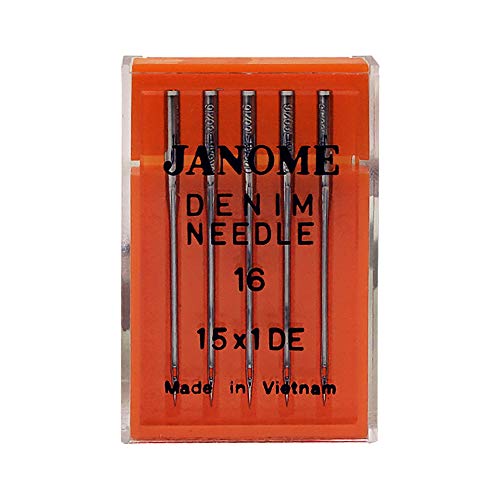
These Janome needles are preferred for heavyweight fabrics such as leather, denim, and vinyl

MASTER EVERY STITCH: Compatible with all home sewing machines, SCHMETZ Jean & Denim Needles handle thick fabric like denim, twill, and quilts for smooth, precise stitching that keeps your projects on track
How Often Should You Change Your Needle When Sewing Denim?
Change your needle every 6-8 hours of sewing time when working with denim, or after completing each major denim project. Denim dulls needles faster than lighter fabrics because of its tight weave and thickness, so more frequent changes prevent breakage and improve stitch quality.
Signs you need to change your needle:
- Popping or punching sound when the needle penetrates fabric (instead of a smooth whoosh)
- Skipped stitches that weren't happening at the start of the project
- Thread shredding or breaking frequently
- Visible burr or bent tip when you examine the needle closely
- Puckered seams that weren't occurring earlier
- You can't remember when you last changed it (just change it)
Needle change schedule for denim:
- After every project: If you're hemming jeans or making a jacket
- Every 6-8 hours: For ongoing denim sewing (like making multiple bags)
- Immediately: If you hit a pin, hear a loud pop, or notice any of the signs above
- Before starting: Always begin a new denim project with a fresh needle
Denim needles are inexpensive (about $1 per needle), so changing them frequently is cheap insurance against frustration. A dull needle can ruin hours of work with skipped stitches or broken thread.
Practical tip: Keep a small container near your machine for used needles. When you change a needle, immediately dispose of it safely (wrap in tape or use a needle disposal container) to prevent accidental injury.
Edge case: If you're sewing lightweight, pre-washed denim that's very soft, you might get 10-12 hours from a needle. But heavyweight or raw denim will dull a needle in 4-6 hours. When in doubt, change it.
Can Leather Needles Work on Denim Fabric?
Leather needles can work on denim fabric in a pinch, but they're not ideal because their wedge-shaped point is designed to cut through leather rather than pierce between woven threads. Denim needles are a better choice for denim because their sharp point works with the fabric's weave structure.
Key differences:
Leather needles:
- Wedge-shaped (triangular) point that cuts through material
- Designed for non-woven materials like leather, vinyl, and suede
- Creates a small slit rather than a round hole
- Can damage woven fabrics by cutting threads
Denim needles:
- Sharp, acute point that pierces between threads
- Designed for tightly woven fabrics
- Reinforced shaft for thick materials
- Works with the fabric structure rather than cutting it
When a leather needle might work:
- You're sewing very thick, stiff denim that resists a regular denim needle
- You're combining denim with leather in the same project
- You're creating decorative stitching where the cut effect is desirable
- You have no other option and need to finish a project
Why denim needles are better:
A denim needle's sharp point slides between the warp and weft threads of the weave, preserving the fabric's integrity. A leather needle's wedge point cuts through threads, which can weaken the fabric over time and create visible slits instead of round holes.
Practical test: If you have both needle types, sew a test seam on scrap denim with each. Examine the stitching closely, the denim needle should create a cleaner line with less visible disturbance to the fabric. The leather needle may leave slightly elongated holes.
Bottom line: Save leather needles for leather projects and use denim needles for denim. The small cost difference isn't worth the potential fabric damage or inferior results.
FAQ
What needle do you need for denim on a sewing machine?
Use a size 90/14 or 100/16 denim needle (also called a jeans needle) for most denim projects on a regular sewing machine. Choose 90/14 for lightweight to medium-weight denim and 100/16 for heavyweight denim or multiple layers.
Can you use a regular needle to sew denim?
You can use a regular universal needle on very lightweight denim, but it will likely break, skip stitches, or produce poor results on medium to heavyweight denim. Denim needles are specifically designed with a sharp point and reinforced shaft for dense fabrics.
What's the difference between a size 90 and 100 denim needle?
A size 90/14 needle is 0.9mm in diameter and works for medium-weight denim, while a size 100/16 is 1.0mm and handles heavyweight denim and multiple layers. The larger needle is stronger and less likely to break on thick seams.
Do you need a special needle for hemming jeans?
Yes, use a size 100/16 or 110/18 denim needle for hemming jeans because the hem creates 4-6 layers of fabric at the side seam. A smaller needle will break when it encounters this thickness.
Why does my needle keep breaking when I sew denim?
Your needle breaks because it's too small for the fabric weight, it's dull from extended use, or you're sewing too fast over thick seams. Use the correct size denim needle, change it frequently, and slow down over bulky areas.
Are jeans needles and denim needles the same?
Yes, jeans needles and denim needles are exactly the same thing, just different names used by different manufacturers. Both refer to a sharp-point needle with a reinforced shaft for dense, tightly woven fabrics.
Can you hand sew denim?
Yes, you can hand sew denim using a size 7 or 8 sharps or embroidery needle with strong thread. Use a thimble to protect your finger and wax your thread for strength. Hand sewing works well for repairs and decorative stitching.
What size needle for lightweight denim?
Use a size 80/12 or 90/14 denim needle for lightweight denim and chambray. These fabrics are thinner and less densely woven than standard jeans fabric, so they don't require the largest needle sizes.
How often should you change your needle when sewing denim?
Change your needle every 6-8 hours of sewing time or after each major denim project. Denim dulls needles faster than lighter fabrics, and a dull needle causes skipped stitches and breakage.
Can you use a leather needle on denim?
Leather needles can work on denim in a pinch, but they're not ideal because their wedge-shaped point cuts through fabric rather than piercing between threads. Denim needles are better for preserving fabric integrity and creating clean stitches.
Do sergers need denim needles?
Most sergers can use denim needles if they accept standard sewing machine needles (130/705 H system). Denim needles improve stitch quality on heavyweight denim but aren't necessary for lightweight denim or single-layer edge finishing.
Where can you buy denim needles?
Buy denim needles at fabric stores (Joann, Hobby Lobby), online retailers (Amazon, Wawak.com), sewing machine dealers, and big-box stores with sewing sections. They cost $3-8 for a pack of five needles.
Conclusion
Choosing the right needle for denim makes the difference between a frustrating sewing experience and a successful project. A size 90/14 denim needle handles most medium-weight denim projects, while a 100/16 or 110/18 tackles heavyweight fabric and thick seams. These specialty needles feature a sharp point and reinforced shaft that prevent the skipped stitches, breakage, and poor stitch quality you'd get with a universal needle.
Your next steps:
- Assess your denim project, weigh the fabric and count the layers to determine the right needle size
- Buy a variety pack of denim needles (sizes 90/14, 100/16, and 110/18) for about $8-12
- Start with a fresh needle at the beginning of every denim project
- Test on scrap fabric before sewing your actual project to confirm the needle works smoothly
- Change your needle every 6-8 hours of sewing time or when you notice any problems
- Slow down when sewing over thick seams and let the machine do the work
Keep denim needles in your sewing kit alongside your universal and ballpoint needles. The small investment (less than $1 per needle) prevents broken needles, skipped stitches, and damaged fabric. Whether you're hemming jeans, making a denim jacket, or creating a sturdy tote bag, the right needle ensures professional results and makes the sewing process enjoyable instead of frustrating.