
Quick Answer
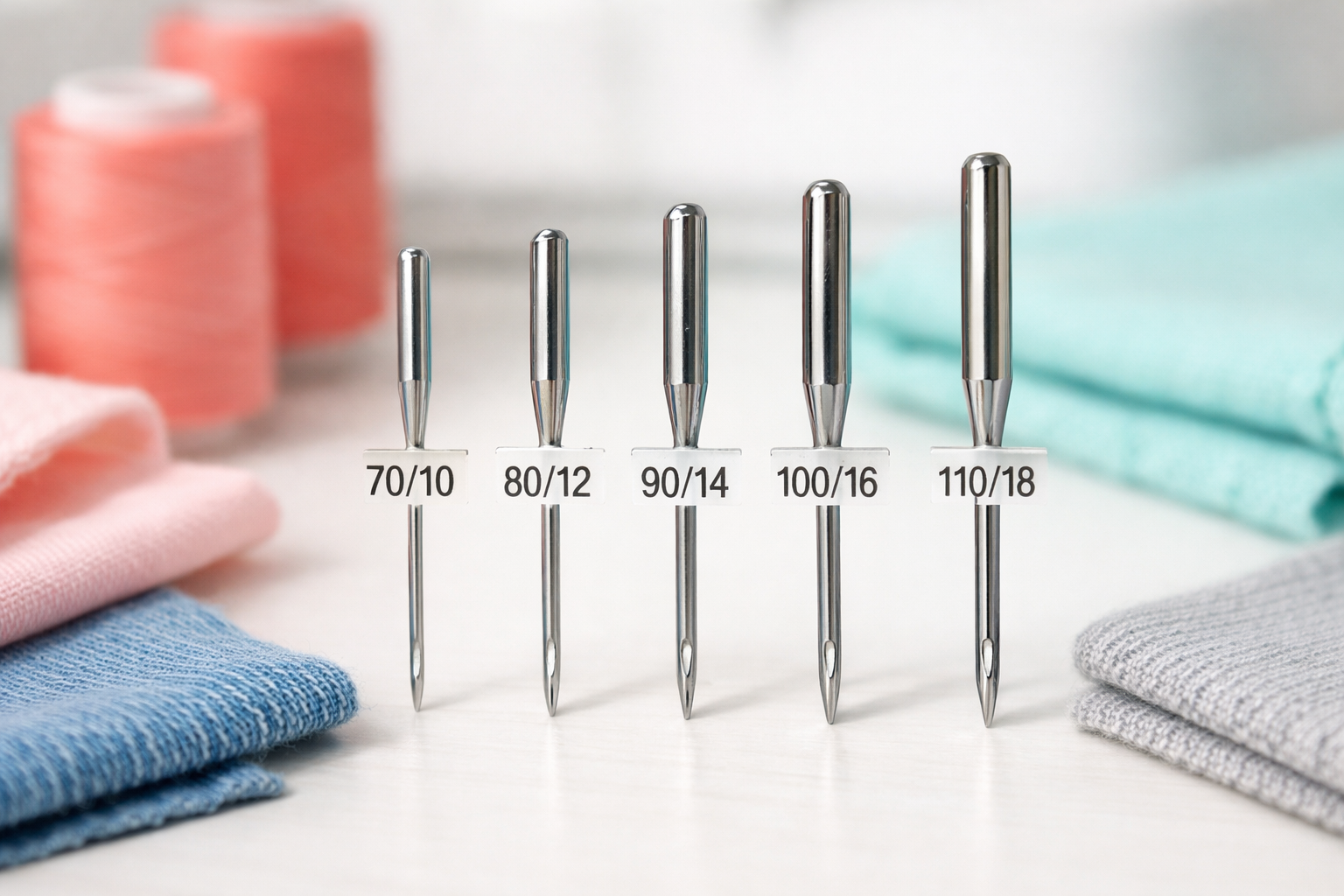
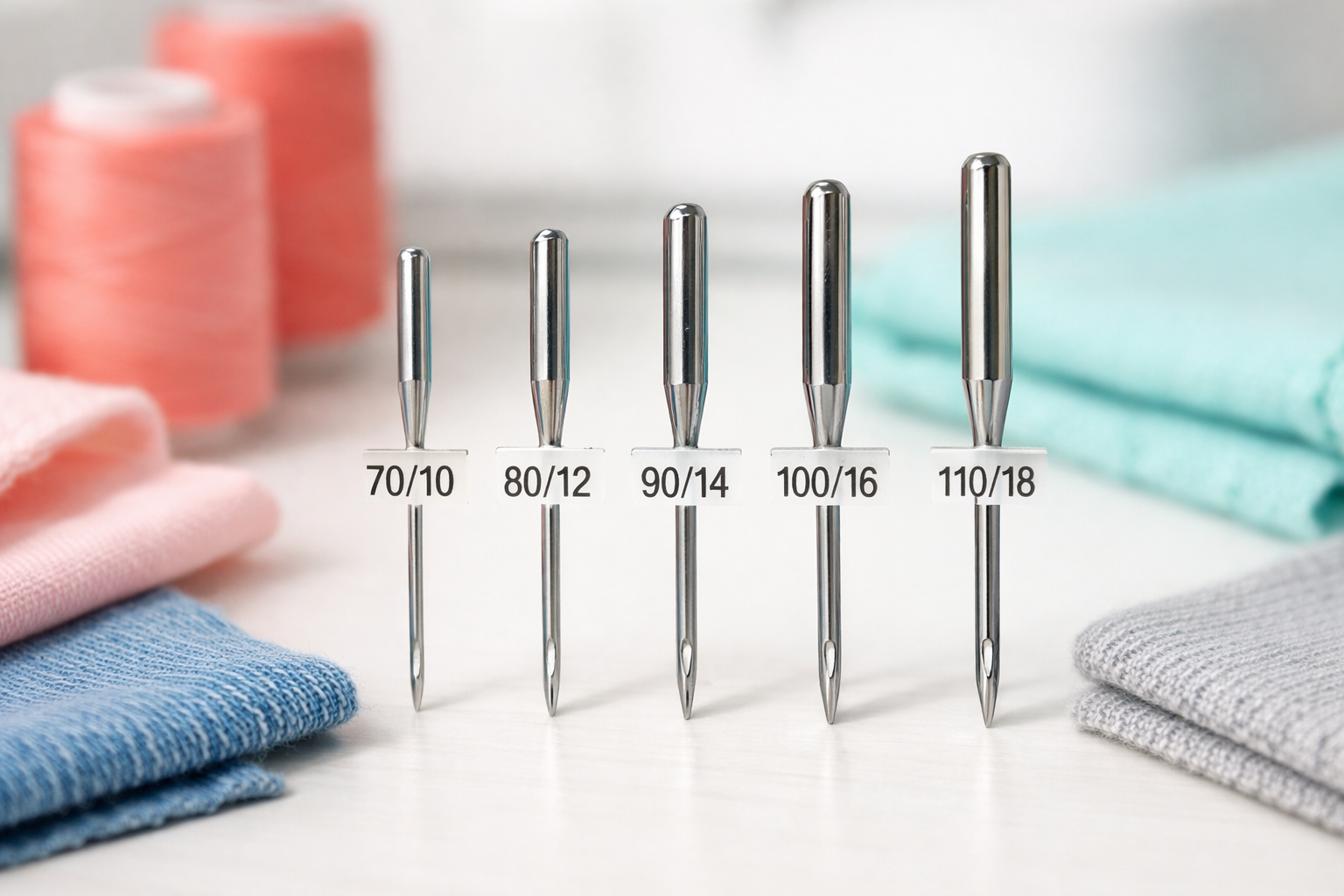
Sewing machine needle numbers indicate the needle’s diameter or thickness, with two measurement systems displayed together: the European metric size (ranging from 60 to 120) and the American size (ranging from 8 to 21). A 80/12 needle means it’s 0.8mm in diameter (European) or size 12 (American), and the higher the number, the thicker the needle shaft and the heavier the fabric it can handle.
Key Takeaways
- Needle numbers represent thickness: The first number (European) measures diameter in hundredths of a millimeter; the second (American) is a corresponding size designation
- Higher numbers = thicker needles: A 110/18 needle is much thicker than a 70/10 and designed for heavy fabrics like canvas or upholstery
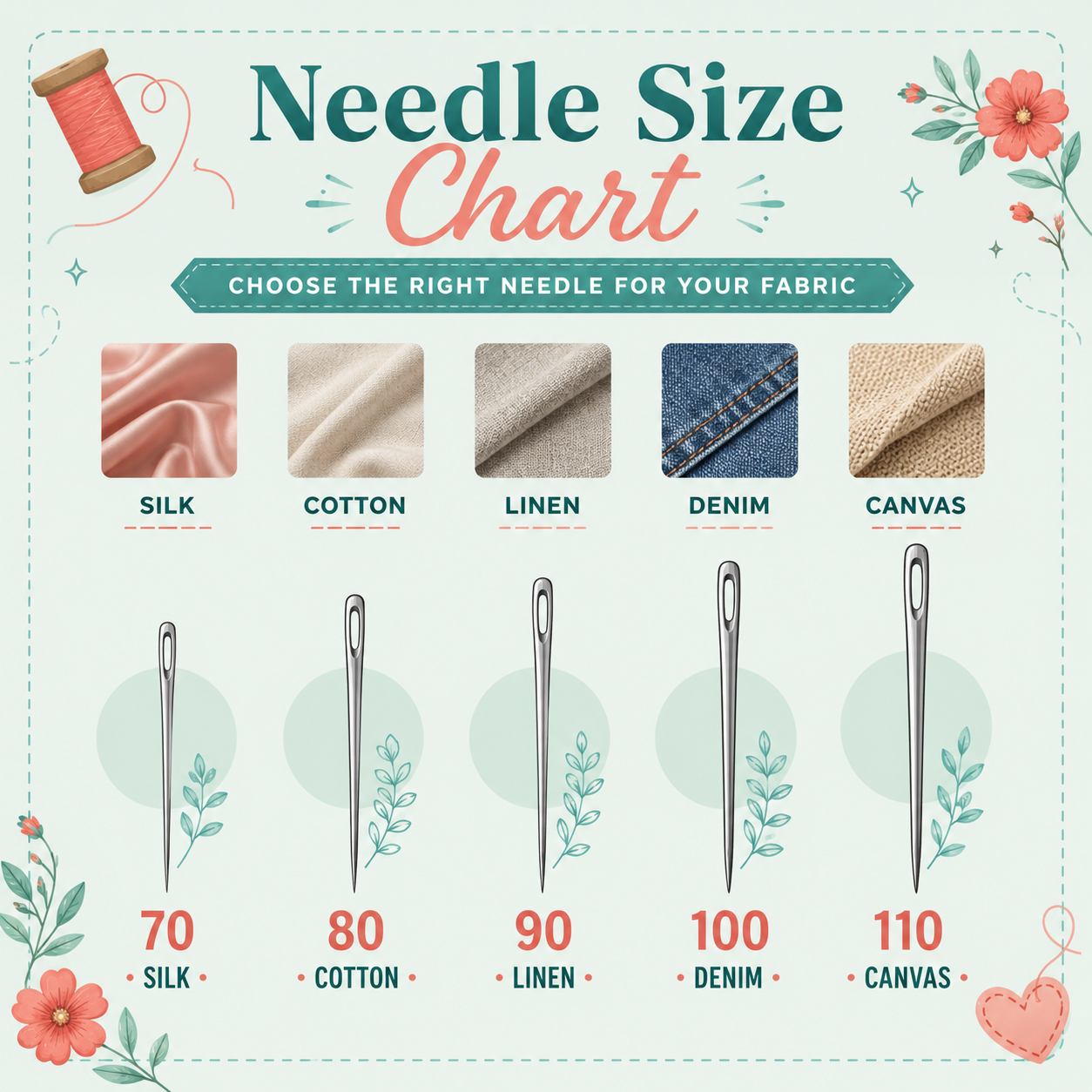
- Match needle to fabric weight: Lightweight fabrics need thin needles (60/8-70/10), medium fabrics use 80/12-90/14, and heavy fabrics require 100/16-110/18
- Wrong needle size causes problems: Using needles that are too thin can break them, while needles that are too thick create large holes and damage delicate fabrics
- Universal needles work for many projects: Size 80/12 or 90/14 universal needles handle most cotton, linen, and basic woven fabrics
- Specialty needles have different points: Beyond size, needle types (ballpoint, sharp, stretch) matter for different fabric structures
- Replace needles regularly: Dull or damaged needles cause skipped stitches, thread breaks, and fabric puckering regardless of correct sizing
What Do the Numbers on Sewing Machine Needles Mean?
The numbers stamped on sewing machine needles tell you exactly how thick the needle shaft is, using two different measurement systems side by side. The first number is the European metric size, which measures the needle diameter in hundredths of a millimeter, while the second number is the American size, which uses a different numbering scale but corresponds to the same physical thickness.
For example, a needle marked 80/12 has a shaft diameter of 0.80mm (European measurement) and is designated as size 12 in the American system. Similarly, a 90/14 needle measures 0.90mm in diameter. This dual-numbering system exists because different regions historically used different measurement standards, and manufacturers now include both to avoid confusion.
Why this matters for your sewing:
- Thicker needles (higher numbers) can pierce through dense, heavy fabrics without bending or breaking
- Thinner needles (lower numbers) create smaller holes and are gentler on delicate fabrics
- The needle size directly affects stitch quality, fabric damage, and whether your needle will survive the project
Most sewing machine needle packages display both numbers separated by a slash, and you’ll find sizes ranging from 60/8 (very fine) up to 120/21 (extremely heavy-duty). The most commonly used sizes for everyday sewing fall between 70/10 and 100/16.
Do Higher Needle Numbers Mean Thicker or Thinner?
Higher needle numbers always mean thicker, stronger needles. A 100/16 needle has a much thicker shaft than a 70/10 needle, making it capable of punching through heavier fabrics without bending or snapping.
Think of it like wire gauge in reverse: as the number increases, so does the needle’s diameter and strength. Here’s how the progression works:
Needle size progression (thin to thick):
- 60/8 and 65/9: Ultra-fine for sheer fabrics like organza or silk chiffon
- 70/10 and 75/11: Fine needles for lightweight cottons, silk, and delicate synthetics
- 80/12 and 90/14: Medium needles for quilting cotton, linen, and most everyday fabrics
- 100/16 and 110/18: Heavy needles for denim, canvas, upholstery, and multiple fabric layers
- 120/21: Extra-heavy for thick leather, vinyl, or industrial applications
This numbering system makes it easy to select the right needle once you understand that bigger numbers equal bigger needles. Choose a needle that’s thick enough to penetrate your fabric without deflecting, but not so thick that it leaves visible holes or damages the weave.
Difference Between 80/12 and 90/14 Sewing Needles
An 80/12 needle measures 0.8mm in diameter while a 90/14 needle measures 0.9mm, making the 90/14 about 12% thicker and better suited for slightly heavier fabrics. This seemingly small difference significantly impacts how the needle performs with different fabric weights and thread types.
When to choose 80/12:
- Quilting cotton and standard cotton prints
- Lightweight linen and chambray
- Most rayon and polyester blends
- General-purpose sewing with all-purpose thread
- Projects where you want minimal visible needle holes
When to choose 90/14:
- Medium-weight denim and twill
- Home décor fabrics like canvas and duck cloth
- Multiple layers of quilting cotton
- Sewing with thicker threads like topstitching thread
- Fabrics that are tightly woven or have some stiffness
The 80/12 is often considered the “standard” size for general sewing because it handles the widest range of common fabrics. However, if you notice your needle deflecting (bending slightly as it enters the fabric), skipped stitches, or if you’re sewing through multiple layers, stepping up to a 90/14 usually solves the problem. Conversely, if you see large holes or fabric puckering with a 90/14, drop down to an 80/12.
How to Choose the Right Needle Size for Fabric
Match your needle size to your fabric weight by following this simple rule: the needle should be thick enough to penetrate the fabric cleanly without bending, but thin enough that it doesn’t leave visible holes or damage the fabric structure. Start by assessing your fabric’s weight and density, then select from the appropriate needle size range.
Fabric-to-needle matching guide:
Sheer and delicate fabrics (organza, chiffon, silk, voile)
- Use 60/8, 65/9, or 70/10 needles
- Choose sharp or microtex needles for clean penetration
Lightweight fabrics (lawn, batiste, fine cotton, lightweight silk)
- Use 70/10 or 75/11 needles
- Universal or sharp needles work well
Medium-weight fabrics (quilting cotton, shirting, linen, light denim)
- Use 80/12 or 90/14 needles
- Universal needles are the go-to choice
Medium-heavy fabrics (canvas, duck cloth, corduroy, heavy linen)
- Use 90/14 or 100/16 needles
- Universal or jeans needles provide strength
Heavy fabrics (upholstery, thick denim, multiple layers)
- Use 100/16 or 110/18 needles
- Jeans or denim needles have reinforced shafts
Very heavy fabrics (leather, vinyl, thick canvas)
- Use 110/18 or 120/21 needles
- Leather needles have cutting points
Additional factors to consider:
- Thread thickness: Heavier threads need larger needles to accommodate the thread through the eye
- Stitch density: Closely spaced stitches in delicate fabric may need a smaller needle to prevent tearing
- Fabric structure: Knits need ballpoint needles regardless of weight; wovens need sharp or universal points
When in doubt, start with an 80/12 universal needle and adjust based on results. If stitches skip or the needle bends, go up a size. If you see large holes or fabric damage, go down a size.


2X STRONGER STEEL — Constructed with reinforced, thick shafts that withstand the resistance of dense, heavy fabrics without bending or breaking, staying sharp longer for consistent, skip-free stitching through any material from start to finish.

Set of 5 leather sewing machine needles include three 90/14 sized needles, and two 100/16 sized needles
What Size Needle for Cotton Fabric?
For standard quilting cotton and medium-weight cotton fabrics, use an 80/12 or 90/14 universal needle. These sizes create clean stitches without damaging the fabric weave and work with most all-purpose threads.
Cotton fabric comes in various weights, so fine-tune your needle choice based on the specific cotton type:
Lightweight cotton (lawn, voile, batiste): 70/10 or 75/11 needle Standard quilting cotton: 80/12 needle (most common choice) Shirting and poplin: 80/12 needle Medium-weight cotton (canvas, duck cloth): 90/14 or 100/16 needle Denim (cotton twill): 90/14 to 110/18 depending on weight
The 80/12 universal needle is the workhorse for cotton sewing because it balances strength and fineness perfectly for the most common cotton weights. If you’re piecing a quilt with standard cotton prints, an 80/12 will serve you well for thousands of stitches. However, if you’re topstitching through multiple layers or working with a tightly woven cotton, stepping up to a 90/14 prevents needle deflection and skipped stitches.
Pro tip: If you’re sewing cotton knit fabric (like jersey or interlock), switch to a ballpoint or stretch needle in the same size range (80/12 or 90/14) to avoid snagging the knit structure.

Made in India

SEWING MADE SIMPLE: SCHMETZ Universal Needles work with all home sewing machines and handle everything from delicate silks to heavy denim, making them perfect for any quilting, embroidery, craft, or home décor project

Ample Quantity: The set includes 60pcs sewing machine needles in size 80/12, sufficient for long-term daily use.
What Size Needle for Denim and Heavy Fabric?
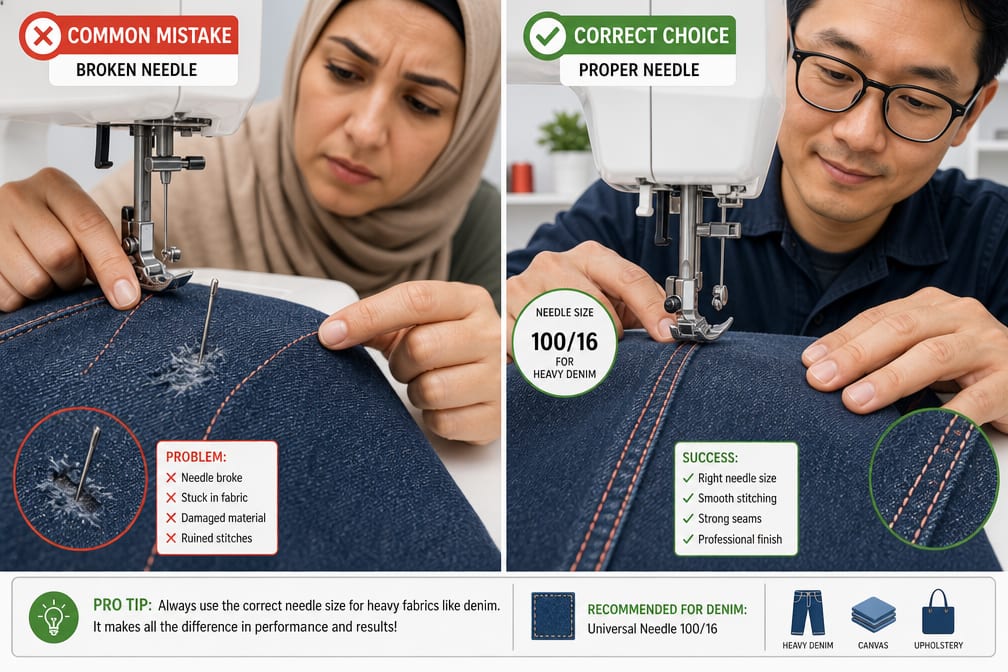
For denim and heavy fabrics, use a 100/16 or 110/18 jeans/denim needle, which has a reinforced shaft and sharp point designed to penetrate dense weaves without breaking. The exact size depends on the denim weight: lightweight denim works with 90/14, medium denim needs 100/16, and heavy or multiple-layer denim requires 110/18.
Denim needle sizing guide:
- Lightweight denim (chambray, thin jeans): 90/14 jeans needle
- Medium denim (standard jeans, jackets): 100/16 jeans needle
- Heavy denim (raw denim, thick jeans, multiple layers): 110/18 jeans needle
- Extra-heavy applications (topstitching through belt loops, hemming thick jeans): 110/18 or 120/21 jeans needle
Jeans needles differ from universal needles in two important ways: they have a reinforced shaft that resists bending and a very sharp point with a slight cutting edge that slices through tight weaves. This design prevents the needle from deflecting when it hits dense fabric or thick seams.
Other heavy fabrics and their needle requirements:
- Canvas and duck cloth: 100/16 or 110/18 universal or jeans needle
- Upholstery fabric: 100/16 or 110/18 universal needle
- Vinyl and faux leather: 90/14 to 110/18 leather needle (with wedge point)
- Thick fleece or coating: 90/14 to 100/16 universal needle
- Multiple layers of quilting cotton: 90/14 universal needle
Common mistake to avoid: Using a regular universal needle on denim often leads to bent or broken needles, especially when crossing thick seams. Always switch to a jeans needle before starting a denim project, even if the denim seems relatively thin.
What Size Needle for Knit Fabric?
For knit fabrics, use a 75/11 or 80/12 ballpoint or stretch needle, which has a rounded tip that slides between knit loops instead of piercing them. The size depends on the knit weight: lightweight jerseys use 75/11, medium-weight knits use 80/12, and heavy sweatshirt fleece uses 90/14.
Knit fabrics require special attention because their structure is fundamentally different from woven fabrics. The loops that create knit fabric can snag or run if pierced by a sharp needle, so the rounded ballpoint tip is essential regardless of fabric weight.
Knit needle sizing by fabric type:
- Lightweight jersey (t-shirt fabric, lightweight modal): 75/11 ballpoint or stretch needle
- Medium jersey (standard knit fabric, cotton/spandex blends): 80/12 ballpoint or stretch needle
- Ponte and double knit: 80/12 or 90/14 ballpoint needle
- Sweatshirt fleece and French terry: 90/14 ballpoint or stretch needle
- Heavy sweater knits: 90/14 or 100/16 ballpoint needle
Ballpoint vs. stretch needles: Both have rounded tips, but stretch needles have a special scarf (the indentation above the eye) that helps prevent skipped stitches on fabrics with high elasticity like spandex, swimwear, and activewear. For most cotton/poly knits, a standard ballpoint works fine, but if you’re sewing athletic wear or anything with significant stretch, choose a stretch needle.
Signs you’re using the wrong needle on knits:
- Visible holes or runs in the fabric along the seam line
- Skipped stitches (the machine misses stitches intermittently)
- Fabric puckering or wavy seams
- Thread breaking frequently
If you experience any of these issues, first check that you’re using a ballpoint or stretch needle, then verify the size is appropriate for your fabric weight.
What Happens If You Use the Wrong Size Sewing Needle?
Using the wrong needle size causes a cascade of problems: needles that are too small bend or break, create skipped stitches, and struggle to penetrate fabric, while needles that are too large leave visible holes, damage delicate fabric structures, and cause puckering. The mismatch between needle and fabric disrupts the precise timing and tension that creates quality stitches.
Problems from needles that are too small:
- Needle breakage: Thin needles can’t withstand the force needed to penetrate heavy fabric
- Bent needles: The shaft deflects when hitting dense fabric, throwing off timing
- Skipped stitches: A deflected needle misses the bobbin hook, failing to form stitches
- Thread shredding: The thread rubs against fabric it can’t easily penetrate
- Uneven stitches: Inconsistent penetration creates irregular stitch length
Problems from needles that are too large:
- Visible holes: The needle creates permanent marks in delicate fabrics
- Fabric damage: Large needles can break fibers in sheer or loosely woven fabrics
- Puckering: Oversized holes cause fabric to gather around the seam
- Runs in knits: Sharp, thick needles can snag and create runs in knit fabrics
- Poor stitch quality: The hole is too large for the thread, creating loose, sloppy stitches
Real-world example: Sewing lightweight silk with a 100/16 needle designed for denim will leave a trail of visible puncture marks that permanently damage the fabric. Conversely, attempting to hem thick jeans with a 70/10 needle will likely result in a broken needle within the first few stitches, potentially damaging your machine’s timing or hook system.
The good news is that needle size mistakes are easy to fix: simply change to the appropriate size and the problems typically disappear immediately. Keep a variety of needle sizes on hand so you can switch as needed for different projects.
Can I Use a Universal Needle for All Projects?
Universal needles work well for most woven fabrics in the medium-weight range, but they’re not truly universal for all sewing projects. They have a slightly rounded point that handles both wovens and some stable knits, making them versatile for everyday sewing, but they can’t replace specialty needles for delicate fabrics, heavy materials, knits, or leather.
What universal needles do well:
- Quilting cotton and cotton prints
- Linen and linen blends
- Basic polyester and rayon fabrics
- Light to medium denim
- Home décor fabrics like canvas
- General garment construction with stable fabrics
- Projects with mixed fabric types that are all medium-weight
When universal needles fall short:
- Delicate fabrics: Sheer fabrics need sharper microtex needles for clean penetration
- Knit fabrics: Jerseys and stretchy fabrics need ballpoint or stretch needles to prevent snags
- Heavy denim: Thick denim needs reinforced jeans needles to prevent bending
- Leather and vinyl: These need cutting-point leather needles
- Embroidery: Embroidery needles have larger eyes and special coatings for decorative threads
- Topstitching: Topstitch needles have extra-large eyes for thick threads
Think of universal needles as the “everyday” option that covers about 70% of typical home sewing projects. An 80/12 or 90/14 universal needle is perfect for piecing quilts, making simple garments from cotton or linen, and general mending. However, keeping a few specialty needles on hand (ballpoint for knits, jeans needles for denim, and microtex for delicate fabrics) ensures you’re prepared for projects outside that 70% range.
Smart needle strategy: Start each project with a fresh universal needle in the appropriate size for your fabric weight. If you encounter problems (skipped stitches, puckering, fabric damage), that’s your signal to switch to a specialty needle designed for your specific fabric type.
Why Does My Needle Keep Breaking When Sewing?
Needles break most often because they’re too small for the fabric, bent from hitting pins or the needle plate, or old and weakened from extended use. The needle may also be installed incorrectly, the machine may be threaded wrong, or you might be pulling the fabric instead of letting the feed dogs move it naturally.
Common causes of needle breakage:
Wrong needle size: Using a 70/10 needle on denim or heavy fabric causes immediate breakage Hitting pins: Sewing over pins bends or breaks needles; always remove pins before the needle reaches them Bent needle: Even slightly bent needles are weak points that snap under pressure Old needles: Needles weaken after 8-10 hours of sewing or one large project Incorrect installation: A needle that’s not pushed fully up into the clamp or is facing the wrong direction will break Pulling fabric: Tugging fabric through the machine puts lateral stress on the needle Wrong needle type: Using a sharp needle on thick knits can cause deflection and breakage Damaged needle plate: Burrs or scratches on the needle plate can catch and break needles
Troubleshooting steps when needles keep breaking:
- Check needle size: Verify you’re using a needle thick enough for your fabric (90/14 or larger for heavy fabrics)
- Install a fresh needle: Replace the needle and ensure it’s pushed all the way up and tightened securely
- Remove all pins: Take pins out before they reach the presser foot
- Check threading: Rethread the machine completely, ensuring thread is in all guides
- Let the machine feed: Don’t pull or push fabric; let the feed dogs do the work
- Slow down: Reduce sewing speed when working with thick seams or multiple layers
- Inspect the needle plate: Look for burrs or damage around the needle hole
Prevention tip: Change your needle at the start of each new project or after 8-10 hours of sewing, whichever comes first. Needles are inexpensive, and a fresh needle prevents most breakage issues while improving stitch quality.
Sewing Needle Size Chart for Beginners
This reference chart matches common fabrics to their ideal needle sizes, giving beginners a quick lookup guide for most sewing projects. Print this chart and keep it near your sewing machine for easy reference.
| Fabric Type | Fabric Examples | Needle Size | Needle Type |
|---|---|---|---|
| Sheer/Delicate | Organza, chiffon, silk, voile | 60/8 – 70/10 | Microtex/Sharp |
| Lightweight | Lawn, batiste, fine cotton, lightweight silk | 70/10 – 75/11 | Universal/Sharp |
| Medium-weight | Quilting cotton, shirting, linen, light denim | 80/12 – 90/14 | Universal |
| Medium-heavy | Canvas, duck cloth, corduroy, heavy linen | 90/14 – 100/16 | Universal/Jeans |
| Heavy | Upholstery, thick denim, multiple layers | 100/16 – 110/18 | Jeans/Denim |
| Very Heavy | Leather, vinyl, thick canvas | 110/18 – 120/21 | Leather/Jeans |
| Lightweight Knits | Jersey, t-shirt fabric, modal | 75/11 – 80/12 | Ballpoint/Stretch |
| Medium Knits | Cotton/spandex, ponte, double knit | 80/12 – 90/14 | Ballpoint |
| Heavy Knits | Sweatshirt fleece, sweater knits | 90/14 – 100/16 | Ballpoint |
How to use this chart:
- Identify your fabric type and weight
- Find the corresponding row in the chart
- Start with the smaller size in the range if you’re unsure
- Test on a scrap piece of your fabric
- Adjust up or down one size if needed based on results
Beginner’s starter needle kit: Stock these five needles to cover 90% of home sewing projects:
- 70/10 Universal: For lightweight fabrics and delicate projects
- 80/12 Universal: Your go-to for quilting cotton and everyday sewing
- 90/14 Universal: For heavier cottons and multiple layers
- 100/16 Jeans: For denim and heavy fabrics
- 80/12 Ballpoint: For knit fabrics and t-shirts
Replace needles frequently (every project or every 8-10 hours of sewing) because dull needles cause more problems than wrong sizes. Mark your needle packages with the date you opened them to track freshness.
Common Mistakes When Choosing Sewing Needle Size
The most common mistake sewers make is using the same needle for every project instead of matching the needle size and type to each fabric. This “one needle fits all” approach leads to poor stitch quality, fabric damage, and frustration that could be avoided by spending 30 seconds to change needles.
Top needle selection mistakes:
Using old, dull needles: Needles lose their sharp point after 8-10 hours of use, causing skipped stitches and fabric damage even if the size is correct. Replace needles at the start of each project.
Ignoring needle type: Choosing the right size but wrong type (like using a sharp universal needle on knits instead of a ballpoint) causes just as many problems as wrong sizing.
Starting too large: Many sewers default to 90/14 or 100/16 needles thinking “bigger is stronger,” but oversized needles damage delicate fabrics and create visible holes.
Not testing first: Skipping the test-sewing step on a fabric scrap means you might sew an entire project with the wrong needle before discovering the problem.
Mixing up needle types: Keeping needles loose in a container makes it impossible to know which is which; always store needles in their original packaging or label them clearly.
Using damaged needles: Continuing to sew with a bent or burred needle (often from hitting a pin) causes thread breaks, skipped stitches, and eventually needle breakage.
Forgetting about thread weight: Matching needle to fabric but ignoring thread thickness leads to problems; thick topstitching thread needs a larger needle eye regardless of fabric weight.
Assuming universal means everything: Universal needles work for many wovens but fail on knits, leather, and very delicate or very heavy fabrics.
How to avoid these mistakes:
- Keep a needle reference chart near your machine
- Store needles in labeled containers or original packaging
- Change needles at the start of each project
- Always test on fabric scraps before sewing your actual project
- Stock at least five basic needle types and sizes
- Remove pins before they reach the presser foot
- Match both size AND type to your fabric
Quick decision rule: When in doubt, start with an 80/12 universal needle for wovens or an 80/12 ballpoint for knits. Sew a test seam on a scrap. If you see problems (holes, skipped stitches, puckering, thread breaks), adjust size or type accordingly. This test-and-adjust approach takes less than a minute and saves hours of frustration.
Where to Buy Sewing Machine Needles in Different Sizes
Sewing machine needles are widely available at fabric stores, craft retailers, online marketplaces, and sewing machine dealers, with prices ranging from $3-8 for a pack of five needles. The best source depends on whether you need needles immediately or can wait for shipping, and whether you want to see packaging in person or prefer the wider selection available online.
Where to find sewing needles:
Local fabric and craft stores:
- Joann Fabrics, Hobby Lobby, Michaels (carry Schmetz, Singer, and store brands)
- Independent fabric shops (often stock specialty and hard-to-find needles)
- Walmart and Target (limited selection, usually basic universal needles)
- Advantage: Immediate availability, can examine packaging, ask staff questions
- Disadvantage: Limited selection, higher prices than online
Online retailers:
- Amazon (widest selection, fast shipping with Prime)
- Wawak Sewing Supplies (bulk pricing, professional selection)
- Nancy’s Notions and Sewing Parts Online (specialty needles)
- Joann.com and other craft store websites (online selection often larger than in-store)
- Advantage: Better prices, huge selection, convenient delivery
- Disadvantage: Can’t examine needles in person, must wait for shipping
Sewing machine dealers:
- Authorized dealers for your machine brand (Bernina, Janome, Brother, etc.)
- Often carry premium needle brands and specialty types
- Advantage: Expert advice, needles specifically recommended for your machine
- Disadvantage: Usually higher prices, limited locations
What to buy:
For beginners, start with a variety pack that includes multiple sizes (typically 70/10, 80/12, 90/14, and 100/16 in universal needles). Schmetz is the most trusted brand and worth the slightly higher price for consistent quality. Once you know which sizes you use most, buy those in larger quantities to save money.
Buying tips:
- Check the package for the needle system (most home machines use 130/705 H system)
- Buy needles in multipacks rather than singles for better value
- Stock up on your most-used sizes (usually 80/12 and 90/14)
- Don’t buy more than you’ll use in a year; needles can corrode in storage
- Look for sales at craft stores (often 40-50% off with coupons)
Budget consideration: A five-pack of quality needles costs $5-7, which breaks down to about $1-1.50 per needle. Since you should change needles every project, factor needle cost into your project budget. Buying in bulk online can reduce the per-needle cost to under $1.

Regular Point & Durable Design:Features a sharp regular point that penetrates fabrics smoothly,ensuring even stitches and avoiding skipped stitches or fabric damage.The needles are made of high-quality material with a sturdy shaft,wear-resistant and durable,not easy to bend or break even when sewing heavy-duty materials.The bright color coating not only enhances visibility but also adds a layer of protection against wear.

SEWING MADE SIMPLE: SCHMETZ Universal Needles work with all home sewing machines and handle everything from delicate silks to heavy denim, making them perfect for any quilting, embroidery, craft, or home décor project

PREMIUM QUALITY MATERIAL: Made of top quality high-strength steel, sharp smooth, sturdy and durable, not easy to bend, and long service life.
Frequently Asked Questions
How often should I change my sewing machine needle?
Change your needle after every 8-10 hours of sewing or at the start of each new project, whichever comes first. Needles become dull and develop microscopic burrs that cause skipped stitches, thread breaks, and fabric damage even when the size is correct.
Can I use the same needle for woven and knit fabrics?
No, woven and knit fabrics require different needle types. Wovens work with universal or sharp needles, while knits need ballpoint or stretch needles with rounded tips that slide between loops instead of piercing them. Using the wrong type causes fabric damage and stitch problems.
What does the “H” mean on needle packages?
The “H” stands for “Hohlkehle,” the German word for the scarf (the indentation on the back of the needle above the eye). Different letters after H indicate needle types: H (universal), H-J (jeans), H-S (stretch), H-M (microtex), and so on.
Why do my needles keep bending?
Needles bend when they hit pins, the needle plate, or when they’re too thin for the fabric and deflect during penetration. Always remove pins before sewing over them, use the correct needle size for your fabric weight, and ensure the needle is installed correctly and tightened securely.
Is there a difference between cheap and expensive needles?
Yes, quality needles like Schmetz have more consistent sizing, sharper points, better coatings, and stricter quality control than bargain brands. The difference becomes obvious in stitch quality, needle longevity, and fewer breakage issues. The small price difference ($5 vs $3) is worth it for reliable performance.
What size needle should I use for quilting?
For piecing quilts with standard quilting cotton, use an 80/12 universal or quilting needle. For machine quilting through all layers (top, batting, backing), use a 90/14 quilting needle, which has a special taper to penetrate multiple layers without damaging fabric.
Can I sharpen a dull sewing needle?
No, sewing machine needles cannot be effectively sharpened at home. The point is precision-ground during manufacturing, and any attempt to sharpen it will alter the shape and ruin the needle’s performance. Needles are inexpensive consumables meant to be replaced, not sharpened.
What’s the difference between a jeans needle and a universal needle?
Jeans needles have a reinforced shaft that resists bending and a very sharp point designed to penetrate dense, tightly woven fabrics like denim. Universal needles have a slightly rounded point and standard shaft, making them versatile for medium-weight wovens but less effective on heavy fabrics.
Do I need different needles for my serger?
Most sergers use the same needle system as regular sewing machines (130/705 H), so you can use the same needles. However, check your serger manual because some industrial or specialty sergers use different needle systems like ELx705 or DCx27.
What happens if I install a needle backwards?
Installing a needle backwards (with the flat side facing front instead of back) prevents the needle from reaching the bobbin hook, causing the machine to skip every stitch. The needle may also hit the needle plate or hook, potentially damaging your machine.
Can I use embroidery needles for regular sewing?
Embroidery needles have larger eyes and special coatings for decorative threads, but they work fine for regular sewing in the same size range. However, they’re more expensive than universal needles, so save them for embroidery projects where the larger eye and coating provide real benefits.
What size needle do I need for topstitching?
For topstitching with regular thread, use the same size you’d use for construction (usually 90/14). For topstitching with thick decorative thread, use a 90/14 or 100/16 topstitch needle, which has an extra-large eye and deeper groove to accommodate thicker thread without shredding.
Conclusion
Understanding what sewing machine needle numbers mean transforms needle selection from guesswork into a simple, logical process. The dual numbering system (European/American) tells you exactly how thick the needle is, and the straightforward rule that higher numbers equal thicker needles makes it easy to match needles to fabric weight. An 80/12 universal needle handles most everyday sewing, but keeping a small collection of sizes (70/10, 80/12, 90/14, 100/16) and types (universal, ballpoint, jeans) ensures you’re prepared for any project.
Take action on your next project:
- Assess your fabric by weight and structure (woven vs. knit, delicate vs. heavy)
- Select the appropriate needle size using the guidelines in this article
- Choose the right needle type (universal for wovens, ballpoint for knits, jeans for denim)
- Test on a scrap before sewing your actual project
- Adjust if needed based on stitch quality, fabric damage, or needle performance
- Replace regularly at the start of each project or after 8-10 hours of sewing
The small investment in the right needles (typically $5-7 per pack) and the 30 seconds it takes to change them pays off in better stitch quality, fewer frustrations, and professional-looking results. Start building your needle collection today, and you’ll never again wonder whether your needle is causing your sewing problems. The answer to “what do sewing machine needle numbers mean” is now clear: they’re your roadmap to perfect stitches on every fabric.


