
Quick Answer
Sewing your own clothes is not automatically cheaper than buying them. For basic everyday items like t-shirts and jeans, mass-produced retail clothing typically costs less due to economies of scale. However, sewing becomes more cost-effective when you’re making tailored pieces, alterations for hard-to-fit sizes, home décor items, or specialty garments that would be expensive to buy ready-made. The break-even point depends on your fabric choices, how often you sew, and whether you already own equipment.
Key Takeaways
- Initial investment matters: Expect to spend $200-500 on a decent sewing machine and basic supplies before making your first garment
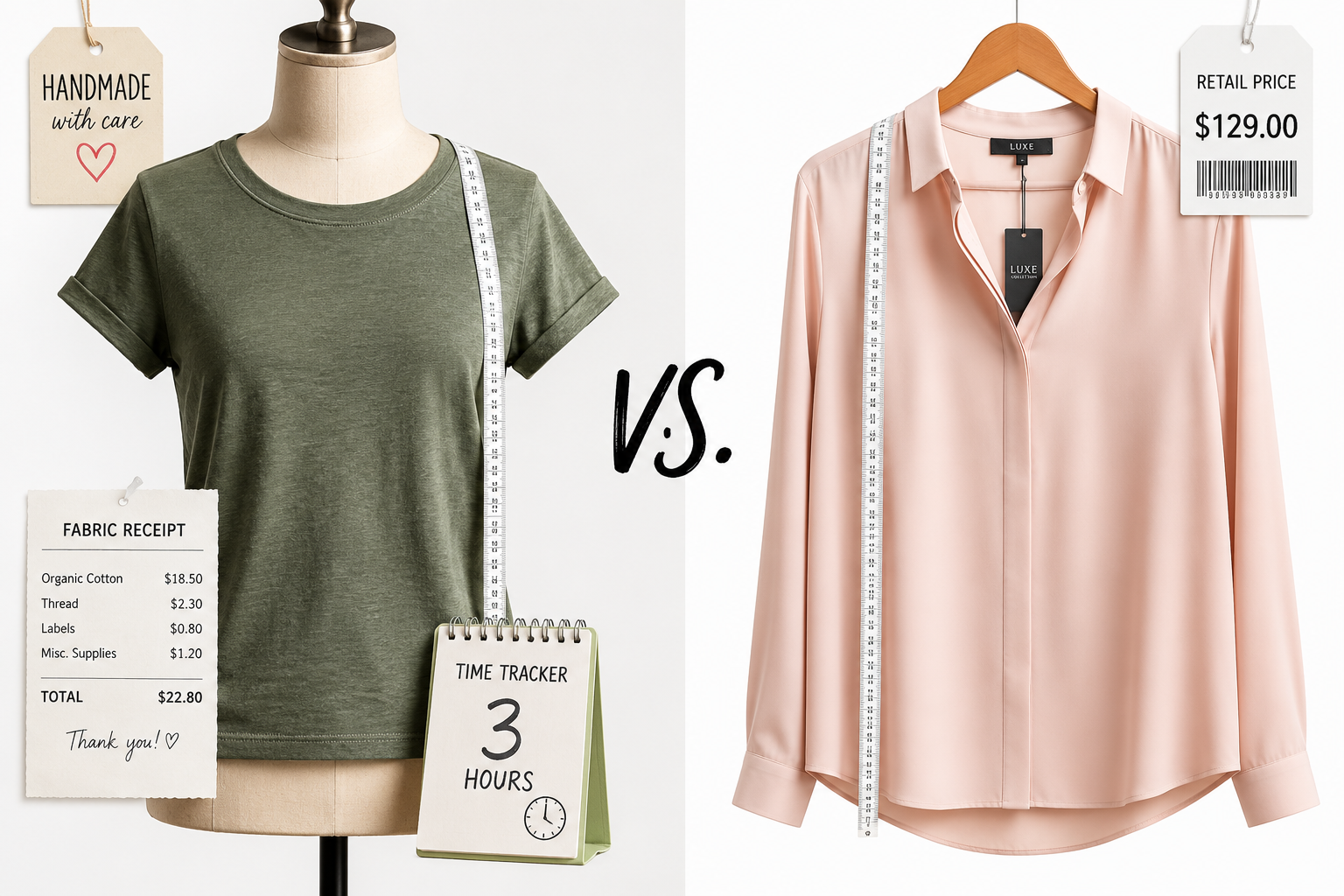
- Simple basics aren’t cheaper: A basic cotton t-shirt costs $3-8 to sew but takes 2-3 hours, while retail versions cost $5-15
- Specialty items save money: Tailored blazers, wedding attire, and plus-size clothing are often 40-60% cheaper to sew than buy
- Fabric quality drives cost: Premium fabrics can make homemade garments more expensive than fast fashion equivalents
- Time has value: Factor in 3-8 hours per garment for beginners, which affects the true cost-benefit calculation
- Alterations offer quick wins: Hemming, taking in seams, and adjusting fit costs pennies versus $15-40 at a tailor
- Home décor items excel: Curtains, pillow covers, and table linens are consistently 50-70% cheaper to sew
- Equipment longevity helps: A well-maintained sewing machine can last 20+ years, spreading the initial cost across hundreds of projects
How Much Does It Cost to Start Sewing Your Own Clothes?
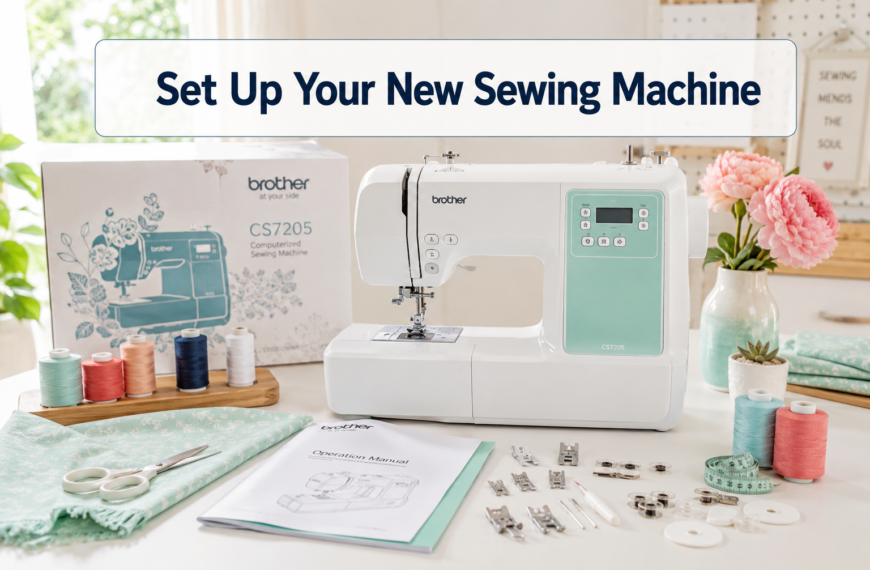
Starting to sew your own clothes requires an initial investment of $200-500 for essential equipment and supplies. This includes a basic sewing machine ($100-300), thread assortment ($20-30), scissors and cutting tools ($30-50), measuring tools ($15-20), pins and needles ($10-15), and your first fabric purchase ($30-100).
Essential startup costs breakdown:
- Sewing machine: $100-300 for a reliable beginner model with basic stitches
- Cutting tools: $30-50 for fabric scissors, rotary cutter, and cutting mat
- Measuring supplies: $15-20 for measuring tape, ruler, and marking tools
- Notions: $20-40 for thread, pins, needles, seam ripper, and bobbins
- First pattern and fabric: $30-100 depending on project complexity
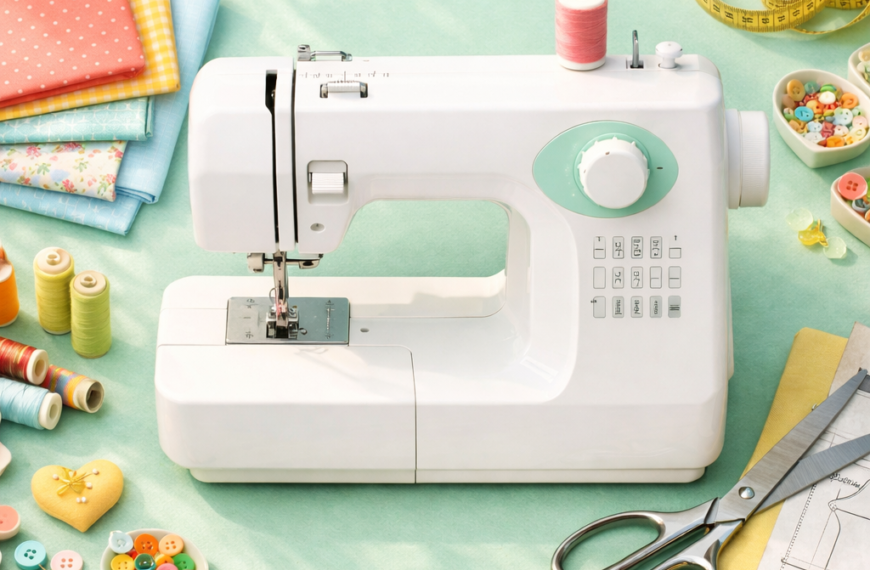
You don’t need an expensive machine to start. Many sewers successfully use machines in the $150-250 range for years. The key is choosing a model with adjustable stitch length, a reverse function, and the ability to handle different fabric weights. For guidance on selecting equipment that fits your budget, check out our sewing machine comparison guide.
Common beginner mistake: Buying too many specialty tools upfront. Start with basics and add specialty feet, rulers, and gadgets only when specific projects require them. This prevents wasting money on tools you may never use.

Sewing Magnetic Seam Guide Foot for Precise Straight Stitching This professional sewing tool ensures accurate and consistent straight seams for all sewing projects. As an essential part of your sewing supplies and sewing accessories, it perfectly guides fabric along the set seam line, greatly improving stitching precision and work efficiency.

Upgraded Multifunctional Design: Our magnetic seam guide features an innovative polygonal design that excels in edge binding, accurate positioning, edge roll prevention, and crease pressing. Say goodbye to the pitfalls of traditional sewing aids—this guide stays true, even when working with thick fabrics

【Ready to Start】 This sewing machine comes pre-threaded and is checked before packing to confirm normal stitching function. The small fabric piece inside is used only for factory stitch testing and does not mean the machine has been used.
Is It Actually Cheaper to Make Your Own Clothes or Buy Them?
Making your own clothes is cheaper than buying them only for specific garment types and circumstances. Mass-produced basics like t-shirts, jeans, and simple dresses are almost always cheaper to buy retail due to factory economies of scale. However, tailored pieces, formal wear, plus-size clothing, and items requiring custom fit typically cost 40-70% less to sew yourself.
When sewing saves money:
- Tailored blazers and structured jackets (retail $100-300 vs. homemade $40-120)
- Formal and wedding attire (retail $200-800 vs. homemade $60-250)
- Plus-size and petite alterations (retail limited options vs. custom fit)
- Home décor items like curtains and cushions (retail $50-200 vs. homemade $15-60)
- Children’s clothing that needs frequent sizing up
When buying is cheaper:
- Basic t-shirts and tank tops (retail $5-15 vs. homemade $8-20 including time)
- Simple jeans and casual pants (retail $20-50 vs. homemade $25-60)
- Fast fashion trend pieces you’ll wear once or twice
- Athletic wear requiring specialty fabrics and construction
The calculation changes dramatically when you factor in time. A beginner might spend 4-6 hours making a simple dress. If you value your time at even $10/hour, that’s $40-60 in labor on top of materials. For experienced sewers who work faster and enjoy the process, the time investment feels less like a cost.
What Are the Hidden Costs of Sewing Clothes at Home?
Hidden costs of sewing at home include pattern purchases ($8-20 each), specialty notions like zippers and buttons ($3-15 per garment), interfacing and stabilizers ($5-15 per project), thread in matching colors ($3-5 per spool), and electricity for running your machine and iron. These extras can add $20-40 to each project beyond fabric costs.
Often-overlooked expenses:
- Patterns: $8-20 per pattern, though reusable across sizes
- Interfacing: $5-15 per garment for structure in collars, cuffs, and waistbands
- Specialty notions: Zippers ($3-8), buttons ($2-10), elastic ($2-5)
- Pressing equipment: Iron and ironing board ($40-80 if you don’t own them)
- Seam finishes: Serger thread, bias tape, or seam sealant ($10-20)
- Mistakes and learning curve: Wasted fabric from errors ($10-30 per mistake)
Maintaining your equipment also costs money over time. Regular sewing machine maintenance includes cleaning supplies, oil, and occasional professional servicing. Budget $30-50 annually for upkeep if you sew regularly.
Edge case: If you need to buy specialized presser feet for specific techniques (walking foot for knits, zipper foot, buttonhole foot), each costs $15-40. These are one-time purchases but add up quickly when starting out.

Magnetic Seam Guide for Sewing Machine: Seam guide with a strong built-in magnetic backing, securely adheres to any metal sewing machine bed. No slipping or shifting—just steady guidance for consistent stitching every time

【Package includes】- 1 pcs curved nose tweezers, 1 pcs double-ended fluff brush, 1 pcs needle board screwdriver and 4 pcs screwdrivers, 7 pcs in total. Different styles of screwdrivers, a sufficient number of tools are sufficient for your daily cleaning and repair needs.

Sewing vs Buying Clothes: Cost Comparison Breakdown
A direct cost comparison shows that sewing a basic cotton dress costs $25-45 in materials and takes 4-6 hours, while a similar retail dress costs $30-60 and requires zero time investment. However, a tailored wool blazer costs $80-150 to sew versus $200-400 retail, making the time investment worthwhile for higher-value items.
| Garment Type | Retail Cost | DIY Materials | Time Required | Winner |
|---|---|---|---|---|
| Basic T-shirt | $5-15 | $8-12 | 2-3 hours | Buy |
| Simple Dress | $30-60 | $25-45 | 4-6 hours | Tie |
| Tailored Blazer | $200-400 | $80-150 | 8-12 hours | Sew |
| Curtain Panel | $40-100 | $15-35 | 1-2 hours | Sew |
| Wedding Dress | $800-2000 | $150-400 | 20-40 hours | Sew |
This comparison assumes mid-range fabric quality and doesn’t include the initial equipment investment. For beginner sewers, add 50-100% more time to these estimates while learning techniques.
Choose sewing if: You need custom fit, want specific fabric choices, enjoy the creative process, or are making high-value items where the savings justify the time investment.
Choose buying if: You need basic wardrobe staples quickly, don’t have time to sew, or are shopping during sales when retail prices drop below material costs.
How Much Fabric Do You Need to Make a Shirt and What Does It Cost?
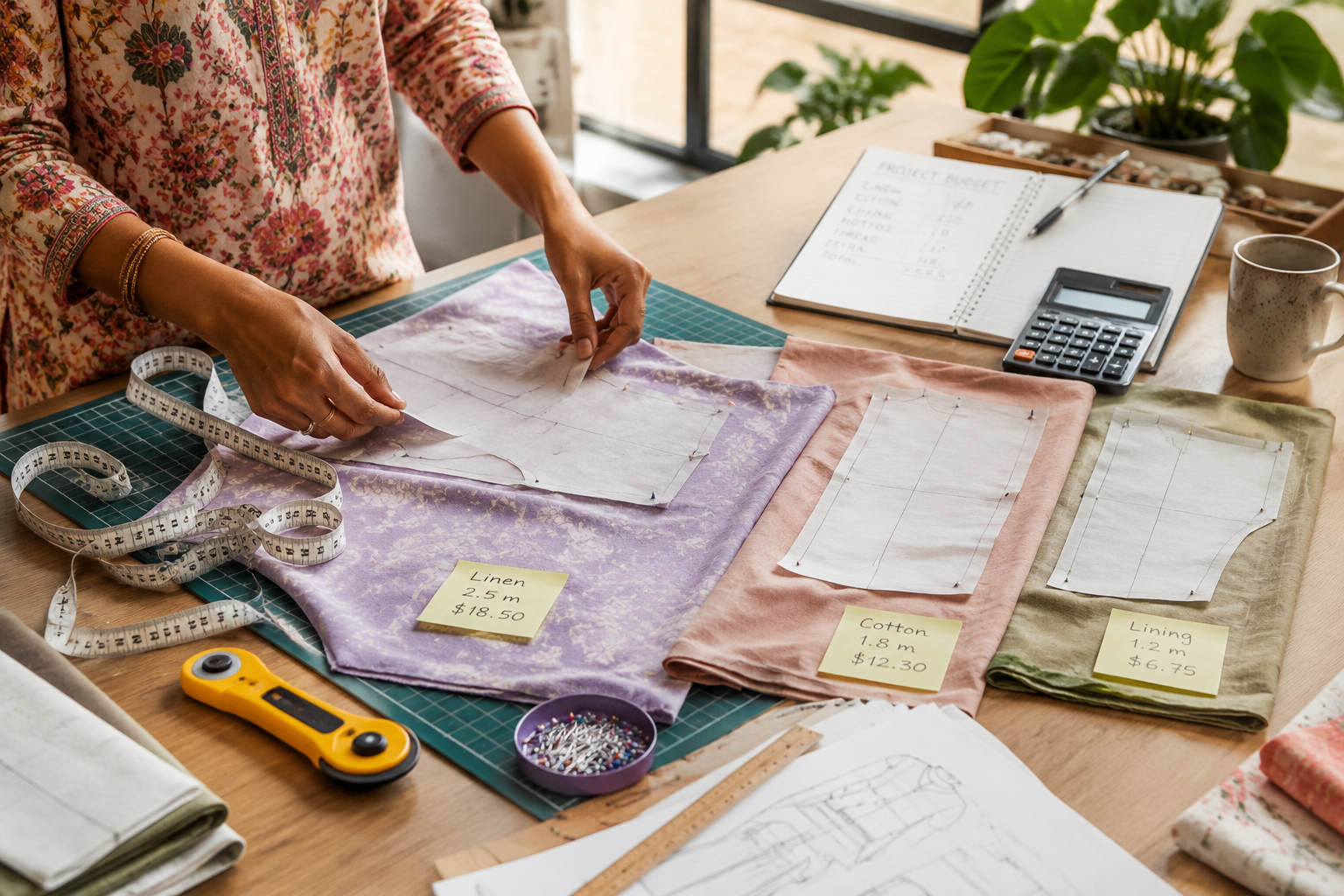
Making a basic adult shirt requires 1.5-2.5 yards of fabric depending on size and style, costing $12-50 based on fabric quality. Cotton quilting fabric runs $8-12 per yard, mid-range apparel fabric costs $12-20 per yard, and premium fabrics like silk or wool range from $20-40 per yard.
Fabric requirements by garment:
- Basic t-shirt: 1.5-2 yards = $12-24 (cotton jersey)
- Button-up shirt: 2-2.5 yards = $16-50 (cotton or linen)
- Simple dress: 2-4 yards = $20-80 (varies by length and fullness)
- Pants: 2-3 yards = $20-60 (denim or twill)
- Lined jacket: 3-4 yards main + 2-3 yards lining = $60-140
Fabric width matters. Most apparel fabric comes in 45-inch or 60-inch widths. Wider fabric requires less yardage, potentially saving $5-15 per project. Always buy an extra half-yard for mistakes, pattern matching, or pre-washing shrinkage.
Money-saving tip: Shop fabric sales, remnant bins, and online retailers. Many sewers report finding quality fabric for 40-60% off retail by timing purchases around holiday sales or buying from wholesale suppliers.
The quality gap is real. A $5/yard polyester from a discount store will look and feel cheaper than a $15/yard cotton from a specialty fabric shop. If you’re sewing to save money on basics, the cheap fabric makes sense. If you’re sewing for quality and longevity, invest in better materials.
When Does Sewing Your Own Clothes Save Money?
Sewing your own clothes saves money when you make items that would cost significantly more retail, need custom sizing, or plan to sew regularly enough to amortize equipment costs. The break-even point typically occurs after making 8-12 garments, assuming you already own a sewing machine and basic supplies.
Scenarios where sewing wins financially:
- Custom fit needs: Plus-size, petite, tall, or between-sizes shoppers save 50-70% by sewing
- Formal occasions: Bridesmaid dresses, prom gowns, and special event wear
- High-quality basics: Making a $15 fabric shirt that matches a $60 retail quality
- Home décor: Curtains, pillow covers, and table linens offer 60-80% savings
- Children’s clothing: Fast-growing kids benefit from quick, inexpensive homemade items
- Alterations: Hemming, taking in, or letting out existing clothes costs pennies
The math improves dramatically if you already own equipment. A sewer who inherited a machine or received one as a gift skips the $100-300 startup cost, making the first few projects immediately cost-effective.
Decision rule: If you’ll make fewer than 5-6 items per year, buying is probably cheaper when you factor in equipment costs and learning curve. If you’ll sew monthly or more, the per-item cost drops significantly and sewing becomes economical.
Is Sewing Worth It If You Only Make a Few Items Per Year?
Sewing only a few items per year is rarely cost-effective purely from a financial standpoint, but it may still be worthwhile for custom fit, creative satisfaction, or learning a valuable skill. Making 3-4 garments annually means your $300 equipment investment adds $75-100 to each item’s cost in the first year alone.
Break-even calculation example:
- Initial investment: $300 (machine and supplies)
- Annual projects: 4 garments
- Average material cost per garment: $35
- First-year cost per item: $35 + ($300 ÷ 4) = $110 per garment
By year three, if you maintain the same pace, the equipment cost per item drops to $35 + ($300 ÷ 12) = $60, which becomes competitive with retail for mid-range clothing.
Non-financial benefits that may justify occasional sewing:
- Perfect fit for hard-to-fit body types
- Exact fabric and style choices you can’t find retail
- Skill development for future projects or career
- Therapeutic creative outlet and stress relief
- Ability to repair and alter existing clothing
- Sustainable alternative to fast fashion
If you’re sewing primarily to save money and only plan occasional projects, focus on high-value items where the savings are substantial: formal wear, home décor, or alterations. Skip basic t-shirts and jeans that cost less retail.
Alternative approach: Join a sewing co-op or makerspace where you can access equipment without the full purchase cost, making occasional sewing more economical.
Common Mistakes Beginners Make That Waste Money When Sewing
Beginners waste the most money by buying cheap fabric that’s difficult to work with, purchasing too many specialty tools upfront, choosing overly complex first projects, and not pre-washing fabric before cutting. These mistakes can add $50-150 in wasted materials and unnecessary purchases to your first few projects.
Top money-wasting mistakes:
- Buying bargain fabric that’s impossible to sew: Slippery polyester and loosely-woven fabrics frustrate beginners and often end up in the trash
- Skipping pattern instructions: Cutting corners leads to mistakes requiring fabric replacement
- Not pre-washing fabric: Shrinkage after construction ruins finished garments
- Buying every tool in the store: Specialty gadgets you’ll never use clutter your space and drain your budget
- Choosing difficult first projects: Complex patterns with zippers, buttonholes, and linings overwhelm beginners
- Ignoring seam allowances: Cutting incorrectly wastes fabric and ruins fit
- Using dull scissors or needles: Poor tools damage fabric and create frustration
Money-saving strategy: Start with simple projects using forgiving fabrics like cotton quilting fabric or medium-weight cotton. These materials are affordable ($8-12/yard), easy to handle, and hide minor mistakes. Master basic techniques before investing in expensive fabrics or complex patterns.
Understanding proper sewing machine tension prevents wasted thread and fabric from poor stitch quality. Many beginners blame their fabric or skills when tension issues are the real culprit.
Edge case: Buying a used machine without testing it first. A non-functioning machine from a garage sale might seem like a $30 bargain but can cost $80-150 to repair, exceeding the cost of a new budget model.
What Type of Clothes Are Cheaper to Sew Than Buy?
Clothes that are cheaper to sew than buy include structured garments like blazers and coats, formal wear, home décor items, plus-size and petite clothing, and simple items like pajamas and lounge wear. These categories offer 40-70% savings because retail markups are high or custom sizing is expensive.
Best candidates for cost-effective sewing:
Structured garments:
- Blazers and suit jackets (save $100-250)
- Coats and outerwear (save $80-200)
- Tailored pants and skirts (save $40-100)
Special occasion wear:
- Wedding and bridesmaid dresses (save $300-1000)
- Prom and formal gowns (save $150-400)
- Costumes and cosplay (save $50-200)
Home and comfort:
- Curtains and drapes (save $60-150 per panel)
- Pillow covers and cushions (save $15-40 each)
- Pajamas and loungewear (save $20-50 per set)
- Tote bags and accessories (save $15-40 each)
Custom fit items:
- Plus-size clothing with limited retail options
- Petite or tall sizes requiring alterations
- Maternity wear with short usage period
The savings come from retail markup structures. A blazer that costs $80 in materials might retail for $250-400 because of the labor, overhead, and profit margins built into commercial production. When you provide the labor yourself, you capture that value.
For projects involving knit fabric sewing, the learning curve is steeper but the savings on activewear and comfortable basics can be substantial once you master the techniques.
What Clothes Are Not Worth Sewing Yourself?
Clothes not worth sewing yourself include basic t-shirts, simple jeans, athletic wear with technical fabrics, and fast-fashion trend pieces. These items benefit from factory economies of scale and specialized equipment that make retail versions cheaper than homemade alternatives.
Skip sewing these items:
Mass-produced basics:
- Plain t-shirts and tank tops (retail $5-15 vs. DIY $8-20)
- Basic jeans and casual pants (retail $20-50 vs. DIY $25-60)
- Simple leggings (retail $10-25 vs. DIY $15-30)
- Socks and underwear (specialized equipment required)
Technical garments:
- Athletic wear with moisture-wicking fabrics
- Swimwear requiring specialty elastics and construction
- Waterproof outerwear with sealed seams
- Bras and structured undergarments
Trend pieces:
- Fast-fashion items you’ll wear once or twice
- Highly embellished garments requiring hours of detail work
- Items with complex hardware like metal grommets or rivets
The time investment rarely justifies sewing basic t-shirts. A simple tee takes 2-3 hours for a beginner and still costs $8-12 in materials. You can buy a comparable shirt for $10 or less during sales, saving both time and money.
Exception: If you need a basic item in a specific fabric (organic cotton, particular print, or hard-to-find color), sewing might be worthwhile despite the cost. The value is in customization, not savings.
Athletic wear requires specialized machines (sergers or coverstitch machines) and technical fabrics that are expensive in small quantities. Unless you’re making multiple pieces, retail options from discount athletic brands offer better value.
Do You Need an Expensive Sewing Machine to Save Money?
You don’t need an expensive sewing machine to save money sewing clothes. A reliable machine in the $150-300 range handles most garment construction and home décor projects effectively. Spending more than $500 makes sense only if you’re sewing frequently, working with difficult fabrics, or need specialized features like embroidery or quilting functions.
Essential features for cost-effective sewing:
- Adjustable stitch length and width
- Reverse stitch for securing seams
- Multiple stitch options (straight, zigzag, stretch)
- Adjustable presser foot pressure
- Free arm for sleeves and cuffs
- Reliable tension system
These features appear on machines starting around $150-200. Higher-priced machines ($400-1000+) add convenience features like automatic needle threaders, more stitch options, and computerized controls, but they don’t fundamentally improve your ability to save money by sewing.
When to consider upgrading:
- You’re sewing multiple projects monthly and want speed/convenience
- You work with difficult fabrics like silk or heavy denim regularly
- You need specialized functions (embroidery, quilting, serging)
- Your current machine requires frequent repairs
Many experienced sewers successfully use vintage machines from the 1960s-1980s that cost $50-150 used. These mechanical machines are durable, repairable, and handle most projects beautifully. Learn more about whether old sewing machines are better than new ones.
Money-saving tip: Buy a basic machine new for warranty protection, then add a used serger later if you want professional-looking seam finishes. This approach costs $250-400 total versus $600-1000 for a high-end single machine.
Regular maintenance extends machine life significantly. Following proper sewing machine care practices means your initial investment serves you for decades, dramatically improving the cost-per-project ratio.
How Long Does It Take to Sew a Dress vs Buying One?
Sewing a simple dress takes 4-8 hours for a beginner and 2-4 hours for an experienced sewer, compared to 30-60 minutes to shop for and purchase a ready-made dress online or in stores. The time investment is the biggest hidden cost of sewing your own clothes and must be factored into any cost-benefit analysis.
Time breakdown for common projects:
- Simple t-shirt: 2-3 hours (beginner) / 1 hour (experienced)
- Basic dress: 4-8 hours (beginner) / 2-4 hours (experienced)
- Button-up shirt: 6-10 hours (beginner) / 3-5 hours (experienced)
- Pants with zipper: 5-8 hours (beginner) / 2-4 hours (experienced)
- Lined jacket: 10-15 hours (beginner) / 6-8 hours (experienced)
These estimates include pattern preparation, cutting, construction, and finishing. They don’t include shopping for fabric, pre-washing materials, or fixing mistakes.
Time value calculation example:
If you value your time at $15/hour and spend 6 hours making a dress with $30 in materials, your true cost is $30 + (6 × $15) = $120. A comparable retail dress might cost $50-80, making buying the more economical choice purely from a financial standpoint.
However, many sewers don’t view sewing time as lost productivity. If you enjoy the creative process, find it relaxing, or sew while watching TV, the time feels less like a cost and more like a hobby you’d pursue anyway.
Speed improves with practice: After making the same pattern 2-3 times, your speed increases by 40-60%. Experienced sewers who’ve made dozens of garments work much faster than beginners, improving the time-cost equation significantly.
Is Sewing Cheaper for Plus-Size or Petite Clothing Alterations?
Sewing is significantly cheaper for plus-size and petite clothing alterations, with DIY alterations costing $1-5 in materials versus $15-40 at a professional tailor. Making custom-fit garments from scratch saves even more, as plus-size and petite clothing often carries retail premiums of 20-50% over standard sizes.
Alteration cost comparison:
- Hemming pants: DIY $0-2 (thread only) vs. tailor $12-20
- Taking in side seams: DIY $0-1 vs. tailor $15-30
- Shortening sleeves: DIY $0-2 vs. tailor $10-18
- Adding darts for fit: DIY $0-1 vs. tailor $20-35
For people who need extensive alterations on most purchased clothing, learning basic sewing skills pays for itself within 5-10 alterations. A $200 investment in a basic machine and supplies breaks even after altering just 6-8 garments.
Plus-size sewing advantages:
- Retail options are limited and expensive
- Custom fit eliminates common fit issues
- Fabric costs are only slightly higher (extra 0.5-1 yard)
- Savings of $40-100 per garment compared to specialty retailers
Petite sewing advantages:
- Hemming everything gets expensive quickly
- Proportions are better when sewn to measure
- Children’s patterns can sometimes be adapted
- Savings of $20-60 per garment in alteration costs
Many sewers in these size ranges report that sewing becomes cost-effective much faster than for people who fit standard sizing. The combination of limited retail options, higher prices, and necessary alterations makes the time investment worthwhile.
Quick win: Start with simple alterations like hemming and taking in seams before attempting full garment construction. These skills provide immediate value and build confidence for more complex projects.
Alternatives to Sewing If You Want Custom Fit Clothes on a Budget
Alternatives to sewing for custom fit clothes on a budget include buying secondhand and altering, using made-to-measure online services, learning basic hand-sewing for alterations, renting special occasion wear, and shopping brands that specialize in your size range. These options provide better fit without the time investment of full garment construction.
Cost-effective alternatives:
Secondhand shopping plus alterations:
- Buy thrift store items in your preferred style ($5-20)
- Pay for professional alterations only on perfect pieces ($15-40)
- Total cost: $20-60 for custom-fit quality garments
Made-to-measure online services:
- Companies like eShakti, Sumissura, or Indochino offer custom sizing
- Prices range from $60-200 depending on garment type
- More expensive than off-the-rack but less than custom tailoring
Basic hand-sewing skills:
- Learn hemming, button replacement, and simple repairs
- No machine required, minimal tool investment ($10-20)
- Extends life of existing wardrobe and improves fit
Clothing rental services:
- Rent formal wear and special occasion pieces ($30-100 per event)
- Avoid buying expensive items worn once or twice
- Many services offer size-inclusive options
Size-specialist brands:
- Research brands known for your body type
- Better initial fit reduces alteration needs
- Often comparable in price to mainstream brands
For people who want custom fit but don’t enjoy sewing or lack time, combining thrift shopping with strategic alterations offers the best value. Buy quality pieces secondhand for $10-30, then invest $15-25 in professional alterations for items you’ll wear frequently.
Decision rule: Choose alterations over sewing from scratch if you need fewer than 5-6 custom pieces per year. Choose sewing if you need ongoing custom fit for most of your wardrobe or enjoy the creative process.
If you’re experiencing issues with your current machine, troubleshooting guides for sewing machine jamming or skipping stitches can help you avoid costly repairs or replacements.
Frequently Asked Questions
Is it really cheaper to make your own clothes?
It depends on what you’re making. Sewing saves money on tailored items, formal wear, home décor, and custom-fit clothing, but basic items like t-shirts and jeans are usually cheaper to buy retail due to mass production economies of scale.
How much money can you save by sewing your own clothes?
Experienced sewers save $500-2000 annually by making their own clothes, assuming they sew 10-20 garments per year and focus on items with high retail markups like dresses, jackets, and formal wear. Beginners typically break even in year one after equipment costs.
What is the cheapest thing to sew?
The cheapest items to sew are simple home décor pieces like pillow covers ($3-8 in materials), cloth napkins ($1-2 each), and basic tote bags ($5-10). These projects require minimal fabric, take 30-90 minutes, and offer 60-80% savings versus retail.
Is sewing an expensive hobby?
Sewing can be expensive or budget-friendly depending on your approach. Minimal startup costs are $200-300 for basic equipment, and ongoing costs range from $20-100 per project based on fabric choices. It’s less expensive than hobbies like photography or woodworking but more than reading or hiking.
How much does fabric cost to make a shirt?
Fabric for a basic shirt costs $12-30 depending on quality and fiber content. Cotton quilting fabric runs $8-12 per yard (need 1.5-2 yards), while apparel-quality cotton or linen costs $12-20 per yard. Add $5-10 for thread, buttons, and interfacing.
Can you make money sewing clothes at home?
You can make money sewing at home, but profit margins are slim when competing with mass production. Successful home sewing businesses focus on alterations ($15-40 per service), custom formal wear ($200-800 per piece), or niche markets like historical costumes or plus-size clothing where retail options are limited.
What sewing projects save the most money?
Home décor projects save the most money, with curtains offering $60-150 savings per panel, pillow covers saving $15-40 each, and table linens saving $30-80 per set. For clothing, tailored blazers ($100-250 savings) and formal dresses ($150-600 savings) provide the best return on time invested.
Is it worth buying an expensive sewing machine?
An expensive sewing machine ($500+) is worth it only if you sew frequently (weekly or more), work with difficult fabrics, or need specialized features. For occasional sewers making 5-10 projects yearly, a $150-300 machine provides everything needed for cost-effective sewing.
How long does it take to learn to sew clothes?
Learning basic sewing skills takes 3-6 months of regular practice (2-4 hours weekly). You can complete simple projects like pillows or basic skirts within the first month. Mastering fitted garments with zippers, buttonholes, and linings typically requires 6-12 months of consistent practice.
What fabrics are best for beginner sewers on a budget?
Cotton quilting fabric is ideal for beginners, costing $8-12 per yard, easy to handle, and forgiving of mistakes. Medium-weight cotton, linen blends, and stable knits also work well. Avoid slippery polyester, stretchy fabrics, and anything labeled “dry clean only” until you gain experience.
Do I need a serger to sew my own clothes?
You don’t need a serger to sew clothes. A regular sewing machine with a zigzag stitch handles seam finishing adequately for most projects. Sergers ($200-600) add professional-looking seams and speed but aren’t essential for cost-effective home sewing.
How much does it cost to sew a dress?
Sewing a simple dress costs $25-60 in materials (fabric, thread, zipper, interfacing) and takes 4-8 hours for beginners or 2-4 hours for experienced sewers. A lined or more complex dress costs $40-100 in materials and requires 8-15 hours of work.
Conclusion
Is sewing cheaper than buying clothes? The answer isn’t a simple yes or no. For basic wardrobe staples like t-shirts and jeans, retail shopping wins on both cost and time. But for tailored pieces, formal wear, home décor, and custom-fit clothing, sewing offers substantial savings of 40-70% once you’ve covered initial equipment costs.
The break-even point typically arrives after making 8-12 garments, assuming you invest $200-500 in startup equipment. After that, each project becomes genuinely cost-effective, especially if you focus on high-value items where retail markups are significant.
Your next steps depend on your goals:
If you’re sewing primarily to save money, start with alterations and home décor projects that offer immediate returns. Master hemming, taking in seams, and making pillow covers before investing time in complex garment construction. Focus on items where the savings justify the time investment.
If you’re sewing for custom fit, creative satisfaction, or sustainable fashion, the financial equation matters less. The value lies in perfect fit, fabric choice, and skill development rather than pure dollar savings.
Action steps to get started:
- Calculate your true costs including time, equipment, and materials
- Start with simple projects using affordable, forgiving fabrics
- Learn basic techniques through free online tutorials before buying patterns
- Join sewing communities for fabric swap opportunities and money-saving tips
- Track your actual costs and time for the first 5-10 projects to assess your personal break-even point
Remember that sewing skills compound over time. Your tenth project will be faster, better, and more cost-effective than your first. The initial investment in equipment and learning pays dividends for years as you build a wardrobe that fits perfectly and reflects your personal style.
Whether sewing saves you money ultimately depends on what you make, how often you sew, and whether you value the creative process itself. For many sewers, the real savings aren’t just financial but include better fit, higher quality, and the satisfaction of wearing something you made yourself.