
Quick Answer: Basic sewing machine repairs typically cost between $75 and $150 for common issues like tension problems or bobbin case replacement, while major repairs involving motors or computerized components can range from $150 to $400. Most repair shops charge $50-$100 per hour for labor, and a standard tune-up or cleaning service runs $60-$100.
Key Takeaways
- Average repair costs range from $75-$150 for minor fixes and $150-$400 for major mechanical or electronic repairs
- Hourly labor rates at professional repair shops typically fall between $50-$100, with most simple repairs taking 1-2 hours
- Tune-ups and cleaning services cost $60-$100 and can prevent many expensive repairs down the road
- Motor replacement is one of the pricier repairs at $150-$300, depending on machine type and motor availability
- Repair vs. replace decision depends on machine age, brand quality, and whether repair costs exceed 50% of replacement value
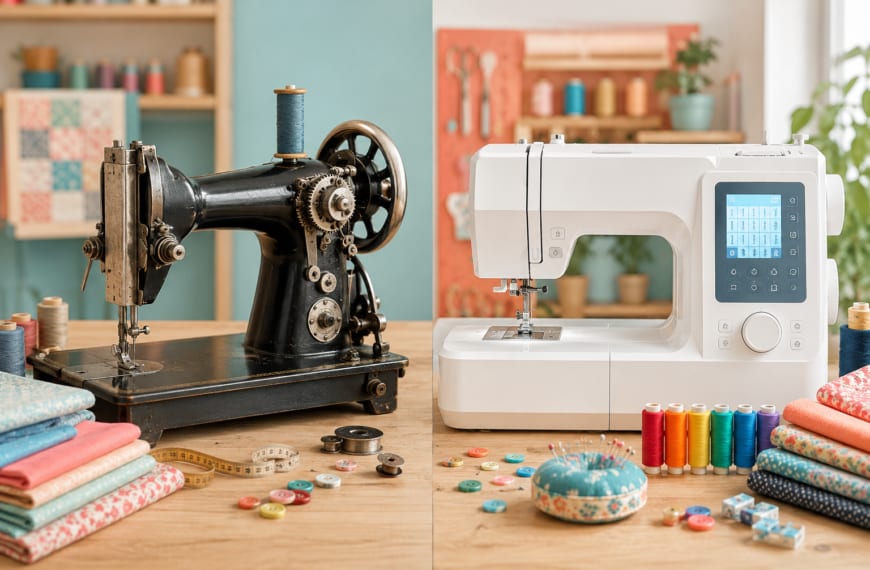
- Vintage machines may cost more to repair due to parts scarcity, but high-quality vintage models are often worth the investment
- DIY repairs can save 50-70% on costs for mechanically-inclined sewists, but risk voiding warranties on newer machines
- Warranty coverage varies widely, always check before paying for repairs on machines less than 5 years old
What Is the Average Cost to Repair a Sewing Machine?
The average sewing machine repair costs between $100 and $200 for most common problems, though prices vary significantly based on the issue’s complexity, your machine’s brand, and your location. Simple fixes like replacing a broken needle bar or adjusting timing might cost $75-$125, while complex electronic board replacements can reach $300-$400.
Here’s what influences the final bill:
- Type of problem: Mechanical issues (broken gears, timing problems) versus electronic failures (computerized display, automatic features)
- Parts availability: Common brands like Singer, Brother, and Janome have readily available parts; specialty or discontinued models require harder-to-find components
- Labor time required: A bobbin case replacement takes 30 minutes; a full timing adjustment might need 2-3 hours
- Geographic location: Urban repair shops in high-cost-of-living areas charge more than rural technicians
- Machine age and condition: Older machines with multiple issues may need comprehensive service beyond the primary repair
Common mistake: Many sewists assume all repairs cost the same. A $75 diagnostic fee doesn’t mean your total repair will be $75, that’s just to identify the problem. Always ask for a complete estimate before authorizing work.
Choose professional repair if your machine is under warranty, has sentimental value, is a high-end model (Bernina, Pfaff, Juki), or the problem involves timing or electronic components.
How Much Does It Cost to Fix a Broken Sewing Machine Motor?
Motor replacement or repair typically costs $150-$300, making it one of the more expensive sewing machine repairs. The final price depends on whether the motor can be repaired (bearing replacement, brush replacement) or needs complete replacement, plus the motor type, standard AC motors cost less than computerized servo motors.
Motor repair cost breakdown:
- Motor bearing replacement: $100-$150 (parts $20-$40, labor 1-2 hours)
- Carbon brush replacement: $75-$125 (parts $10-$25, labor 1 hour)
- Complete motor replacement (mechanical machines): $150-$250
- Computerized motor replacement: $200-$350
- Vintage motor rebuild: $175-$300 (if specialist available)
Signs your motor needs repair include burning smells, unusual grinding noises, inconsistent speed, or the machine not starting at all despite power connection. Sometimes what seems like a motor problem is actually a seized gear or belt issue, which costs less to fix.
Decision rule: If your machine is worth less than $300 and needs a $250 motor replacement, consider putting that money toward a new machine instead. But if you own a $1,000+ machine or a beloved vintage model, motor repair makes financial sense.
Sewing Machine Repair Cost vs. Buying a New Machine
Repair makes financial sense when the cost is less than 50% of your machine’s current replacement value and the machine is less than 10 years old (or a quality vintage model). A $150 repair on a $600 machine is worthwhile; a $250 repair on a $200 machine isn’t.
When to repair:
- High-quality brands (Bernina, Pfaff, Juki, Viking) worth $800+
- Vintage all-metal machines in good overall condition
- Machines with sentimental value (inherited, gift)
- Repair cost is under 40% of replacement value
- Only one or two components need fixing
- Machine is under warranty (repair may be free)
When to replace:
- Repair costs exceed 60% of a comparable new machine
- Multiple systems are failing simultaneously
- Machine is a budget model ($150-$300 range when new)
- Parts are no longer manufactured or available
- You’ve outgrown the machine’s capabilities
- Repair shop says “it’s not worth fixing”
Real-world example: A Brother CS6000i costs about $180 new in 2026. If it needs a $150 motor replacement, you’re better off buying new and gaining warranty coverage. But a Bernina 770 QE worth $4,000 is absolutely worth a $300 computerized board repair.
The break-even calculation changes for vintage machines. A 1960s Singer Featherweight worth $400-$600 to collectors justifies a $200 restoration even though you could buy a basic new machine for less, the vintage machine’s build quality and resale value make it worthwhile.

PRECISE LUBRICATION: Ensure smooth and precise lubrication with our high-quality oil bottle featuring a convenient taper spout, making it easy to reach those intricate machine parts for optimal performance.

4pcs Bobbin Winder Rubber Tire Ring # 15287A for SINGER 15-91, 66-16, 99K, 128-3
Is It Worth Repairing an Old Sewing Machine or Should I Replace It?
An old sewing machine is worth repairing if it’s a quality all-metal model (pre-1980s Singer, Kenmore, or other industrial-grade brands), has sentimental value, or would cost more to replace with equivalent quality. Plastic-bodied machines from the 1990s-2000s are usually not worth major repairs.
Repair-worthy vintage machines:
- Pre-1970s all-metal models: Singer 15, 66, 99, 201, 301, 401, 403, 500 series
- Industrial machines: Juki, Consew, Singer industrial models
- High-end vintage: Bernina, Pfaff, Elna from any era
- Specialty machines: Vintage zigzag, buttonhole, or embroidery machines
These machines were built to last decades and often sew better than modern budget models. Parts are still available through specialty suppliers, and many repair techs love working on them.
Not worth major repairs:
- Plastic-bodied machines from 1985-2010
- Budget brands that sold for under $200 when new
- Machines with proprietary electronic parts no longer manufactured
- Models with cracked plastic frames or housings
Age assessment rule: If your machine is 15-30 years old and wasn’t high-end when new, replacement usually makes more sense. If it’s 40+ years old and all-metal, it’s probably worth saving. The 30-40 year range is the “plastic era” where quality varied dramatically.
One exception: if you’re emotionally attached to a machine (it was your grandmother’s, you learned to sew on it), repair costs up to $300 can be justified for sentimental reasons even if the math doesn’t work purely financially.

2 pcs new metal "SCREW-IN" style spool pins.

You will get 2pcs spool pins, 4pcs felt pads and 1pcs bobbin tire.

Package comes with 2 pieces sewing machine bobbin cases, 20 pieces metal sewing machine bobbins, enough quantity to meet your long time use and replacements, you can take them as backup or share with others
How Much Do Sewing Machine Repair Shops Charge Per Hour?
Most sewing machine repair shops charge between $50 and $100 per hour for labor, with the national average around $65-$75 per hour in 2026. Urban areas and specialty shops (vintage-only, industrial machine specialists) typically charge at the higher end, while small-town repair techs may charge $45-$60 per hour.
Typical hourly rates by location and shop type:
- Small town/rural shops: $45-$65/hour
- Suburban repair shops: $60-$80/hour
- Urban/metro areas: $75-$100/hour
- Mobile repair services: $80-$120/hour (includes travel)
- Vintage specialists: $70-$100/hour
- Authorized brand service centers: $75-$95/hour
Many shops charge a diagnostic fee of $40-$75 that’s either applied to the repair cost or charged separately if you decline the repair. Always ask upfront whether the diagnostic fee is included in the final bill.
Common repair time estimates:
- Basic cleaning and tune-up: 1-1.5 hours
- Tension adjustment: 0.5-1 hour
- Timing adjustment: 1.5-3 hours
- Belt replacement: 0.5-1 hour
- Motor replacement: 2-3 hours
- Feed dog repair: 1-2 hours
Money-saving tip: Call multiple shops and ask for estimates. Prices can vary by $50-$100 for the same repair. Also ask if they offer flat-rate pricing for common repairs, some shops charge $85 for any tune-up regardless of time spent, which can save money on complex adjustments.

Packing list: The sewing machine tool kit includes 1 curved nose tweezers, 1 double headed lint brush, 1 needle board screwdrivers, 4 flat head cross head screwdrivers, 2 seam rippers, 12 silicone brushes, 21 pieces in total;For daily cleaning and maintenance of sewing machines.

Packing list: The sewing machine tool kit includes 1 curved nose tweezers, 1 double headed lint brush, 2 needle board screwdrivers, 4 flat head cross head screwdrivers, 2 seam rippers, 4 silicone brushes, 14 pieces in total; Different styles of screwdrivers and brushes, a sufficient number of tools are enough to meet your daily needs for cleaning and repairing your sewing machine

Complete 7-Piece Sewing Maintenance Tool Set: Simplify your sewing routine with the SINGER 7pc Sewing Maintenance Tool Set. This sewing machine repair kit features a Universal Machine Needle Inserter, Angled-Edge Lint Brush, Machine Needle Threader, 3 purpose-built Sewing Machine Screwdrivers, and a Clear Mesh Zipper Storage Pouch. Together, these tools form a reliable sewing machine cleaning kit that helps maintain your machine's optimal performance for years of dependable use.
What Are the Most Common Sewing Machine Problems That Need Repair?
The most common sewing machine problems requiring professional repair are timing issues, motor problems, tension assembly failures, and feed dog malfunctions, typically costing $75-$200 to fix. Many sewists also seek repair for broken needle bars, damaged bobbin cases, and computerized display failures.
Top 10 repair issues and typical costs:
- Timing problems ($100-$200): Upper thread and bobbin thread not catching properly; requires precise adjustment
- Motor issues ($150-$300): Won’t start, runs inconsistently, or makes grinding noises
- Tension assembly failure ($75-$150): Broken tension discs or springs causing uneven stitches
- Feed dog problems ($90-$175): Dogs won’t rise, move unevenly, or are damaged
- Bobbin case damage ($60-$120): Worn or bent bobbin case causing thread bunching
- Needle bar issues ($85-$150): Bent or broken needle bar preventing proper needle movement
- Belt replacement ($65-$110): Worn or broken drive belt causing power loss
- Computerized board failure ($200-$400): Display issues, button malfunctions on electronic machines
- Presser foot mechanism ($70-$130): Broken presser bar or spring
- Gear damage ($125-$250): Stripped or broken gears causing mechanical failure
Prevention tip: About 40% of these repairs could be prevented with annual professional cleaning and maintenance ($60-$100). Regular cleaning removes lint buildup that causes many mechanical failures, and technicians catch small problems before they become expensive repairs.
DIY vs. professional decision: Tension adjustments, belt replacements, and basic cleaning can often be done at home with YouTube tutorials and basic tools. Timing adjustments, motor work, and computerized repairs should always go to professionals, incorrect timing adjustment can damage your machine further.

How Much Does It Cost to Replace a Sewing Machine Timing Belt?
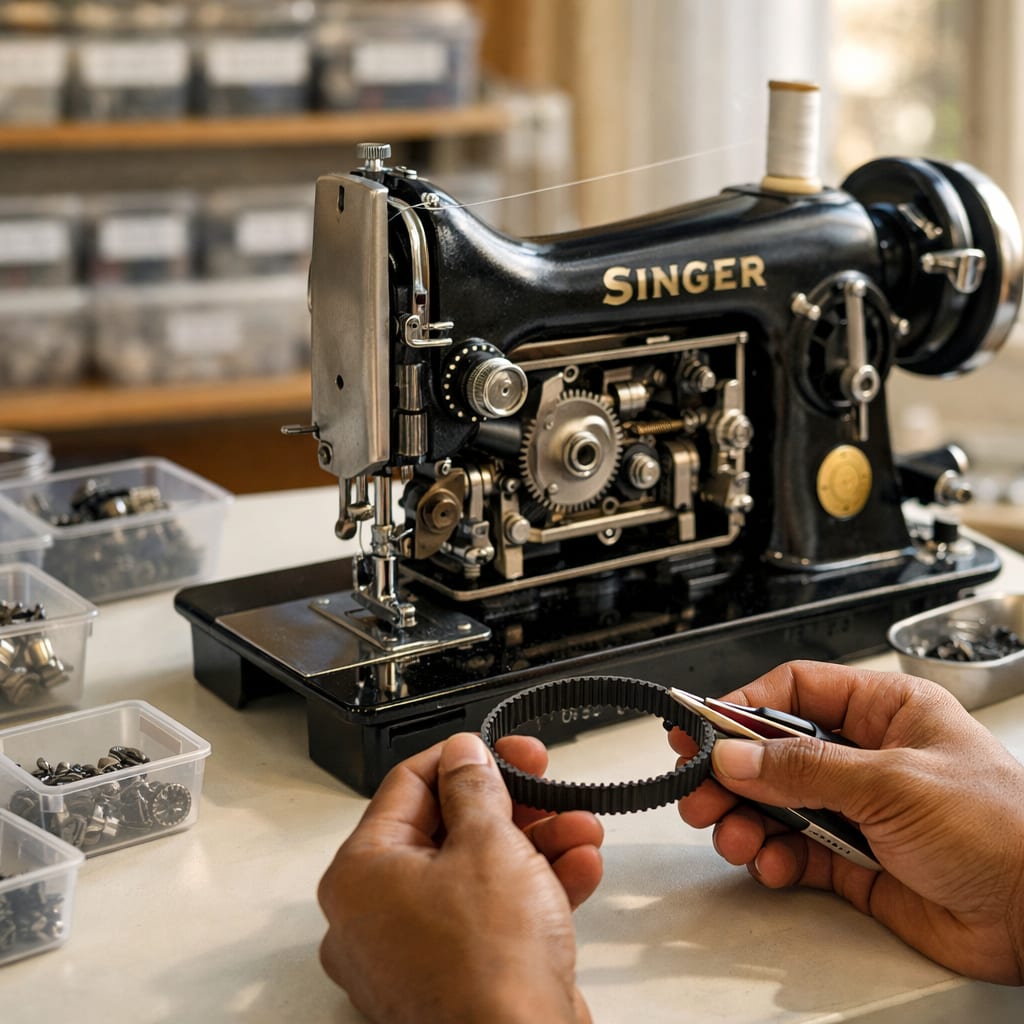
Timing belt replacement typically costs $65-$110 at a repair shop, including the belt (usually $15-$30) and 30-60 minutes of labor. This is one of the more affordable repairs and can dramatically improve machine performance if the old belt was slipping or worn.
Belt replacement cost factors:
- Belt type: V-belts ($10-$20) vs. specialty belts ($25-$40)
- Machine accessibility: Easy-access models take 30 minutes; machines requiring extensive disassembly take 1+ hours
- Additional issues: If belt wore due to motor misalignment, expect additional adjustment costs
- Machine age: Vintage machines may need custom-sized belts that cost more
Signs you need belt replacement include the motor running but the needle not moving, squealing noises during operation, burning rubber smell, or visible cracks and fraying on the belt itself.
DIY option: Belt replacement is one of the easiest repairs for mechanically-inclined sewists. Belts cost $10-$30 online, and most machines have accessible belt compartments. YouTube has tutorials for nearly every machine model. If you’re comfortable with basic tools, you can save $40-$70 in labor costs.
Choose professional replacement if you’re unsure about your machine’s disassembly, can’t find the right belt size, or notice other issues like motor wobble or pulley damage that might indicate deeper problems.
Can I Repair My Sewing Machine Myself to Save Money?
DIY sewing machine repair can save 50-70% on costs for basic issues like cleaning, belt replacement, bobbin case adjustment, and simple tension fixes, but requires mechanical aptitude, proper tools, and willingness to research your specific model. Attempting complex repairs like timing adjustment or motor work without experience can cause additional damage costing more to fix professionally.
Good DIY repairs for beginners:
- Deep cleaning and oiling (saves $60-$100): Removing lint, cleaning feed dogs, oiling moving parts
- Belt replacement (saves $40-$70): Straightforward on most models with basic tools
- Bobbin case replacement (saves $50-$80): Simple swap if you order the correct part
- Presser foot issues (saves $40-$60): Often just needs cleaning or spring adjustment
- Basic tension adjustment (saves $30-$50): Following manufacturer’s manual guidelines
Leave to professionals:
- Timing adjustment: Extremely precise; incorrect timing damages hooks and needles
- Motor repair/replacement: Electrical work requires expertise
- Computerized board issues: Diagnostic equipment needed
- Gear replacement: Requires complete disassembly and precise reassembly
- Hook assembly work: Timing-related and easy to damage
Tools you’ll need for basic DIY repairs: Small screwdriver set (Phillips and flathead), tweezers, small brushes, sewing machine oil, lint-free cloths, good lighting, and your machine’s service manual (often available free online as PDFs).
Resources for DIY repair:
- YouTube channels dedicated to your machine brand
- Sewing machine forums (PatternReview, Quilt Board)
- Service manuals (search “[your model] service manual PDF”)
- Parts suppliers with installation guides (SewingPartOnline, FixYourOwnMachine)
Warning: DIY repairs on machines still under warranty will void that warranty. If your machine is less than 5 years old, check warranty status before opening it up.
Why Is My Sewing Machine Repair Estimate So Expensive?
Repair estimates seem expensive because they reflect specialized labor (trained technicians are scarce), diagnostic time to identify root causes, parts markup (typically 30-50% over wholesale), and the time-intensive nature of working with precision mechanical and electronic systems. A repair that takes 2 hours at $75/hour plus $40 in parts quickly reaches $190.
What you’re actually paying for:
- Diagnostic expertise ($40-$75): Identifying the real problem, not just symptoms
- Specialized knowledge: Technicians trained on multiple brands and decades of models
- Parts sourcing: Time spent finding correct parts for your specific model
- Precision work: Timing adjustments require accuracy within fractions of millimeters
- Testing and quality assurance: Ensuring the repair actually solved the problem
- Overhead costs: Shop rent, tools, parts inventory, insurance
Why estimates vary so much: A shop quoting $250 for a repair might include a 90-day warranty, thorough cleaning, and tension adjustment, while a $150 quote might be parts-and-labor only. Always ask what’s included.
Red flags for overpricing:
- Diagnostic fees over $100 (unless for complex computerized machines)
- Parts costs more than double the retail price you can find online
- Labor estimates exceeding 4 hours for common repairs
- Pressure to authorize work immediately without a written estimate
- Vague descriptions like “needs work” without specific problem identification
Get a second opinion if the estimate exceeds 50% of your machine’s value, the shop can’t clearly explain what’s wrong, or you’re quoted more than $300 for a non-computerized machine repair.
Negotiation tip: If you’re quoted $200 and decide to buy a new machine instead, ask if the shop sells refurbished machines. Many repair shops refurbish trade-ins and sell them for $150-$400, you might get a better machine than yours for less than the repair cost.
How Much Does Singer Sewing Machine Repair Cost Compared to Brother?
Singer and Brother repair costs are generally comparable for similar machine types, ranging $75-$200 for common repairs, though vintage Singer models (pre-1980) may cost slightly more due to parts scarcity while modern Brother machines benefit from widely available, inexpensive parts. The brand matters less than whether your machine is mechanical, electronic, or computerized.
Brand-specific cost factors:
Singer:
- Vintage all-metal models (pre-1980): Parts available but may cost 20-30% more; labor-intensive but repair-worthy
- 1980s-2000s plastic models: Parts increasingly scarce; often not worth major repairs
- Modern Singer (2010+): Parts readily available; repair costs similar to Brother
- Typical repair range: $75-$250
Brother:
- Excellent parts availability across all eras
- Lower parts costs (often 10-20% less than Singer equivalents)
- Computerized models have good electronic parts support
- Typical repair range: $70-$225
Other brand comparisons:
- Bernina, Pfaff: Higher parts costs ($50-$100 more per repair) but machines worth the investment
- Janome: Similar to Brother, good parts availability, moderate costs
- Viking/Husqvarna: Higher-end repairs, parts cost 30-40% more
- Juki: Industrial models have excellent parts support; repair costs similar to Singer
The real cost driver isn’t brand but machine type. A mechanical Singer and mechanical Brother with the same problem cost nearly the same to fix. A computerized Brother with board failure costs more than a mechanical Singer with timing issues, regardless of brand reputation.
Choose repair based on machine quality, not brand loyalty. A $150 repair on a well-built vintage Singer makes sense; the same repair on a $200 modern Singer doesn’t.
What Repairs Are Covered Under Sewing Machine Warranty?
Most sewing machine warranties cover manufacturer defects in materials and workmanship for 1-5 years on mechanical parts and 1-2 years on electronic components, but exclude damage from misuse, lack of maintenance, unauthorized repairs, or normal wear items like needles, belts, and light bulbs. Always read your specific warranty document, as coverage varies significantly by brand and price point.
Typical warranty coverage:
Budget machines ($150-$400):
- 1-2 years limited warranty on defects
- 90 days on electronic components
- Excludes labor costs (you pay shipping and technician fees)
Mid-range machines ($400-$1,200):
- 2-5 years on mechanical components
- 1-2 years on electronics
- May include one free annual service
- Some brands cover labor at authorized service centers
High-end machines ($1,200+):
- 5-10 years on mechanical parts
- 2-5 years on electronics
- Often includes annual maintenance
- Full labor coverage at authorized centers
What’s typically covered:
- Motor failures due to manufacturing defects
- Gear or shaft breakage from material flaws
- Electronic board failures (not caused by power surges)
- Hook assembly defects
- Structural frame issues
What’s NOT covered:
- Damage from improper threading or tension
- Broken needles or needle bars from user error
- Lint buildup and lack of maintenance
- Damage from unauthorized repairs or modifications
- Cosmetic issues (scratches, worn paint)
- Normal wear items (belts, bulbs, feet)
- Damage from power surges (unless you have surge protection documentation)
Important: Many warranties require proof of annual professional maintenance to remain valid. Keep all service receipts. Also, using non-brand accessories (generic feet, bobbins) can void warranties on some high-end machines.
Before paying for any repair, call the manufacturer’s customer service with your model and serial number to verify warranty status. Some brands offer extended coverage you might not know about.
How Do I Know If My Sewing Machine Is Too Old to Repair?
A sewing machine is too old to repair when replacement parts are no longer manufactured or available, the cost of repair exceeds the machine’s functional and sentimental value, or the frame and major structural components show irreparable damage like cracked plastic housings or corroded metal. Age alone doesn’t determine repairability, a 70-year-old all-metal Singer may be more repairable than a 15-year-old plastic machine.
Signs your machine is too old to repair:
- Parts obsolescence: Manufacturer and aftermarket suppliers no longer stock parts for your model
- Plastic deterioration: Frame, gears, or cams are cracked or brittle (common in 1980s-2000s machines)
- Multiple simultaneous failures: When 3+ major systems fail at once, repair costs compound
- Proprietary electronics: Computerized boards no longer manufactured and no compatible replacements exist
- Repair estimate exceeds replacement: A $300 repair on a machine you could replace with better features for $350
- Technician recommendation: When an experienced tech says “it’s not worth it,” listen
Age-based guidelines:
- Pre-1970 all-metal machines: Almost always worth repairing if structurally sound
- 1970s-1980s machines: Depends on brand quality; high-end worth it, budget models usually not
- 1990s-2000s machines: Most not worth major repairs unless high-end brands
- 2010+ machines: Usually repairable if parts available; check warranty first
Exceptions to age rules:
- Sentimental value: Your grandmother’s machine may be worth a $250 repair even if logic says no
- Specialty machines: Vintage buttonholers, rare zigzag models, or industrial machines worth preserving
- Collector value: Some vintage models (Singer Featherweight, certain art deco models) have resale value justifying repair
Get a second opinion if one shop says your machine is unrepairable. Some techs specialize in vintage machines and have parts sources others don’t. Online forums can also help identify parts availability for obscure models.
What Should I Expect to Pay for Sewing Machine Tune-Up and Cleaning?
A professional sewing machine tune-up and cleaning typically costs $60-$100 and includes deep cleaning of lint and debris, oiling all moving parts, tension adjustment, timing check, and testing all functions. This preventive maintenance service takes 1-1.5 hours and can prevent 60-70% of common repair issues when done annually.
What’s included in a standard tune-up:
- Complete disassembly and cleaning: Removing covers, cleaning feed dogs, hook assembly, and all accessible moving parts
- Lubrication: Oiling all points specified in service manual
- Tension adjustment: Setting upper and bobbin tension for balanced stitches
- Timing verification: Checking that hook and needle timing is correct
- Belt inspection: Checking for wear and proper tension
- Function testing: Testing all stitch types, buttonholes, and special features
- Minor adjustments: Presser foot pressure, stitch length calibration
Tune-up pricing by machine type:
- Basic mechanical machines: $60-$75
- Mechanical with more features: $75-$90
- Electronic machines: $85-$110
- Computerized/embroidery machines: $100-$150
- Industrial machines: $90-$125
When to get a tune-up:
- Annually if you sew regularly (weekly or more)
- Every 2 years for occasional sewists
- Before starting a major project (wedding dress, quilt)
- After extended storage (6+ months unused)
- When you notice performance changes (skipped stitches, tension issues)
DIY vs. professional cleaning: You can do basic cleaning (removing lint, oiling accessible points) monthly yourself, but annual professional service reaches areas you can’t access and catches developing problems early. Think of it like changing your own oil vs. getting a full car inspection.
Money-saving tip: Many shops offer tune-up discounts in slow seasons (January-March). Some offer package deals, buy a tune-up and get 10-20% off any needed repairs discovered during service.
Are Vintage Sewing Machines More Expensive to Repair Than Modern Ones?
Vintage sewing machines (pre-1980) often cost 10-30% more to repair than modern mechanical machines due to parts scarcity and longer diagnostic time, but their all-metal construction means they need repairs less frequently and are almost always worth fixing. Modern computerized machines may have cheaper mechanical parts but expensive electronic components that can exceed vintage repair costs.
Vintage machine repair cost factors:
Higher costs:
- Parts availability: May require specialty suppliers or custom fabrication ($20-$50 extra per part)
- Diagnostic time: Technicians need more time to understand older mechanisms
- Specialty knowledge: Fewer techs work on vintage machines; those who do may charge premium rates
- Cleaning intensity: Decades of old oil and lint require more thorough cleaning
Lower costs:
- Simpler mechanisms: No electronics to fail
- Durability: All-metal parts last longer between repairs
- Fewer systems: No computerized boards, displays, or sensors to malfunction
- Repairability: Designed to be serviced, not replaced
Real-world comparison:
- Vintage Singer 401 timing adjustment: $125-$175 (parts available, but labor-intensive)
- Modern Brother CS6000i timing adjustment: $100-$150 (easier access, common repair)
- Vintage Singer 401 motor replacement: $175-$250 (motor may need rebuilding)
- Brother CS6000i motor replacement: $150-$200 (new motor readily available)
- Vintage Singer 401 computerized board: $0 (doesn’t have one!)
- Brother CS6000i computerized board: $200-$350 (expensive electronic component)
The value equation: A $175 repair on a vintage machine that will last another 30 years is better value than a $125 repair on a modern machine that might last 5-10 more years.
Best vintage machines for repair value:
- Singer 15, 66, 99, 201, 301, 401, 403, 500 series
- Vintage Kenmore (Sears) all-metal models
- Older Pfaff, Bernina, and Elna machines
- Industrial Singers and Jukis
Avoid repairing: 1980s-2000s plastic-bodied machines marketed as “vintage”, they have neither the durability of true vintage nor the parts availability of modern machines.
Frequently Asked Questions
How much does a basic sewing machine repair cost?
Basic sewing machine repairs like tension adjustments, bobbin case replacement, or simple cleaning typically cost $75-$150, including parts and 1-2 hours of labor at $50-$75 per hour.
Is it cheaper to repair or replace a sewing machine?
Repair is cheaper when costs are less than 50% of the machine’s replacement value and the machine is high-quality or has sentimental value. Replace budget machines when repair exceeds 40% of a comparable new model’s price.
How much does a sewing machine tune-up cost?
Professional tune-ups cost $60-$100 for mechanical machines and $85-$150 for computerized models, including cleaning, oiling, tension adjustment, and function testing.
Can I fix my sewing machine myself?
You can DIY basic repairs like cleaning, oiling, belt replacement, and simple adjustments, saving 50-70% on costs. Leave timing adjustments, motor work, and electronic repairs to professionals to avoid causing additional damage.
How long does sewing machine repair take?
Most repairs take 1-3 hours of actual work time, but turnaround time at shops ranges from same-day service to 2-3 weeks depending on parts availability and shop workload. Call ahead to ask about typical turnaround times.
What’s the most expensive sewing machine repair?
Computerized board replacement is typically the most expensive repair at $200-$400, followed by motor replacement at $150-$300 and complete timing overhauls at $150-$250.
Do sewing machine repairs come with warranties?
Most reputable shops offer 30-90 day warranties on repairs, covering the specific work performed. Always ask about warranty terms before authorizing repairs and get them in writing.
How often should I get my sewing machine serviced?
Annual professional service is recommended for regular sewists (weekly use), while occasional sewists can extend to every 2 years. Service prevents most expensive repairs and extends machine life significantly.
Are vintage sewing machines worth repairing?
Pre-1980 all-metal vintage machines are almost always worth repairing due to superior build quality and longevity. They may cost 10-30% more to repair but will outlast modern budget machines by decades.
What should I do if my repair estimate seems too high?
Get a second opinion from another repair shop, verify parts costs online, and compare the estimate to your machine’s replacement value. If the estimate exceeds 60% of replacement cost, consider buying new instead.
Will DIY repairs void my warranty?
Yes, opening your machine or attempting repairs yourself will void manufacturer warranties on most machines less than 5 years old. Always check warranty status before attempting DIY repairs.
How do I find a good sewing machine repair shop?
Ask for recommendations in local sewing groups, check online reviews, verify they work on your machine brand, ask about turnaround times and warranty policies, and get written estimates before authorizing work.
Conclusion
Understanding how much sewing machine repair costs helps you make smart decisions about maintaining, repairing, or replacing your machine. Most common repairs fall in the $75-$200 range, with professional tune-ups at $60-$100 providing excellent preventive value. The repair-versus-replace decision hinges on your machine’s quality, age, and whether repair costs exceed 50% of replacement value.
High-quality machines, whether vintage all-metal models or modern high-end brands like Bernina and Juki, are almost always worth repairing. Budget machines with repair estimates over $150 usually make more sense to replace. DIY repairs can save significant money on basic maintenance and simple fixes, but leave timing, motor, and electronic work to professionals.
Take action now:
- Schedule annual maintenance ($60-$100) to prevent expensive repairs, it’s the single best investment in your machine’s longevity
- Get written estimates from 2-3 shops before authorizing repairs over $150
- Check warranty status before paying for any repair on machines less than 5 years old
- Learn basic DIY maintenance,cleaning, oiling, and tension adjustment, to handle minor issues yourself
- Keep service records to maintain warranty coverage and track your machine’s repair history
Whether you’re nursing a beloved vintage Singer back to health or deciding if your modern machine deserves professional attention, knowing typical repair costs empowers you to invest wisely in your sewing journey. A well-maintained machine, whether 5 or 50 years old, will reward you with thousands of hours of reliable stitching.

![How Often Should You Service a Sewing Machine? [2026 Guide]](https://bestsewingmachinefebe7e.zapwp.com/wp-content/uploads/2026/07/featured-49-870x570.webp)


