
Quick Answer
For most beginners in 2026, Brother machines offer better value and ease of use, especially models like the Brother XM2701 and CS7000i that include automatic needle threaders and clear instruction manuals. Singer machines, particularly the Start 1304 and Heavy Duty 4452, excel at handling thick fabrics and offer a more traditional mechanical feel that some sewers prefer. Your best choice depends on whether you prioritize modern convenience features (Brother) or durability with heavier materials (Singer).
Key Takeaways
- Brother machines typically include more beginner-friendly features like automatic needle threaders and LCD displays at lower price points than comparable Singer models
- Singer machines are generally better built for heavy-duty projects involving denim, canvas, and multiple fabric layers
- The Brother XM2701 (around $150) and Singer Start 1304 (around $120) are the top entry-level models for beginners in 2026
- Mechanical machines from both brands last longer and require less maintenance than computerized models, making them ideal for first-time sewers
- Brother machines have a higher rate of thread jamming issues reported by beginners, often due to improper bobbin threading
- Singer’s metal internal frames typically outlast Brother’s plastic components, with average lifespans of 15-20 years versus 10-15 years
- Beginners should budget $120-$200 for a quality starter machine that won’t frustrate them during the learning process
- The most common mistake beginners make is buying the cheapest machine available, which often lacks essential features and breaks within months
What Are the Main Differences Between Singer and Brother Sewing Machines?
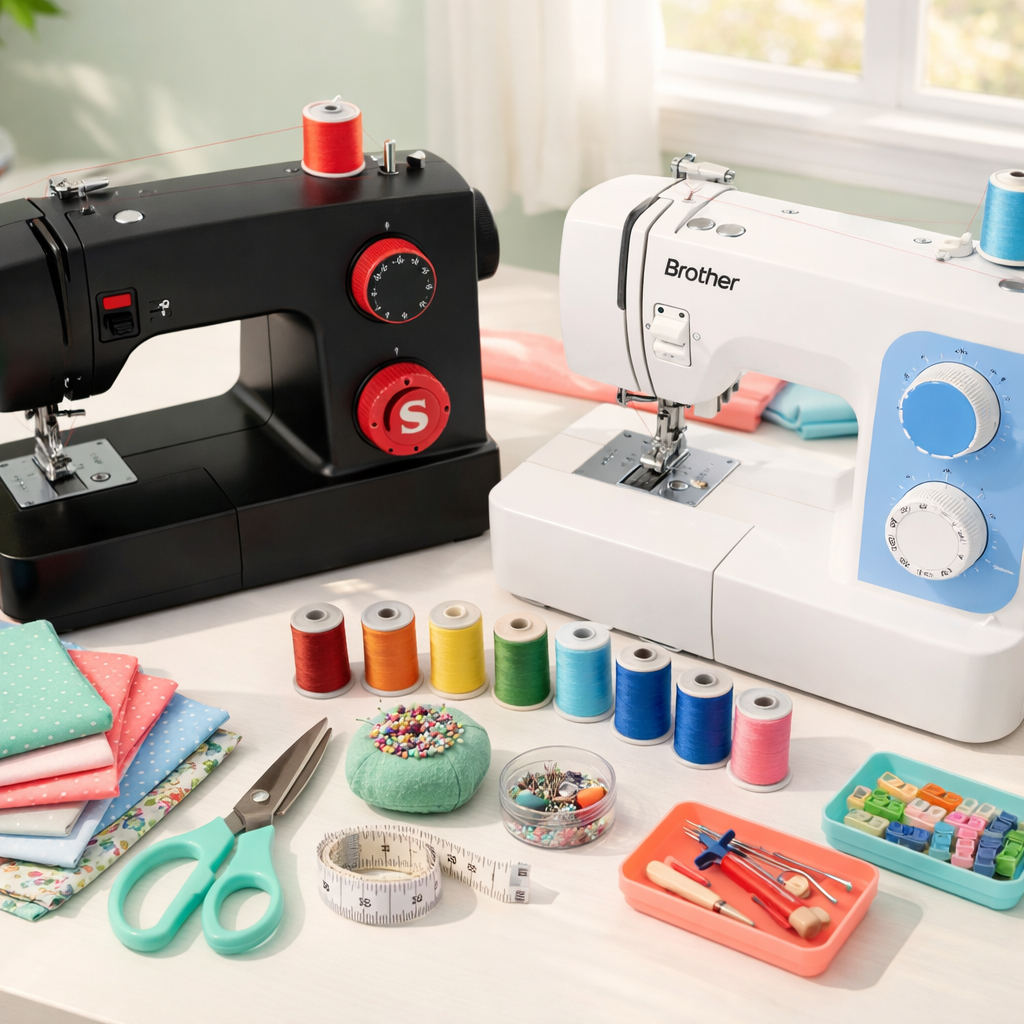
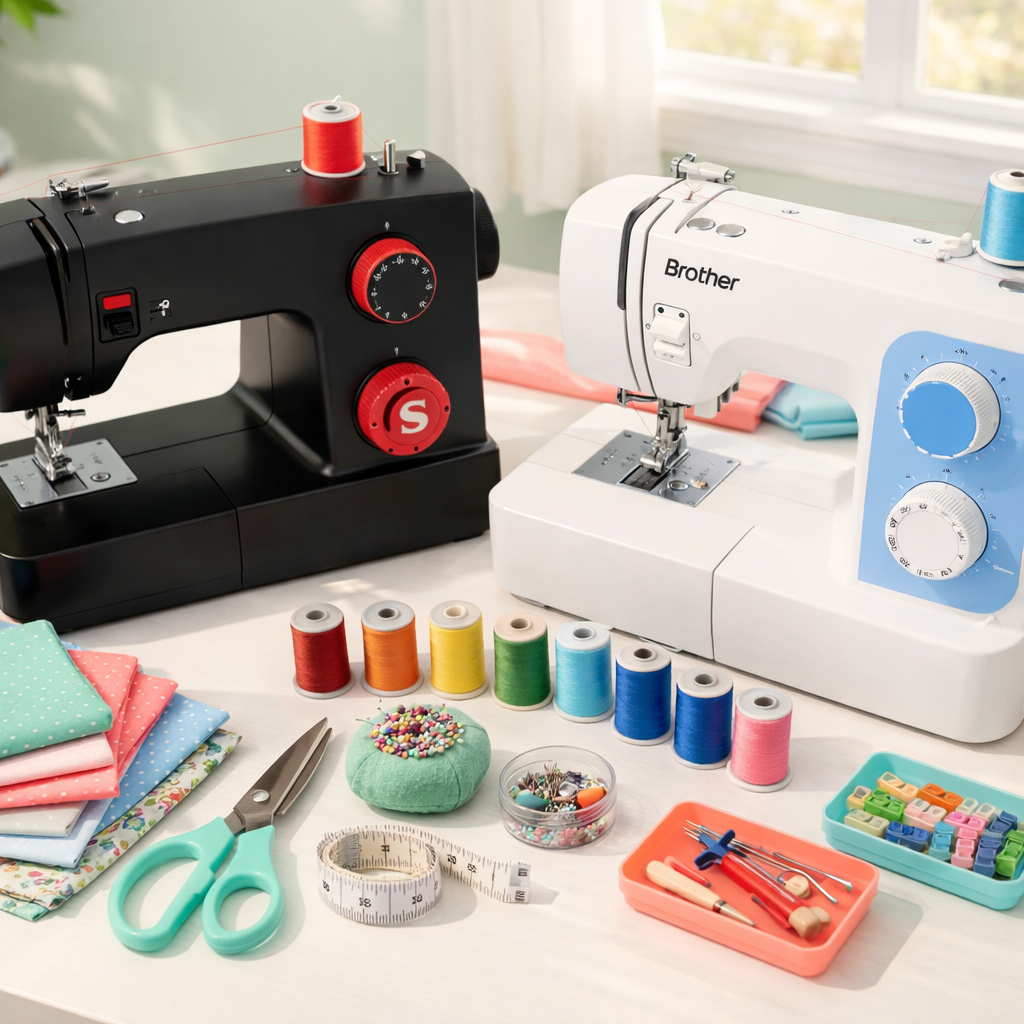
Singer machines emphasize durability and mechanical simplicity with metal internal frames, while Brother focuses on computerized features and user-friendly automation at competitive prices. These fundamental design philosophies create distinct experiences for beginners.
Singer has manufactured sewing machines since 1851, building a reputation on heavy-duty construction. Most Singer beginner models feature:
- Metal internal frames that reduce vibration and increase stability
- Stronger motors rated for thicker fabrics like denim and canvas
- Mechanical controls with physical dials and levers
- Fewer built-in stitches (typically 6-23 on beginner models)
- Manual threading systems that require more initial learning
Brother entered the sewing machine market later but quickly became known for innovation. Brother beginner models typically include:
- Lightweight plastic frames that make machines portable but less stable
- Automatic needle threaders that save time and frustration
- LCD displays showing stitch selection and settings
- More built-in stitches (typically 25-60 on beginner models)
- Computerized stitch selection with push-button controls
The price difference between comparable models is usually $20-$50, with Brother often offering more features for less money. However, Singer’s construction quality means their machines often outlast Brother models by 5-10 years with proper maintenance.
Which Is Easier to Use: Singer or Brother for First-Time Sewers?
Brother machines are easier for absolute beginners because of automatic needle threaders, clear LCD displays, and intuitive push-button controls that reduce the learning curve. Most first-time sewers can start their first project within 30 minutes of unboxing a Brother machine.
The automatic needle threader alone saves beginners significant frustration. Threading a needle manually requires steady hands and good eyesight, and many beginners spend 10-15 minutes on this step alone. Brother’s automatic system completes threading in about 5 seconds.
Brother’s advantages for beginners:
- Visual feedback through LCD screens showing selected stitch and settings
- Jam-resistant quick-set bobbin systems (though they still jam if loaded incorrectly)
- Printed stitch guides on the machine body for quick reference
- Lighter weight (12-15 lbs) making them easier to move and store
- Free-arm design that’s clearly marked for sewing cuffs and sleeves
Singer’s learning curve is steeper but teaches fundamental skills:
- Manual controls force beginners to understand tension, stitch length, and width
- Heavier weight (15-20 lbs) provides stability that prevents fabric shifting
- Simpler mechanics mean fewer things that can break or malfunction
- Better instruction manuals that explain the “why” behind each step
- Consistent performance across different fabric types without adjustment
Choose Brother if you want to complete projects quickly and don’t mind relying on automated features. Choose Singer if you want to truly understand how sewing machines work, even if it takes longer to master.

Ideal for specialty threads
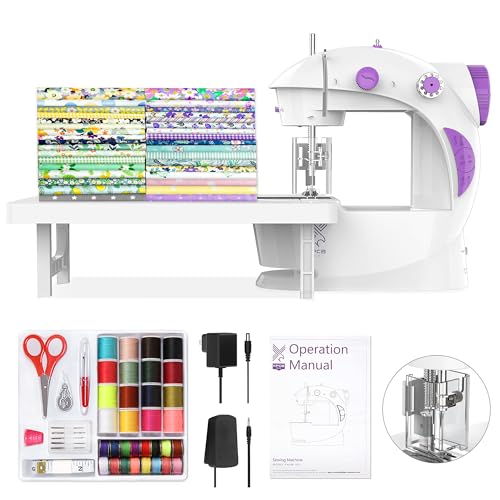
【Fabric Bundles】Equipped with 20pcs 8” x8”in and 100% cotton fabrics square with different patterns, it helps to create your unique sewing project, do the patch work or school projects. And it is also the great practice tool for sewing.
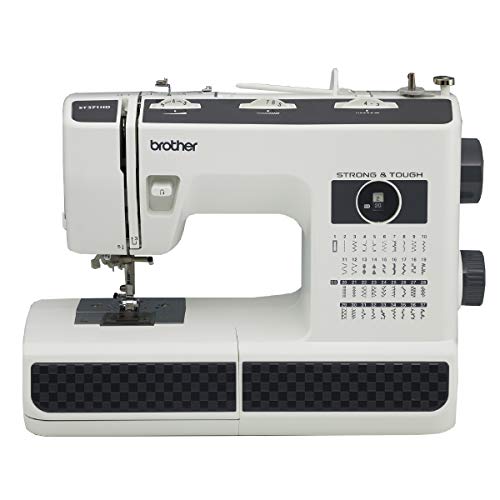
37 Unique Built-in Stitches: This advanced & beginner sewing machine features 37 built-in stitches including an auto-size buttonhole
Best Brother Sewing Machine Models for Beginners Under $200
The Brother XM2701, Brother XM1010, and Brother CS7000i are the top three beginner-friendly models under $200 in 2026, offering the best balance of features, reliability, and value. Each serves different beginner needs.

27 Unique Built-in Stitches: The Brother XM2701 sewing machine includes 27 built-in stitches including decorative, blind hem, zigzag, and stretch stitches and an auto-size buttonhole
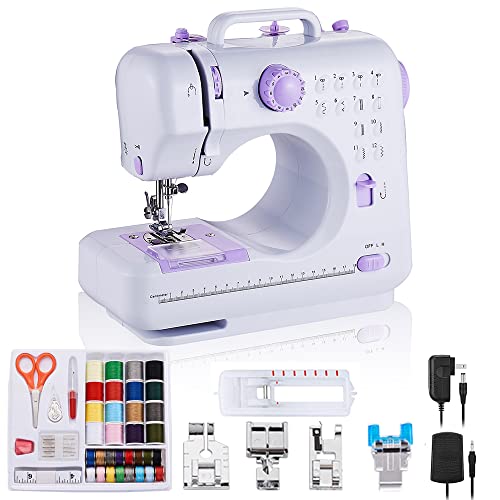
[Size and weight of sewing machine] Net weight of sewing machine: 2.4KG, size: 12.2*5.9*11.8 inches, suitable for household use, such as remodeling clothing, hand-made, sewing home decoration and other sewing needs.

【Pre-Tested Before Shipping】 Each sewing machine is pre-threaded and checked before leaving the factory to confirm normal operation. A small piece of fabric may remain under the presser foot from this testing process and does not indicate prior use. If you need assistance with the machine, customer support is available to help.
Brother XM2701 ($149-$169)
This is the best all-around beginner machine from Brother. It includes 27 built-in stitches, an automatic needle threader, and a free arm for cuffs and sleeves. The XM2701 handles lightweight to medium-weight fabrics well but struggles with thick denim or multiple layers.
Best for: Beginners who want to make clothing, simple home decor, and basic alterations.
Brother XM1010 ($119-$139)
The most affordable option with 10 built-in stitches and a simplified control panel. It lacks an automatic needle threader but includes all essential features for learning basic sewing. The motor is less powerful than the XM2701.
Best for: Budget-conscious beginners who plan to sew lightweight fabrics like cotton and linen.
Brother CS7000i ($179-$199)
This computerized model includes 70 built-in stitches, an LCD display, and automatic needle threading. It’s the most feature-rich option but has more components that can malfunction. The wider table space accommodates larger projects like quilts.
Best for: Beginners who plan to explore quilting, embroidery, and decorative stitching beyond basic sewing.
Common mistake: Beginners often buy the CS7000i thinking more stitches mean better results, but most sewers only use 5-7 stitches regularly. The simpler XM2701 is usually a smarter investment.
Best Singer Sewing Machine Models for Beginners Under $200
The Singer Start 1304, Singer Heavy Duty 4452, and Singer M1500 are the top beginner Singer models under $200, with the Start 1304 offering the best value for new sewers. Singer’s beginner lineup focuses on durability over features.
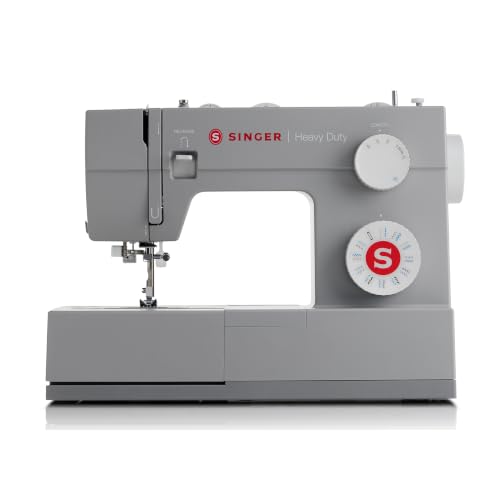
VERSATILE STITCHING WITH 97 APPLICATIONS: Get versatile performance with 23 built-in stitches that deliver 97 stitch applications. Easily handle basic, decorative, and functional sewing techniques, giving you flexibility for everyday projects and creative designs.

17 built-in stitches

STYLISH & DURABLE DESIGN: The SINGER HEAVY DUTY 4423 sewing machine offers a fresh modern color combined with simplicity and strong piercing power for your inspiration and style expression. The heavy-duty metal frame ensures durability, stability, reducing vibrations for precise stitching, while the stainless-steel bedplate allows for smooth fabric feeding. Built to handle frequent use, this machine is designed for sewists of all levels.
Singer Start 1304 ($119-$139)
This basic mechanical machine includes 6 built-in stitches and a 4-step buttonhole. The metal frame and powerful motor handle thick fabrics better than any Brother model in this price range. It lacks an automatic needle threader but is nearly indestructible.
Best for: Beginners who plan to sew heavy fabrics, make bags, or do basic alterations and repairs.
Singer Heavy Duty 4452 ($189-$219)
Technically slightly over $200 but worth mentioning for its exceptional power. This machine sews through denim, canvas, and leather with ease. It includes 32 built-in stitches and sews at 1,100 stitches per minute (compared to 750-850 for most beginner machines).
Best for: Beginners interested in bag making, upholstery, or working with challenging fabrics from day one.
Singer M1500 ($139-$159)
A compact machine with 57 stitch applications and a modern design. It’s lighter than other Singer models (11 lbs) but still includes a metal frame. The electronic foot control provides more precise speed control than mechanical models.
Best for: Beginners with limited space who want a portable machine that still feels sturdy.
Edge case: If you’re learning to sew specifically for costume making or historical garment reproduction, the Singer Start 1304’s simplicity and power make it the better choice over any Brother model, even though it has fewer features.

Do Singer Machines Break Easily Compared to Brother?
Singer machines break less frequently than Brother machines because of their metal internal frames and simpler mechanical construction, but when they do break, repairs are often more expensive. Brother machines have more plastic components that wear out faster but are cheaper to replace.
Based on repair shop data and user reports from 2024-2026, here’s the breakdown:
Singer failure rates:
- Metal gears last 15-20 years with regular maintenance
- Motor failures occur in about 8% of machines within the first 5 years
- Most common issues: timing problems, worn drive belts, tension spring failures
- Average repair cost: $75-$150
Brother failure rates:
- Plastic gears and components wear out after 10-15 years
- Motor failures occur in about 12% of machines within the first 5 years
- Most common issues: bobbin case cracks, computerized control board failures, automatic threader malfunctions
- Average repair cost: $50-$100
The key difference is that Singer machines typically need fewer repairs overall, but each repair costs more because of the quality of replacement parts. Brother machines need more frequent minor repairs, but parts are cheaper and more widely available.
Choose Singer if: You plan to keep your machine for 15+ years and don’t mind investing in occasional professional maintenance.
Choose Brother if: You prefer to replace your machine every 5-10 years rather than repair it, or you want the option to fix minor issues yourself with inexpensive parts.
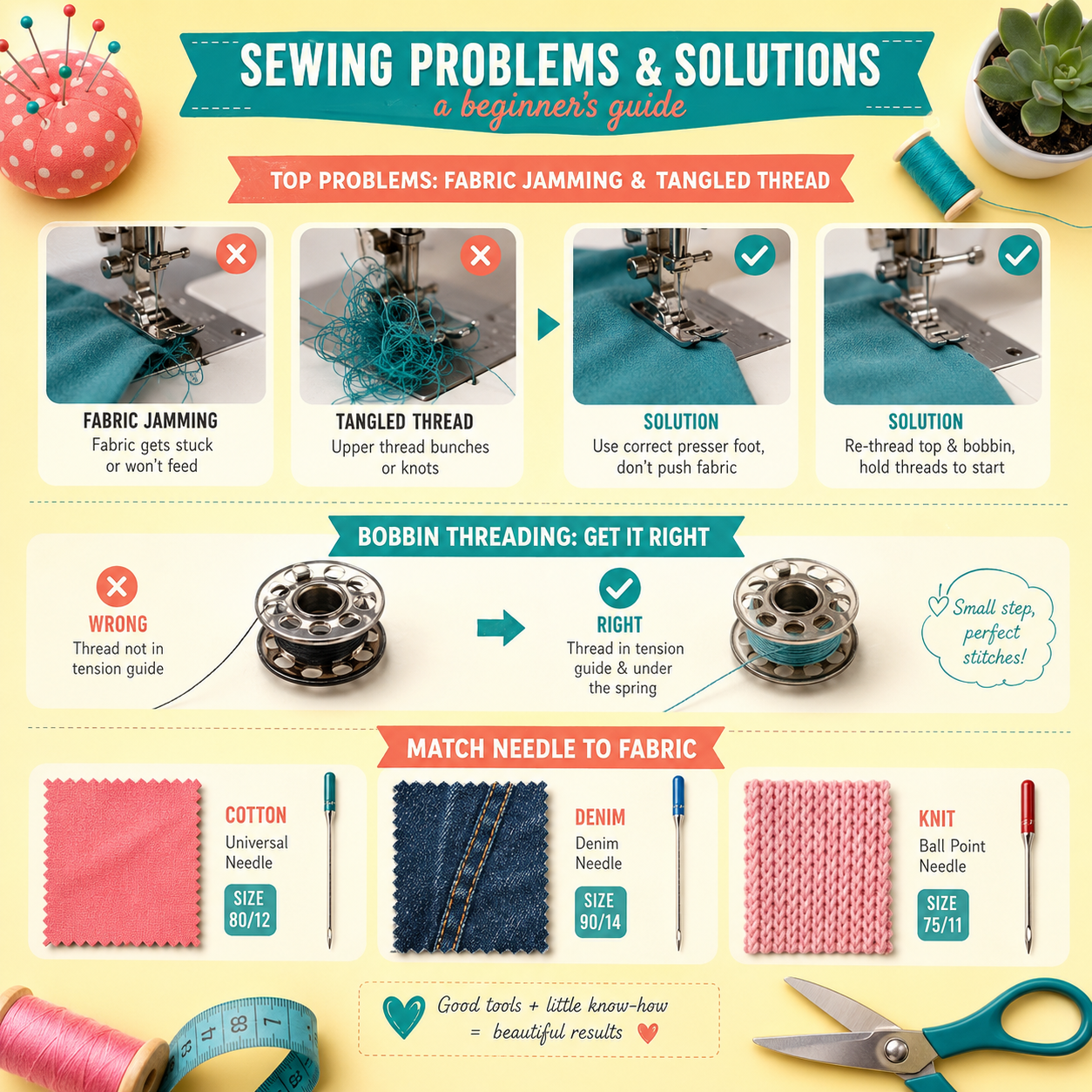
Why Does My Brother Sewing Machine Keep Jamming?
Brother machines jam most often because of incorrect bobbin threading, using the wrong bobbin type, or lint buildup in the bobbin case. These issues account for about 80% of jamming problems reported by beginners.
Fixing Brother Jamming Issues
Bobbin threading problems:
- Remove the bobbin and rethread it following the directional arrows in the bobbin case
- Make sure the thread is pulled through the tension spring (the small metal piece in the bobbin case)
- Leave a 4-6 inch tail of thread after threading
- Ensure the bobbin is inserted in the correct direction (thread should pull counterclockwise)
Wrong bobbin type: Brother machines require Class 15 bobbins, but many beginners accidentally buy Class 15J or other similar sizes. Even a 1mm difference causes jamming. Always buy bobbins specifically marked for your Brother model.
Lint buildup: Remove the bobbin case every 4-6 hours of sewing time and clean out lint with a small brush. Lint accumulates faster when sewing fleece, flannel, or other fuzzy fabrics.
Thread tension issues: If the top thread tension is too tight, it pulls the bobbin thread up, creating bird’s nests under the fabric. Start with tension set to 4 (middle setting) and adjust up or down by half-increments.
Common mistake: Beginners often blame the machine when jamming is actually caused by using cheap thread. Low-quality thread sheds fibers that clog the tension discs and bobbin case. Invest in Gutermann, Coats & Clark, or other quality thread brands.
Are Singer Machines Better for Quilting or Regular Sewing?
Singer machines excel at regular sewing and garment construction, while Brother machines are better suited for quilting because of their wider throat space and specialized quilting stitches. The throat space (the distance between the needle and the machine body) makes the biggest difference.
Singer advantages for regular sewing:
- Stronger feed dogs that move fabric evenly through the machine
- Better stitch quality on thick seams (like jeans hems)
- More consistent tension across different fabric weights
- Heavier machines that don’t vibrate when sewing at high speeds
- Better for sewing multiple layers (up to 6-8 layers of cotton)
Brother advantages for quilting:
- Wider throat space (typically 6-7 inches vs. 4-5 inches on Singer beginners models)
- More decorative stitches for quilt embellishment
- Lighter weight makes free-motion quilting easier
- Built-in walking foot capability on some models
- Better for piecing quilt blocks with precise 1/4-inch seams
If you plan to do both regular sewing and quilting, the Brother CS7000i offers the best compromise with a 7-inch throat space and enough power for garment sewing. For quilters who only occasionally sew garments, Brother is the clear winner. For garment sewers who might try quilting later, Singer provides better overall value.
Edge case: If you plan to quilt with a longarm quilting machine or send quilts out for professional quilting, buy a Singer for piecing quilt tops. You don’t need the wide throat space if you’re not quilting on your home machine.
What Can Go Wrong When Buying a Cheap Beginner Sewing Machine?
Cheap sewing machines under $80 typically have plastic internal gears that strip within months, weak motors that can’t handle anything thicker than two layers of cotton, and poor stitch quality that makes seams come apart. These machines cost beginners more money in the long run because they need replacement within 6-12 months.
Red Flags in Cheap Machines
Plastic internal frame: Machines with all-plastic construction vibrate excessively and can’t maintain consistent tension. The plastic gears strip when sewing through thick fabrics or multiple layers.
Weak motor (under 60 watts): Underpowered motors stall when sewing through denim, canvas, or more than 3 layers of cotton. The motor overheats after 20-30 minutes of continuous use.
No metal components: Quality machines have at least some metal parts in the needle bar, presser foot, and internal frame. All-plastic construction means the machine will break quickly.
Generic brand with no support: Brands like Magicfly, Varmax, and other Amazon-only brands have no customer service, no replacement parts available, and no repair network. When they break, you throw them away.
Unclear instruction manual: Cheap machines often come with poorly translated manuals that don’t explain basic operations. This makes learning to sew nearly impossible for beginners.
What You Get for $120-$200 vs. Under $80
A $120-$200 machine from Singer or Brother includes:
- Metal internal frame or metal reinforcement
- 70-100 watt motor that handles thick fabrics
- Actual customer service and warranty support
- Replacement parts available for 10+ years
- Clear instruction manuals and online video tutorials
- Consistent stitch quality across fabric types
An under-$80 machine typically offers:
- All-plastic construction
- 40-60 watt motor
- No customer service (or non-English support)
- No replacement parts available
- Poor or translated instruction manuals
- Inconsistent stitch quality
The math: A $70 machine that breaks in 8 months plus a $150 replacement costs $220 total. Buying the $150 machine first saves money and months of frustration.
Is Brother or Singer Better for Sewing Thick Fabric Like Denim?
Singer machines handle thick fabrics like denim, canvas, and upholstery fabric significantly better than Brother machines because of their stronger motors, metal frames, and more powerful feed dogs. The Singer Heavy Duty 4452 can sew through 6-8 layers of denim, while most Brother beginner models struggle with more than 3-4 layers.
Why Singer Wins for Heavy Fabrics
Motor power: Singer beginner models typically have 70-90 watt motors, while Brother models have 50-70 watt motors. This 20-30% power difference is critical when sewing thick seams.
Feed dog height: Singer feed dogs rise higher above the throat plate, gripping thick fabrics more securely. Brother feed dogs are shorter and can slip on heavy materials.
Presser foot pressure: Singer machines allow manual adjustment of presser foot pressure, letting you increase pressure for thick fabrics. Most Brother beginner models have fixed presser foot pressure.
Needle position: Singer machines maintain consistent needle penetration through thick fabrics without the needle deflecting. Brother needles can bend or deflect when hitting thick seams, causing skipped stitches.
When Brother Can Handle Denim
Brother machines can sew single layers of denim and lightweight canvas without issues. They work fine for:
- Hemming jeans (2-3 layers)
- Making simple denim bags with minimal seams
- Sewing denim patches or appliques
- Working with chambray or lightweight denim
Brother machines struggle with:
- Thick jeans hems where multiple layers overlap (6+ layers)
- Heavy canvas or duck cloth
- Upholstery fabric
- Leather or faux leather
Choose Singer if: You plan to hem jeans, make bags, work with canvas, or sew any project involving thick fabrics regularly.
Choose Brother if: You’ll mostly sew cotton quilting fabric, lightweight apparel fabrics, and only occasionally work with denim.
Do I Need a Computerized Machine as a Beginner or Mechanical?
Beginners should start with mechanical machines because they’re more reliable, easier to maintain, teach fundamental sewing skills, and cost $30-$80 less than comparable computerized models. Computerized features become useful after you’ve mastered basic sewing techniques.
Mechanical Machine Advantages
Reliability: Mechanical machines have fewer components that can malfunction. There are no circuit boards to fail, no LCD screens to crack, and no computerized sensors to miscalibrate.
Lower maintenance: Mechanical machines need only basic cleaning and oiling. Computerized machines require software updates and can develop electronic issues that require professional repair.
Better learning: Manual stitch selection and tension adjustment force beginners to understand how these settings affect stitch quality. This knowledge is essential for troubleshooting problems.
Lower cost: Mechanical models cost $100-$150, while computerized models with similar build quality cost $150-$250.
Longer lifespan: Mechanical machines last 20-30 years with proper care. Computerized machines become obsolete when circuit boards fail (typically after 10-15 years) and replacement boards are often unavailable.
When Computerized Makes Sense
Physical limitations: If you have arthritis, limited hand strength, or vision problems, computerized features like automatic needle threading and push-button stitch selection reduce physical strain.
Specific project goals: If you plan to do decorative embroidery, complex quilting, or projects requiring 50+ different stitches, computerized machines offer features mechanical machines can’t match.
Time constraints: Computerized machines with automatic features let you complete projects 15-20% faster because you spend less time on setup and adjustments.
Common mistake: Beginners often buy computerized machines thinking they’re “better” or more advanced, then never use 80% of the features. Most sewers use only 5-7 stitches regularly: straight stitch, zigzag, buttonhole, and a few decorative stitches.
Singer vs Janome: Which Is Better for Beginners?
Janome machines are higher quality than both Singer and Brother but cost 30-50% more, making them the best choice for serious beginners who plan to sew regularly and want a machine that will last 20+ years. For casual beginners or those unsure about the hobby, Singer offers better value.
Janome Advantages
Build quality: Janome machines feature all-metal internal frames, precision-engineered parts, and superior stitch quality. Even entry-level Janome models feel more solid than mid-range Singer machines.
Stitch consistency: Janome machines maintain even stitch length and tension across all fabric types with minimal adjustment. This makes learning easier because the machine compensates for beginner mistakes.
Quieter operation: Janome machines run 30-40% quieter than Singer or Brother models because of better motor design and sound dampening.
Better resale value: Janome machines retain 50-60% of their original value after 5 years, compared to 30-40% for Singer and 20-30% for Brother.
Price Comparison
- Janome beginner models: $200-$350 (Janome 2212, Janome MOD-19)
- Singer beginner models: $120-$200 (Start 1304, Heavy Duty 4452)
- Brother beginner models: $120-$200 (XM2701, CS7000i)
Choose Janome if: You’re committed to sewing as a long-term hobby, want the best stitch quality available, and can afford the higher initial investment.
Choose Singer if: You want good quality at a reasonable price and prefer machines that can handle heavy-duty projects.
Choose Brother if: You’re on a tight budget, want modern convenience features, and plan to upgrade in 5-10 years.
How Long Do Singer and Brother Machines Typically Last?
Singer mechanical machines last 15-20 years with regular maintenance, while Brother machines last 10-15 years, though both brands’ computerized models have shorter lifespans of 8-12 years due to electronic component failure. Proper maintenance can extend these lifespans by 30-50%.
Factors Affecting Lifespan
Usage frequency:
- Light use (2-4 hours per week): Machines last at the upper end of their lifespan range
- Moderate use (5-10 hours per week): Machines last the average lifespan
- Heavy use (15+ hours per week): Machines last at the lower end or need major repairs sooner
Maintenance quality: Machines that receive regular cleaning, oiling, and professional servicing every 2-3 years last significantly longer than neglected machines.
Fabric types: Sewing heavy fabrics exclusively wears out motors and gears faster. Machines used primarily for lightweight fabrics last longer.
Storage conditions: Machines stored in climate-controlled spaces away from dust and humidity last longer than those kept in garages or basements.
Maintenance Schedule for Maximum Lifespan
After every project:
- Remove lint from bobbin case and feed dogs
- Wipe down exterior with soft cloth
Every 8-10 hours of sewing:
- Deep clean bobbin area and remove all lint
- Oil moving parts (if your model requires oiling)
- Check needle for burrs or damage
Every 6-12 months:
- Professional servicing and timing check
- Replace needle even if it looks fine
- Check and replace drive belt if worn
Common mistake: Beginners often skip oiling their machines because they don’t realize it’s necessary. Check your manual, many Singer models require oiling every 8-10 hours of use, while most Brother models are self-lubricating.
Common Mistakes Beginners Make When Choosing Their First Sewing Machine
The biggest mistake beginners make is buying the cheapest machine available without researching features, followed by purchasing machines with too many advanced features they’ll never use. Both mistakes waste money and create frustration.
Top 8 Beginner Mistakes
1. Buying based on price alone Choosing a $60 machine over a $150 machine to save money results in a machine that breaks quickly and makes learning frustrating. The $90 savings disappears when you need to buy a replacement.
2. Choosing computerized over mechanical Beginners assume computerized machines are better, but mechanical machines are more reliable and teach fundamental skills better. Save computerized features for your second machine.
3. Prioritizing stitch count A machine with 100 built-in stitches sounds impressive, but most sewers use only 5-7 stitches regularly. Focus on build quality and motor power instead.
4. Ignoring weight Ultra-lightweight machines (under 10 lbs) vibrate and shift during use, making sewing difficult. Look for machines weighing 12-18 lbs for stability without being too heavy to move.
5. Not testing in person Buying online without seeing the machine means you can’t assess build quality, noise level, or how intuitive the controls feel. Visit a store to test machines before buying.
6. Skipping the manual Many beginners never read the instruction manual, then blame the machine when they can’t figure out basic operations. Spend 30 minutes reading the manual before your first project.
7. Buying from unknown brands Generic Amazon brands offer no customer service, no replacement parts, and no repair network. Stick with established brands that will still exist in 5 years.
8. Not considering future projects Buying a machine that only handles lightweight fabrics means you’ll need to upgrade if you want to try bag making, quilting, or other projects. Think about what you might want to sew in 2-3 years.
How to Choose Correctly
Define your goals: List 3-5 specific projects you want to make in your first year. This helps you identify essential features.
Set a realistic budget: Plan to spend $120-$200 for a quality beginner machine that won’t frustrate you.
Research specific models: Read reviews from sewers who’ve owned the machine for 1+ years, not just unboxing reviews.
Test before buying: Visit a sewing machine dealer and test 2-3 models in your price range.
Plan for accessories: Budget an additional $30-$50 for quality thread, extra needles, bobbins, and basic notions.
Is Singer Start 1304 Better Than Brother XM2701 for Learning?
The Brother XM2701 is better for absolute beginners who want quick results and modern convenience, while the Singer Start 1304 is better for beginners who want to learn fundamental skills and work with heavier fabrics. Both are excellent choices, but they serve different learning styles.
Head-to-Head Comparison
| Feature | Singer Start 1304 | Brother XM2701 |
|---|---|---|
| Price | $119-$139 | $149-$169 |
| Built-in stitches | 6 | 27 |
| Automatic needle threader | No | Yes |
| Weight | 15 lbs | 12 lbs |
| Frame construction | Metal internal frame | Plastic with metal components |
| Max layers of denim | 6-8 layers | 3-4 layers |
| Learning curve | Steeper (manual threading) | Easier (automated features) |
| Expected lifespan | 15-20 years | 10-15 years |
Choose Singer Start 1304 If You:
- Want to learn proper threading and tension adjustment
- Plan to sew heavy fabrics like denim or canvas
- Prefer a machine that will last 15+ years
- Don’t mind a steeper learning curve
- Want to save $20-$30
- Value durability over convenience features
Choose Brother XM2701 If You:
- Want to complete your first project within an hour of unboxing
- Plan to sew mostly lightweight to medium-weight fabrics
- Have vision or dexterity issues that make manual threading difficult
- Want more stitch variety for decorative projects
- Prefer modern convenience features
- Don’t mind replacing the machine in 10-15 years
Real-world scenario: If you’re learning to sew to make Halloween costumes for your kids, the Brother XM2701’s variety of stitches and ease of use will help you finish projects faster. If you’re learning to sew to repair work clothes and hem jeans, the Singer Start 1304’s power and durability make it the smarter choice.
Frequently Asked Questions
Can I sew leather on a Singer or Brother beginner machine? Singer Heavy Duty models can handle thin garment leather and faux leather with a leather needle. Brother beginner machines lack the motor power for leather and will stall or skip stitches. Neither brand’s beginner models can handle thick upholstery leather.
Which brand has better customer service? Singer has more authorized repair centers nationwide (over 1,000 locations) compared to Brother (around 600 locations), making warranty service and repairs more accessible. Both brands offer phone and email support with similar response times.
Do I need to buy a special table for my sewing machine? No, both Singer and Brother beginner machines work fine on any sturdy table or desk. Dedicated sewing tables with storage are convenient but not necessary. Make sure your table is at a comfortable height where your elbows bend at 90 degrees when sewing.
Can these machines sew knit fabrics like t-shirt material? Both brands can sew knits with the right needle (ballpoint or stretch needle) and stitch settings (narrow zigzag or stretch stitch). Singer machines handle knits slightly better because of their stronger feed dogs that prevent stretching.
How often do I need to replace the needle? Replace your needle every 8-10 hours of sewing time or after completing 2-3 projects, whichever comes first. Dull needles cause skipped stitches, puckered fabric, and thread breakage. Needles cost $3-$5 for a pack of five.
Are refurbished machines worth buying? Refurbished Singer and Brother machines from authorized dealers come with 90-day to 1-year warranties and cost 20-30% less than new machines. Avoid refurbished machines from unknown sellers on marketplace sites, as they often have hidden problems.
What’s the difference between a free arm and a flat bed? A free arm is a narrow sewing surface that allows you to sew tubular items like sleeves and pant legs. Most modern machines have a removable extension table that converts between flat bed (for large projects) and free arm (for tubular items).
Can I use my machine without the foot pedal? Some Brother computerized models have a start/stop button that lets you sew without a foot pedal, controlling speed with a slider. Singer mechanical machines require the foot pedal. Beginners should use the foot pedal to develop better speed control.
Why does my machine make a clunking sound? Clunking usually indicates the machine needs oiling (for Singer models that require it), has lint buildup in the bobbin area, or has a timing issue. Clean the machine thoroughly first. If clunking continues, take it to a repair shop for timing adjustment.
Do I need to buy the same brand of accessories? No, needles, bobbins, and presser feet are standardized across brands. Buy Class 15 bobbins for both Singer and Brother machines, and any standard household sewing machine needles (size 80/12 or 90/14 for most fabrics).
Can I sew through multiple layers of fleece? Both brands handle 3-4 layers of fleece, but the fabric’s bulk can cause feed dog issues. Use a walking foot (sold separately for $25-$40) to feed thick, slippery fabrics evenly through the machine.
What does “heavy duty” mean for sewing machines? Heavy duty machines have stronger motors (90+ watts), metal internal frames, and reinforced components that handle thick fabrics and extended sewing sessions. The Singer Heavy Duty 4452 is a true heavy-duty machine, while most machines labeled “heavy duty” are just standard machines with marketing names.
Conclusion
Choosing between Singer and Brother for your first sewing machine comes down to your priorities and project goals. Brother machines offer modern convenience with automatic needle threaders, more built-in stitches, and user-friendly controls that help beginners complete projects quickly. Singer machines provide superior durability, stronger motors for heavy fabrics, and mechanical simplicity that teaches fundamental sewing skills.
For most beginners in 2026, the Brother XM2701 ($149-$169) delivers the best balance of features and ease of use for lightweight to medium-weight sewing projects. If you plan to work with denim, canvas, or other heavy fabrics, the Singer Start 1304 ($119-$139) offers unbeatable value and durability. For serious beginners willing to invest more, the Singer Heavy Duty 4452 ($189-$219) provides professional-level power at a beginner-friendly price.
Your Next Steps
- Define your first 3-5 projects to identify which features you actually need
- Set a realistic budget of $120-$200 for a quality machine that won’t frustrate you
- Visit a local sewing machine dealer to test the Brother XM2701 and Singer Start 1304 in person
- Read your machine’s manual cover to cover before starting your first project
- Invest in quality thread and needles (budget $30-$50 for essential supplies)
- Take a beginner sewing class online or in person to learn proper techniques from the start
Both Singer and Brother make excellent beginner machines. The “better” brand is the one that matches your learning style, project goals, and budget. Start sewing, make mistakes, and remember that even experienced sewers began exactly where you are now.


