
Quick Answer
Yes, a used sewing machine is worth buying if it’s been well-maintained, comes from a reputable brand, and meets your specific sewing needs. Most quality machines from brands like Singer, Bernina, and Janome can last 25+ years with proper care, making them excellent value purchases. The key is knowing what to inspect before you buy and understanding which models hold their value.
Key Takeaways
- Quality vintage machines often outlast modern budget models because they’re built with metal parts instead of plastic
- Expect to pay 40-60% of retail price for a used machine in good condition, less for older mechanical models
- Always test before buying: run the machine through all stitches, check tension, and listen for unusual noises
- Mechanical machines are easier to repair than computerized models and parts remain available for popular vintage brands
- Red flags include rust, seized parts, burning smells, and missing accessories that are expensive to replace
- Best sources are local sewing machine shops, estate sales, and Facebook Marketplace where you can inspect in person
- Vintage Singer, Bernina, and Pfaff models hold value best and have active parts markets
- Beginners benefit from used mechanical machines to learn fundamentals without the financial risk
What Should I Check Before Buying a Used Sewing Machine?
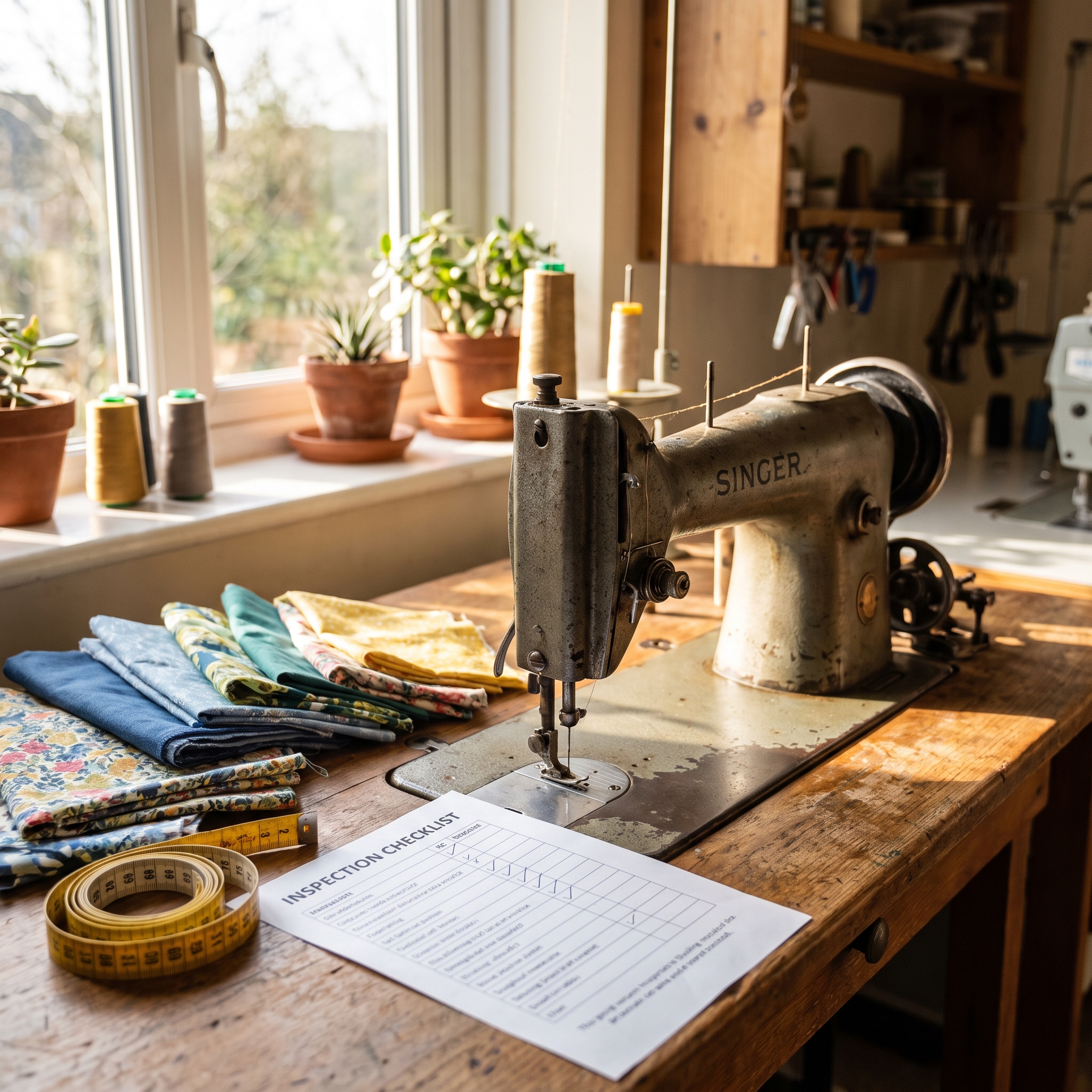
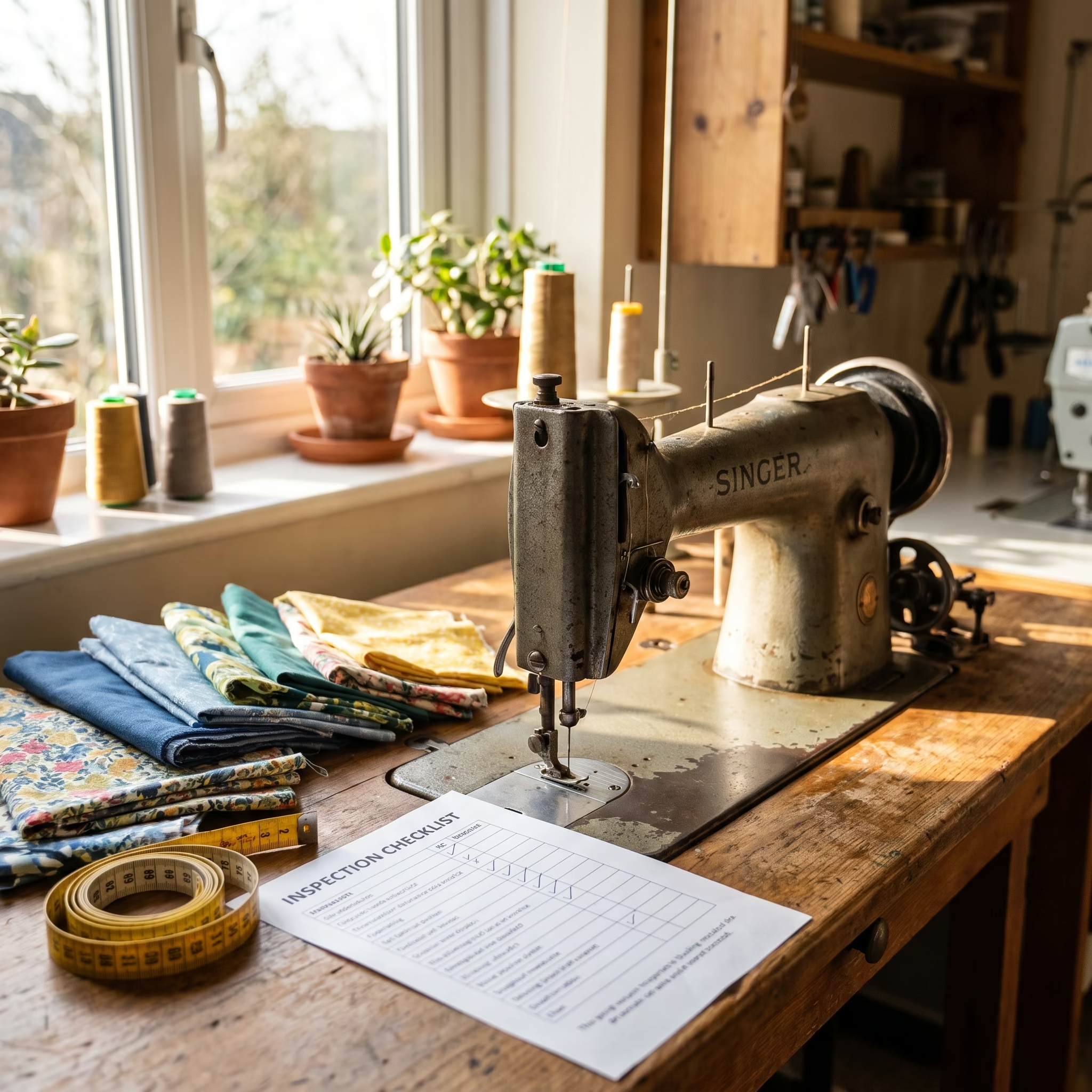
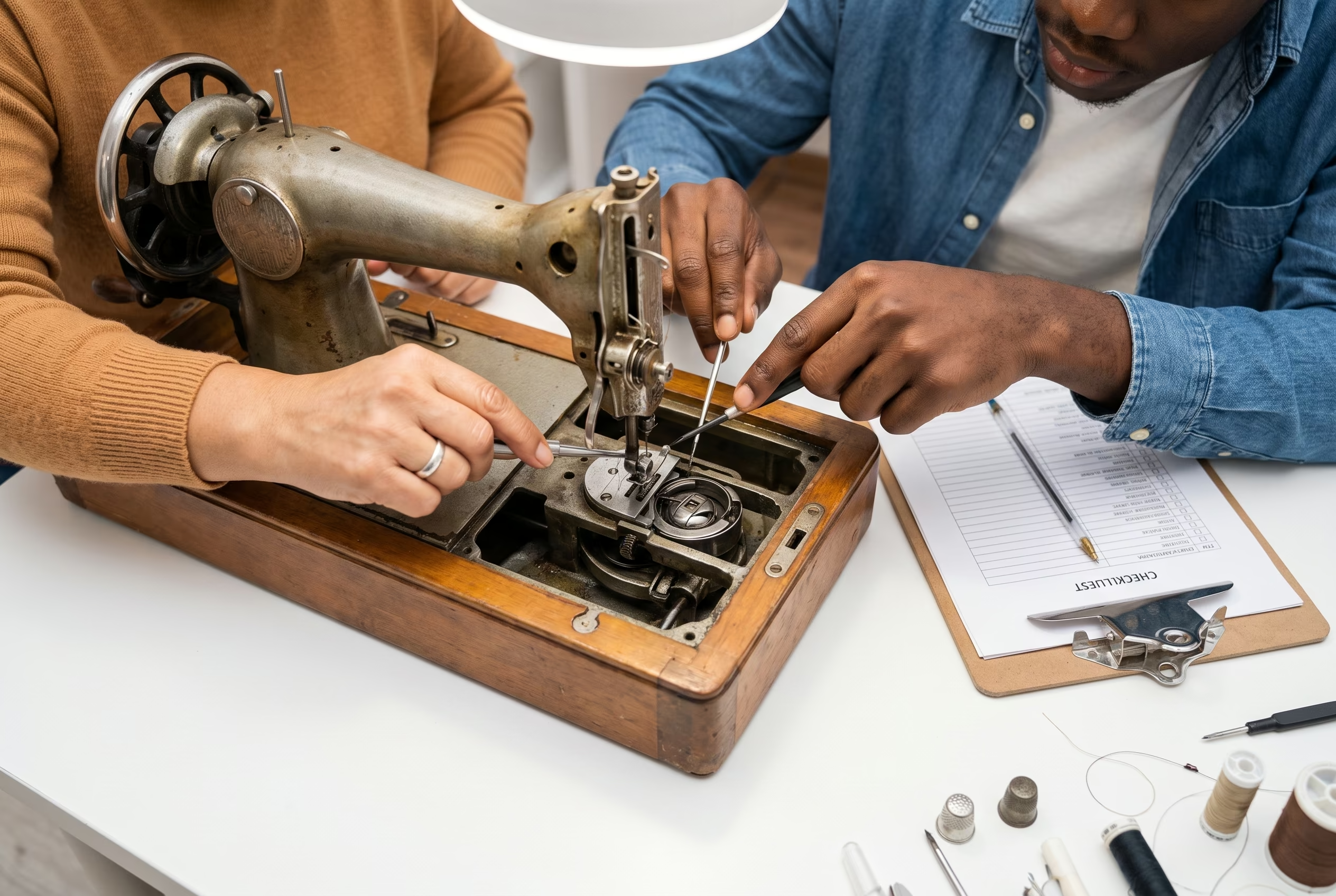
Before buying a used sewing machine, inspect the motor function, stitch quality, mechanical parts, and overall condition. Run the machine through every stitch setting, check that the bobbin winds smoothly, test the tension on scrap fabric, and examine the feed dogs and presser foot for wear.
Essential inspection checklist:
- Motor and power: Plug it in and listen for smooth, consistent humming without grinding or squealing
- Stitch formation: Test straight stitch, zigzag, and any specialty stitches on multiple fabric layers
- Tension system: Both top and bobbin tension should create balanced stitches without loops or puckering
- Feed dogs: Should be sharp and even, moving fabric consistently without skipping
- Bobbin case and hook: Check for burrs, scratches, or damage that can snag thread
- Presser foot pressure: Should adjust smoothly and hold fabric firmly
- Hand wheel: Must turn freely in the correct direction without resistance
- Exterior condition: Look for cracks in the body, rust on metal parts, or signs of water damage
- Accessories: Confirm included feet, bobbins, and attachments (replacements can cost $50-200)
Common mistake: Many buyers focus only on cosmetic condition and miss mechanical issues. A scratched case matters less than a worn feed dog system that will cost $150+ to repair.
Decision rule: If the seller won’t let you test the machine on fabric with your own thread, walk away. Legitimate sellers understand that functional testing protects both parties.
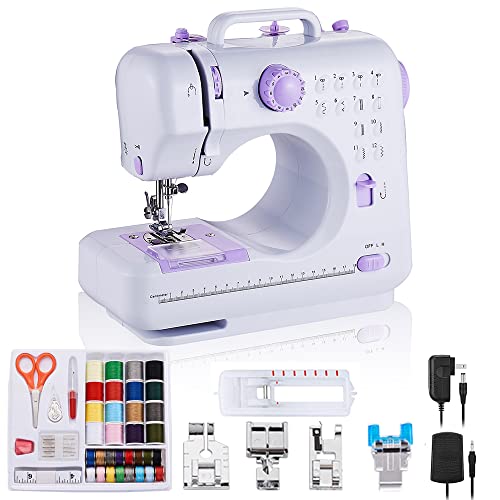
[Size and weight of sewing machine] Net weight of sewing machine: 2.4KG, size: 12.2*5.9*11.8 inches, suitable for household use, such as remodeling clothing, hand-made, sewing home decoration and other sewing needs.

Product Includes: The sewing machine tool kit includes 1 black curved nose tweezers, 1 double headed lint brush, 1 needle board screwdrivers, 4 flat head cross head screwdrivers, 2 seam rippers, 5 silicone brushes and 1 storage bag, 15 pieces in total. Different styles of screwdrivers and brushes, a sufficient number of tools are enough to meet your daily needs for cleaning and repairing your sewing machine, and the storage bag allows you to better store this set
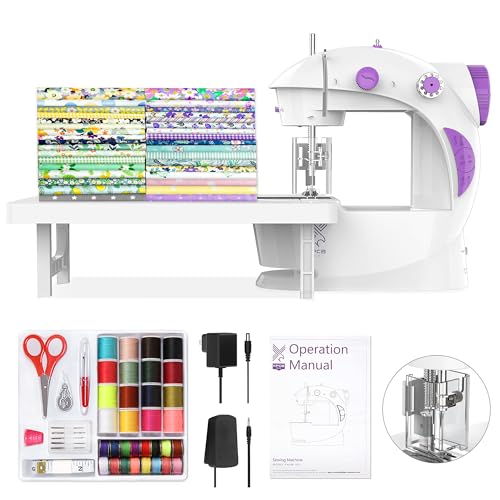
【Fabric Bundles】Equipped with 20pcs 8” x8”in and 100% cotton fabrics square with different patterns, it helps to create your unique sewing project, do the patch work or school projects. And it is also the great practice tool for sewing.
How Much Should I Pay for a Used Sewing Machine?
Used sewing machines typically sell for 40-60% of their original retail price when in good working condition, with vintage mechanical models often priced between $50-300 and used computerized machines ranging from $200-800 depending on age and features.
Pricing guidelines by category:
- Basic mechanical machines (Singer Simple, Brother LS-2125): $30-100
- Mid-range mechanical (vintage Singer 401, Kenmore 158 series): $75-250
- Heavy-duty mechanical (Singer 201, Pfaff 130): $150-400
- Entry computerized (Brother CS6000i, Singer Quantum Stylist): $100-250
- Mid-range computerized (Janome 8077, Bernina 330): $300-700
- High-end/embroidery (Bernina 770, Brother PE800): $800-2,500
Factors that increase value:
- Original accessories and manual included
- Recent professional servicing with documentation
- Rare or discontinued models with cult followings
- All-metal construction (pre-1970s machines)
- Specialty features like walking foot or free-arm
Factors that decrease value:
- Missing feet or bobbins (can cost $50-100 to replace)
- Cosmetic damage beyond normal wear
- Unknown service history
- Generic or store-brand names with limited parts availability
Pro tip: Machines sold at estate sales and thrift stores often price far below market value ($10-50) because sellers don’t know what they have. Sewing machine repair shops sell refurbished machines at fair market rates with warranties.

VINTAGE-INSPIRED DESIGN: The SINGER HD500 Classic sewing machine combines the timeless charm of vintage-inspired design with features like a built-in needle threader, one-step buttonhole, and drop feed. This beautifully styled machine not only enhances your sewing space with its elegant look but also provides the functionality you need to tackle any project with ease. Enjoy the perfect blend of nostalgic aesthetics and modern sewing innovation.

17 built-in stitches
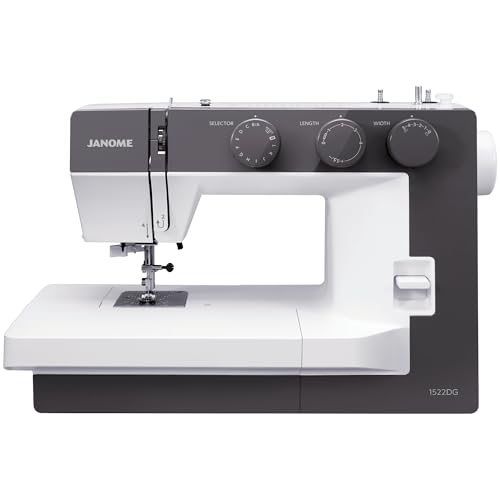
Designed to Stand Out – Complement your love for sewing with a machine that's styled to impress. You'll love the shade of black. A solid metal frame construction backs up the looks with real structural integrity, creating a heavy duty sewing machine.
Are Old Sewing Machines Better Than New Ones?
Old all-metal mechanical sewing machines from the 1950s-1970s are often more durable and repairable than modern budget machines, but new machines offer features like automatic buttonholes, multiple stitch patterns, and computerized controls that vintage models lack.
Advantages of vintage machines:
- Metal gears and frames last decades longer than plastic components
- Simpler mechanics mean fewer parts to break and easier DIY repairs
- Stronger motors handle heavy fabrics like denim and canvas better
- Repairable indefinitely with readily available parts for popular models
- No planned obsolescence or discontinued electronic components
Advantages of modern machines:
- Automatic features like needle threaders and one-step buttonholes save time
- Wider stitch selection including decorative and stretch stitches
- Quieter operation with improved motor technology
- Better lighting with LED work lights
- Computerized precision for consistent stitch length and tension
The reality: A $99 modern plastic machine will likely fail within 3-5 years, while a 1960s Singer 401 can sew for another 60 years. However, a new $400+ machine from Janome or Bernina combines modern features with quality construction.
Choose vintage if: You sew primarily woven fabrics, value repairability, and don’t need computerized features. Choose modern if you work with knits, want convenience features, or need specialty stitches for quilting or embroidery.
What Are Common Problems With Used Sewing Machines?
The most common problems with used sewing machines include timing issues, worn feed dogs, tension problems, dried lubricant causing stiff movement, and electrical issues in older motors. Most mechanical problems are fixable, but computerized circuit board failures can be expensive or impossible to repair.
Mechanical issues (usually repairable):
- Timing problems: Needle and hook don’t sync properly, causing skipped stitches ($50-150 repair)
- Worn feed dogs: Teeth are dull and don’t grip fabric ($30-80 for replacement)
- Tension spring damage: Creates inconsistent stitch quality ($20-60 repair)
- Dried oil and lint buildup: Causes stiff movement and noise (DIY cleaning or $40-80 service)
- Bent needle bar: From hitting pins or forcing fabric ($75-125 repair)
- Broken belts: Motor runs but hand wheel doesn’t turn ($15-40 DIY or $60-100 professional)
Electrical issues (variable repairability):
- Worn motor brushes: Causes weak power or intermittent operation ($30-80 repair)
- Frayed power cords: Safety hazard but easy to replace ($10-30)
- Failed foot pedal: Erratic speed control ($25-60 for replacement)
- Circuit board failure (computerized machines): Often costs more to repair than machine value ($200-500)
Red flags that indicate expensive repairs:
- Rust on internal parts (indicates water damage and corrosion)
- Seized hand wheel that won’t turn even with force
- Burning smell when motor runs
- Cracked or broken body casting
- Missing proprietary parts that are no longer manufactured
Edge case: Some vintage machines have reverse gears made of pot metal that deteriorate over time. This affects models like certain 1950s Singers and requires specialized repair that may cost $100-200.
Is It Worth Buying a Vintage Singer Sewing Machine?
Vintage Singer sewing machines from the 1950s-1970s are worth buying if they’re all-metal models like the 201, 301, 401, or 500 series, which are known for exceptional durability and stitch quality. Avoid plastic-bodied Singers from the 1980s onward, which don’t offer the same longevity.
Best vintage Singer models to buy:
- Singer 201: All-metal workhorse, considered one of the best straight-stitch machines ever made ($150-350)
- Singer 401/401A: Slant-needle design, excellent for garment sewing ($100-250)
- Singer 500/503: Rocketeer series, stylish and reliable ($125-300)
- Singer 221 Featherweight: Portable, highly collectible, holds value ($350-600)
- Singer 15-91: Industrial-strength straight stitch, built like a tank ($100-200)
Singer models to avoid:
- 1980s-1990s plastic models: Promise, Stylist, and Tradition series with plastic gears
- Touch & Sew models with cams: Cams wear out and are hard to find
- Very early treadle machines (pre-1920s): Beautiful but require specialized knowledge to maintain
Parts availability: Singer made millions of machines, so parts for popular models remain widely available through online suppliers, eBay, and sewing machine shops. Bobbins, belts, and feet are standardized across many models.
Decision rule: If you find a vintage Singer for under $100 and it runs smoothly through all stitches, it’s almost always worth buying. These machines were built when Singer dominated the market through quality, not planned obsolescence.

Where Is the Best Place to Buy a Used Sewing Machine?
The best places to buy used sewing machines are local sewing machine repair shops (which sell serviced machines with warranties), estate sales (for below-market prices), and Facebook Marketplace (where you can inspect before buying). Avoid eBay and online-only purchases unless the seller has extensive positive feedback and offers returns.
Ranked by reliability and value:
1. Sewing machine repair shops
- Pros: Machines are serviced, often include 30-90 day warranties, expert advice available
- Cons: Prices at market rate, limited selection
- Best for: Beginners who want peace of mind
2. Estate sales and auctions
- Pros: Below-market prices ($10-100 for quality machines), often include accessories
- Cons: Sold as-is, requires knowledge to identify good deals, competitive
- Best for: Experienced sewers who can assess condition quickly
3. Facebook Marketplace and Craigslist
- Pros: Local pickup allows testing, negotiable prices, large selection
- Cons: No buyer protection, must screen sellers carefully, some scams
- Best for: Buyers who know what to look for and can test in person
4. Thrift stores (Goodwill, Salvation Army)
- Pros: Very low prices ($15-75), occasional amazing finds
- Cons: Usually can’t test before buying, hit-or-miss condition, no returns
- Best for: Bargain hunters willing to take risks
5. eBay and online marketplaces
- Pros: Widest selection, buyer protection through PayPal
- Cons: Can’t test before buying, shipping costs $30-100, higher return rates
- Best for: Seeking specific rare models not available locally
Safety tips for Facebook Marketplace:
- Meet in public places or bring someone with you
- Test the machine before exchanging money
- Verify the seller’s profile has history and mutual friends
- Trust your instincts, if something feels off, walk away
Common mistake: Buying from online-only sellers who post stock photos instead of actual pictures of the machine. Always insist on seeing photos of the specific machine you’re buying, including serial number and any flaws.

27 Unique Built-in Stitches: The Brother XM2701 sewing machine includes 27 built-in stitches including decorative, blind hem, zigzag, and stretch stitches and an auto-size buttonhole

Multi-function sewing machine: Double Thread & Double Speed, Forward & reverse sewing, Automatic thread rewind, Sews sleeves, Adjustable stitch length, Hand switch or foot pedal to start, LED light, thread cutter, hidder drawer included, two power supply modes

【Pre-Tested Before Shipping】 Each sewing machine is pre-threaded and checked before leaving the factory to confirm normal operation. A small piece of fabric may remain under the presser foot from this testing process and does not indicate prior use. If you need assistance with the machine, customer support is available to help.
How Do I Test a Used Sewing Machine Before Buying?
To test a used sewing machine before buying, bring your own thread and fabric scraps, then run the machine through all stitch settings, test the tension on multiple fabric layers, check the bobbin winding function, and listen for unusual noises or vibrations that indicate mechanical problems.
Step-by-step testing process:
1. Visual inspection (before powering on)
- Check for cracks, rust, or damage to the body
- Verify all knobs and dials turn smoothly
- Confirm presser foot lifts and lowers properly
- Turn hand wheel manually, should rotate smoothly without catching
2. Power and motor test
- Plug in and turn on (bring an extension cord if needed)
- Listen for smooth motor hum without grinding or squealing
- Test foot pedal response, should accelerate smoothly without surging
- Check that light works (if equipped)
3. Threading and tension test
- Thread the machine with your own thread (reveals any threading issues)
- Wind a bobbin, should wind evenly without wobbling
- Insert bobbin and check that thread pulls smoothly
- Sew test stitches on scrap fabric, top and bottom should be balanced
4. Stitch quality test
- Straight stitch on single layer, double layer, and thick fabric
- Zigzag stitch at various widths
- Test any specialty stitches (buttonhole, stretch, decorative)
- Sew slowly and at full speed, quality should remain consistent
5. Mechanical function test
- Test reverse lever or button
- Adjust stitch length and width while sewing
- Change presser foot if extras are included
- Check that needle clamp holds needle securely
What to bring:
- Thread (polyester all-purpose in a neutral color)
- Fabric scraps (cotton, denim, and knit if possible)
- Notebook to record observations
- Flashlight to inspect internal areas
- This checklist printed out
Red flags during testing:
- Skipped stitches (timing issue, expensive repair)
- Thread bunching underneath (tension or hook problem)
- Loud knocking or grinding sounds (worn gears)
- Burning smell (motor or electrical issue)
- Needle hits presser foot or throat plate (bent parts)
Decision rule: If the machine can’t sew a balanced straight stitch on cotton fabric after proper threading, don’t buy it unless you’re prepared to invest in professional repair.
What Brands of Used Sewing Machines Hold Their Value?
Bernina, Pfaff, and vintage Singer machines hold their value best in the used market, often selling for 60-70% of original retail price even after years of use. These brands are known for durability, repairability, and strong enthusiast communities that maintain demand.
Top value-holding brands:
Bernina
- Swiss-made quality with metal construction
- Models like the 830, 930, and 1008 are highly sought after
- Parts and service widely available
- Retain 60-70% of value after 10+ years
Pfaff
- German engineering, known for built-in walking foot (IDT system)
- Vintage models like the 130 and 1222 are collector favorites
- Strong quilting community support
- Retain 55-65% of value
Vintage Singer (pre-1970)
- Models like 201, 221 Featherweight, and 401 appreciate over time
- Featherweights often sell for more than original price
- Huge parts availability and repair knowledge base
- Can retain 100%+ of inflation-adjusted value
Janome (higher-end models)
- Reliable Japanese construction
- Models like Memory Craft series hold value well
- Retain 50-60% of value
Brands that depreciate quickly:
- Brother (except industrial models): 30-40% value retention
- Modern Singer (post-1980): 25-35% value retention
- Generic store brands (Kenmore, White): 20-30% value retention
- No-name imports: 10-20% value retention
Why some brands hold value:
- Build quality: All-metal construction lasts generations
- Repairability: Parts remain available and repairs are economical
- Community: Active user groups share knowledge and maintain demand
- Performance: Machines that sew better than modern equivalents at any price
Investment perspective: A $400 used Bernina 830 from the 1970s will likely sell for $350-450 in another decade. A $400 new Brother computerized machine will be worth $50-100 in the same timeframe.
Should a Beginner Buy a Used or New Sewing Machine?
Beginners should buy a used mechanical sewing machine from a quality brand because it costs less, teaches fundamental skills without electronic assistance, and won’t be a significant financial loss if sewing doesn’t become a long-term hobby. A $75-150 used Singer or Janome mechanical machine is ideal for learning.
Advantages of used for beginners:
- Lower financial risk: Invest $100 instead of $300-500 while learning
- Simpler operation: Mechanical controls are intuitive and teach fundamentals
- Durability: Quality vintage machines tolerate beginner mistakes better
- Resale value: Can sell for close to purchase price if you decide sewing isn’t for you
- Fewer distractions: Focus on technique rather than computerized features
When beginners should buy new:
- You’re certain sewing will be a long-term hobby
- You need specific modern features (automatic buttonholes, stretch stitches)
- You want a warranty and customer support
- You can’t find quality used machines locally
- You prefer the peace of mind of new equipment
Best used machines for beginners:
- Singer 401/401A: Reliable, simple controls, excellent stitch quality ($100-200)
- Janome mechanical models: Easy threading, consistent tension ($75-150)
- Kenmore 158 series: Solid construction, widely available ($50-125)
- Brother mechanical models: Lightweight, beginner-friendly ($40-100)
Features beginners actually need:
- Straight stitch and zigzag (that’s 90% of sewing)
- Adjustable stitch length
- Reverse function
- Free arm for sleeves and cuffs
- Adjustable presser foot pressure
Features beginners don’t need yet:
- 50+ decorative stitches
- Computerized controls
- Embroidery functions
- Automatic thread cutters
- Touchscreen displays
Common beginner mistake: Buying a cheap new machine ($99-150) instead of a quality used one at the same price. The used machine will perform better and last longer.
What Are Red Flags When Buying a Used Sewing Machine?
Major red flags when buying a used sewing machine include rust on internal parts, a seized hand wheel, burning smells, missing proprietary accessories, and sellers who won’t allow testing. These issues indicate expensive repairs or fundamental problems that make the machine not worth buying at any price.
Critical red flags (walk away):
- Rust on internal mechanisms: Indicates water damage and corrosion that will continue spreading
- Seized or extremely stiff hand wheel: Major mechanical failure requiring expensive repair
- Burning smell when running: Electrical fire hazard or motor failure
- Cracked body casting: Structural damage that can’t be properly repaired
- Seller refuses to let you test: Almost always hiding significant problems
Serious concerns (negotiate heavily or pass):
- Missing bobbin case: Replacements cost $25-75 and may be hard to find for older models
- No power cord or foot pedal: Replacements run $30-80 and may not be available
- Loud grinding or knocking sounds: Worn gears or timing issues ($100-200 repair)
- Skipped stitches on test fabric: Timing problem requiring professional adjustment
- Bent needle bar or presser bar: Indicates machine was forced or dropped
Minor concerns (negotiate price down):
- Cosmetic scratches or fading: Doesn’t affect function
- Missing standard accessories: Generic feet and bobbins are inexpensive
- Needs cleaning and oiling: DIY maintenance costs under $20
- Worn rubber on foot pedal: Replaceable for $5-15
- Faded decals: Purely aesthetic
Questions that reveal red flags:
- “Why are you selling?” (Vague answers or “it doesn’t work right” are warnings)
- “When was it last serviced?” (Never serviced = likely needs work)
- “Can I test it on fabric?” (Refusal is a deal-breaker)
- “Do you have the manual?” (Shows care and helps verify model)
- “What’s included?” (Missing key parts indicate neglect)
Trust your instincts: If the seller seems evasive, the price seems too good to be true, or something feels off, walk away. There are always more machines available.
Can You Get Replacement Parts for Old Sewing Machines?
Yes, replacement parts for popular vintage sewing machines remain widely available through online retailers, eBay, sewing machine shops, and specialized vintage parts suppliers. Machines from major brands like Singer, Bernina, Pfaff, and Janome have the best parts availability, while obscure brands may have limited or no parts support.
Parts availability by brand:
Excellent availability:
- Singer (especially pre-1980 models): Huge aftermarket, parts everywhere
- Bernina: Company maintains parts for machines 25+ years old
- Pfaff: Good parts support through dealers and online
- Janome: Parts available for most models from 1990s onward
Moderate availability:
- Brother: Parts for popular models, limited for older/discontinued
- Kenmore: Many parts interchange with Singer models
- Viking/Husqvarna: Dealer network maintains parts inventory
Poor availability:
- Generic store brands (White, Morse, Domestic)
- Obscure Japanese imports from 1960s-70s
- Very old treadle machines (pre-1920)
Most commonly needed parts (and typical costs):
- Bobbins: $1-3 each (must match machine type exactly)
- Belts: $5-15
- Light bulbs: $3-8
- Presser feet: $8-25 each
- Bobbin cases: $15-40
- Needles: $5-10 per pack (universal sizing)
- Tension springs: $10-25
- Feed dogs: $20-50
Where to find parts:
- Sewing Parts Online (sewingpartsonline.com): Largest online inventory
- eBay: Vintage parts, NOS (new old stock), used parts from parts machines
- Local sewing machine dealers: Can order OEM parts
- Amazon: Generic parts and common consumables
- Facebook groups: Vintage sewing machine communities buy/sell/trade parts
Parts that are hardest to find:
- Proprietary computerized circuit boards (often discontinued)
- Plastic gears for 1980s-90s machines (wear out and aren’t reproduced)
- Specialty cams for vintage cam-driven machines
- Body panels and decorative trim pieces
Pro tip: When buying a vintage machine, search “[model number] parts” before purchasing to verify parts availability. If you can’t find basic parts like bobbins and belts, reconsider the purchase.
Is Buying a Used Sewing Machine From Facebook Marketplace Safe?
Buying a used sewing machine from Facebook Marketplace is safe if you meet in a public location, test the machine thoroughly before paying, verify the seller’s profile authenticity, and bring someone with you. The platform offers no buyer protection, so in-person inspection is essential.
Safety best practices:
Before meeting:
- Check seller’s profile for history, mutual friends, and other listings
- Read all previous reviews or ratings if available
- Ask for additional photos including serial number and any flaws
- Confirm the machine works and can be tested
- Agree on price and meeting location in advance
Meeting safely:
- Choose public locations (coffee shop, library, police station parking lot)
- Meet during daylight hours
- Bring a friend or family member
- Tell someone else where you’re going and when you’ll return
- Trust your instincts, if something feels wrong, leave
Testing on-site:
- Bring extension cord, thread, and fabric
- Test all functions as outlined in the testing section above
- Take your time, don’t let seller rush you
- Verify serial number matches photos
- Check that all promised accessories are included
Payment safety:
- Bring exact cash to avoid showing large amounts of money
- Don’t pay until you’ve tested the machine
- Get a receipt with seller’s name, date, machine model, and serial number
- Never wire money or use payment apps before seeing the machine
Red flags on Facebook Marketplace:
- New profile with no history
- Stock photos instead of actual machine photos
- Price significantly below market value (possible scam)
- Seller pushes for immediate payment or deposit
- Unwilling to meet in public or allow testing
- Story keeps changing about the machine’s history
Advantages over other platforms:
- Can see seller’s profile and mutual connections
- Local pickup eliminates shipping risks and costs
- Ability to test before buying
- Often better prices than eBay or shops
Disadvantages:
- No buyer protection or dispute resolution
- Must handle safety precautions yourself
- Can’t verify machine history
- No returns if problems appear later
Decision rule: Only buy from Facebook Marketplace if you can test the machine in person and the seller has a legitimate-looking profile with history. Never send money in advance or agree to shipping.
How Long Do Sewing Machines Typically Last?
Quality sewing machines typically last 25-50 years with proper maintenance, while budget modern machines often fail within 5-10 years. All-metal vintage machines from the 1950s-1970s can function for 60+ years, and industrial machines regularly operate for decades with regular servicing.
Lifespan by construction type:
All-metal mechanical machines (pre-1970s):
- Expected lifespan: 50-100+ years
- Examples: Singer 201, Bernina 830, Pfaff 130
- Limiting factors: Motor brushes (replaceable), belts (replaceable), user maintenance
- Many still in daily use after 70+ years
Quality modern mechanical machines:
- Expected lifespan: 25-40 years
- Examples: Janome HD3000, Singer Heavy Duty 4452
- Limiting factors: Plastic components, motor quality, maintenance
- Professional servicing extends life significantly
Mid-range computerized machines:
- Expected lifespan: 15-25 years
- Examples: Brother CS6000i, Janome Memory Craft series
- Limiting factors: Circuit board failure, discontinued parts, software issues
- Electronics typically fail before mechanics
Budget plastic machines:
- Expected lifespan: 3-10 years
- Examples: Sub-$150 machines from any brand
- Limiting factors: Plastic gears strip, motors burn out, timing slips
- Often not economical to repair
Industrial machines:
- Expected lifespan: 30-50+ years with professional maintenance
- Examples: Juki DDL-8700, Consew 206RB
- Built for 8+ hours daily use
- Regular professional servicing is essential
Factors that extend machine life:
- Regular cleaning and oiling (every 8-10 hours of use)
- Professional servicing every 1-2 years for heavy use
- Using quality thread (cheap thread creates lint and tension problems)
- Proper storage (covered, in climate-controlled space)
- Correct needle changes (every 8-10 hours of sewing)
- Not forcing fabric or sewing over pins
Factors that shorten machine life:
- Never cleaning or oiling
- Using wrong needles or dull needles
- Sewing over pins (damages timing)
- Storing in damp or dusty conditions
- Using cheap thread that sheds lint
- Ignoring early warning signs (unusual noises, skipped stitches)
Real-world example: Many sewers inherit machines from grandmothers that still sew perfectly after 50+ years. These are almost always all-metal mechanical machines that received basic maintenance.
What’s Better: Used Mechanical or Computerized Sewing Machine?
A used mechanical sewing machine is better for most buyers because it’s more reliable, easier to repair, and costs less, while a used computerized machine offers convenience features like automatic buttonholes and stitch memory but risks expensive circuit board failures that can’t be economically repaired.
Choose used mechanical if:
- You primarily sew garments, home decor, or basic projects
- You value long-term reliability and repairability
- You want lower purchase price ($50-250 range)
- You’re comfortable with manual controls
- You sew heavy fabrics that need strong motors
- You want a machine that will last decades
Mechanical advantages:
- Fewer parts to break
- DIY repairs are possible
- Parts remain available for decades
- Stronger motors in vintage models
- Lower purchase and maintenance costs
- Intuitive physical controls
Choose used computerized if:
- You need specialty stitches for quilting or embroidery
- You want convenience features (automatic buttonhole, needle threader)
- You’re buying a recent model (less than 10 years old)
- You can verify the electronics work perfectly
- You’re willing to accept shorter lifespan
- You need stitch memory or programmable patterns
Computerized advantages:
- Automatic buttonholes in one step
- Precise stitch length and width control
- Decorative stitch libraries
- Needle threaders and thread cutters
- Stitch memory and customization
- Better for quilting with specialty stitches
The critical difference: When a mechanical machine breaks, you can usually repair it for $50-150. When a computerized machine’s circuit board fails, repair often costs $300-500 or is impossible if parts are discontinued. This makes used computerized machines riskier purchases.
Best compromise: Buy a newer (5-7 years old) computerized machine from a top brand (Bernina, Janome, Pfaff) that’s still within parts support window. Avoid computerized machines older than 15 years unless they’re high-end models with proven reliability.
Decision rule: If you can accomplish your sewing goals with straight stitch, zigzag, and basic utility stitches, choose mechanical. Only choose computerized if you specifically need features that mechanical machines can’t provide.
Frequently Asked Questions
Can you negotiate the price of a used sewing machine?
Yes, most private sellers expect negotiation on used sewing machines, especially if the machine needs cleaning, is missing accessories, or has cosmetic damage. Offer 10-20% below asking price and be prepared to walk away if the seller won’t negotiate.
How much does it cost to service a used sewing machine?
Professional sewing machine servicing typically costs $75-150 for a basic cleaning, oiling, and timing adjustment. More extensive repairs like replacing worn parts or fixing electrical issues can cost $100-300 depending on the problem and parts needed.
Are sewing machines from the 1960s still good?
Yes, 1960s sewing machines from quality brands like Singer, Bernina, and Pfaff are often superior to modern budget machines because they feature all-metal construction, powerful motors, and simple mechanics that are easy to maintain and repair.
What’s the best vintage sewing machine for beginners?
The Singer 401 or 401A is the best vintage machine for beginners because it offers reliable straight stitch and zigzag, has simple controls, features all-metal construction, and typically sells for $100-200 with parts widely available.
Should I buy a sewing machine without a manual?
Yes, you can buy a sewing machine without the original manual because most manuals are available free online as PDFs through sites like manualslib.com or brand websites. Search for “[brand] [model number] manual” to find downloadable versions.
How do you know if a sewing machine motor is bad?
A bad sewing machine motor will produce burning smells, run very hot, make grinding noises, fail to reach full speed, or stop working intermittently. Test by running the machine for 5-10 minutes and listening for unusual sounds or checking for excessive heat.
Can you use a sewing machine that’s been in storage for 20 years?
Yes, but a machine stored for 20 years needs thorough cleaning, fresh oil, and a new belt before use. Old oil becomes gummy and must be removed with sewing machine oil or mineral spirits before re-oiling all moving parts.
What’s the difference between a low-shank and high-shank machine?
Low-shank machines have approximately 3/4 inch between the presser foot attachment and needle plate, while high-shank machines have about 1-1/4 inches. This determines which presser feet fit your machine, so verify shank type before buying accessories.
Are Kenmore sewing machines worth buying used?
Vintage Kenmore sewing machines from the 1960s-1970s are worth buying because many were manufactured by Singer or Japanese companies and feature quality metal construction. Avoid plastic Kenmore models from the 1980s onward.
How often should a sewing machine be oiled?
Mechanical sewing machines should be oiled every 8-10 hours of sewing time or monthly if used regularly. Use only sewing machine oil (never WD-40 or 3-in-1 oil) and apply to all moving metal parts according to the manual.
Can you fix a sewing machine that won’t pick up bobbin thread?
Yes, machines that won’t pick up bobbin thread usually have timing issues, incorrect threading, or a damaged bobbin case. Check threading first, then verify the needle is inserted correctly and fully. If problems persist, the machine needs professional timing adjustment.
What does it mean when a sewing machine is “timed”?
Timing refers to the precise synchronization between the needle and the hook (or shuttle) that catches the thread to form stitches. When timing is off, the machine skips stitches or doesn’t form stitches at all, requiring professional adjustment.
Conclusion
Buying a used sewing machine is absolutely worth it when you know what to look for and choose quality brands with proven longevity. The sweet spot is vintage all-metal mechanical machines from the 1950s-1970s or well-maintained modern machines from brands like Bernina, Janome, and Pfaff that offer decades of reliable service at 40-60% of retail price.
Your next steps:
- Define your needs: List the types of projects you’ll sew and features you actually need versus want
- Research models: Focus on Singer 401, Bernina 830, Pfaff 130, or Janome mechanical models that fit your budget
- Find local sources: Check Facebook Marketplace, estate sales, and sewing machine repair shops in your area
- Prepare for testing: Print this checklist, gather thread and fabric scraps, and schedule time to thoroughly test machines
- Inspect carefully: Use the red flags and testing procedures outlined above before committing to purchase
- Budget for service: Set aside $75-100 for professional cleaning and adjustment if buying from private sellers
- Join communities: Connect with vintage sewing machine groups on Facebook or Reddit for ongoing support and advice
The used sewing machine market offers incredible value for sewers at every skill level. A well-chosen vintage machine will likely outlast you and can be passed down to the next generation, making it not just a purchase but an investment in a sustainable, creative hobby. Start your search today with confidence, knowing exactly what to look for and what to avoid.


