
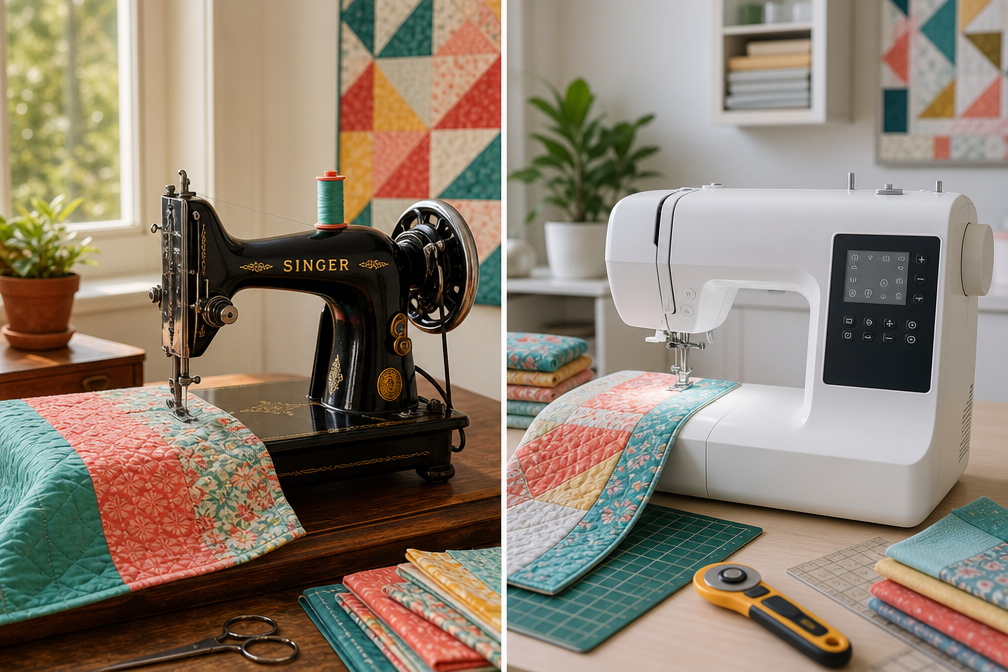
Quick Answer: Old sewing machines excel at durability and straight-stitch reliability thanks to all-metal construction, while new machines offer convenience features like automatic threading, hundreds of stitch patterns, and computerized controls. The “better” choice depends on your sewing style, vintage machines suit quilters and those who value longevity and repairability, whereas modern machines benefit sewers who need decorative stitches, buttonholes, and beginner-friendly automation.
Key Takeaways
- Vintage machines are built with all-metal internal parts that can last 50-100+ years with basic maintenance, while most modern machines under $500 use plastic gears that wear faster
- Old machines typically perform only straight stitch and zigzag, but execute these stitches with exceptional consistency and power through thick fabrics
- New computerized machines offer 50-400+ stitch patterns, automatic needle threading, speed control, and digital displays that simplify complex techniques
- Restoration costs for vintage machines range from $50-$300 depending on condition, while comparable new all-metal machines start around $800-$1,200
- Quilters often prefer vintage machines because consistent stitch length and metal construction handle layers of fabric and batting without skipped stitches
- Beginners may find new machines easier due to automatic features, but vintage machines teach fundamental sewing mechanics better
- Common vintage machine problems include dried lubricant, worn belts, and outdated electrical cords,most are fixable with basic tools
- Choose vintage if you sew garments, quilts, or home décor with straight seams and value a machine that lasts decades; choose new if you need embroidery, stretch stitches, or want plug-and-play convenience
What Makes Vintage Sewing Machines Different From Modern Ones?
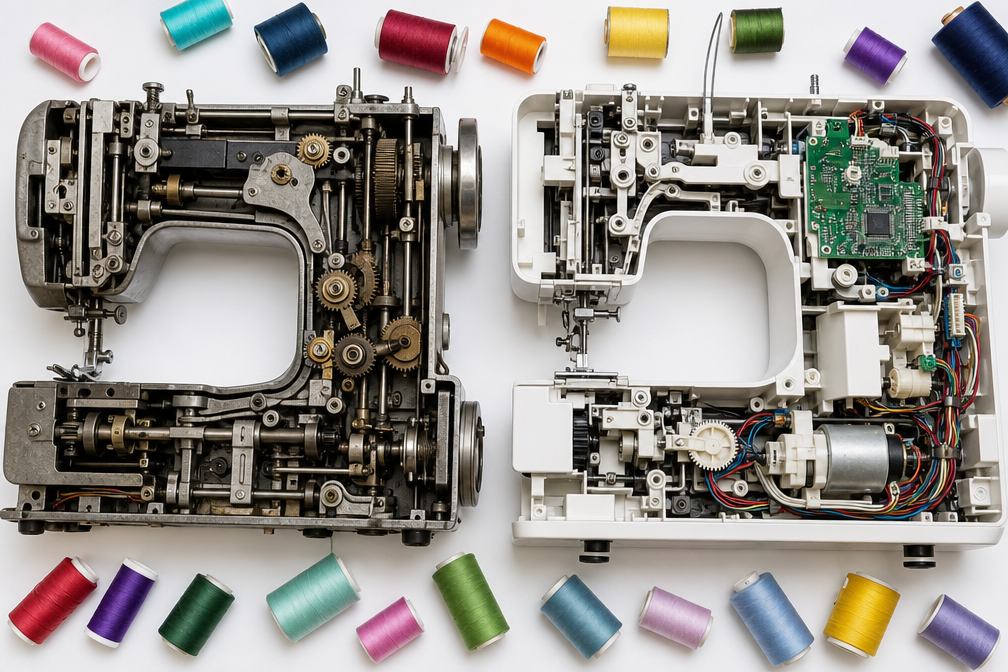
Vintage sewing machines manufactured before the 1980s feature all-metal internal components including steel gears, brass bushings, and cast-iron frames, whereas most modern machines under $500 use plastic gears, nylon cams, and lightweight aluminum or composite frames. This fundamental construction difference affects longevity, repairability, and stitch quality.
Key construction differences:
- Gear systems: Vintage machines use metal-on-metal gears that can be cleaned and re-lubricated indefinitely; modern budget machines use injection-molded plastic gears that strip under heavy use
- Frame weight: A vintage Singer 201 weighs about 28 pounds with a solid cast body; a comparable new mechanical machine weighs 12-15 pounds with a plastic housing
- Motor design: Old machines typically use universal motors with carbon brushes (replaceable); new machines use computerized motors with circuit boards (often not repairable)
- Stitch formation: Vintage machines rely on purely mechanical cam systems for stitch patterns; computerized machines use stepper motors controlled by software
The mechanical simplicity of vintage machines means fewer points of failure. When a 1960s Singer breaks, you can usually identify the problem visually and fix it with basic tools. When a modern computerized machine fails, the issue often involves proprietary circuit boards or software that require manufacturer service.
Choose a vintage machine if you value repairability, plan to sew for decades, and primarily need straight stitching. Choose a modern machine if you want the latest stitch options, don’t want to learn mechanical troubleshooting, or need features like automatic tension adjustment.
Do Old Sewing Machines Last Longer Than New Models?
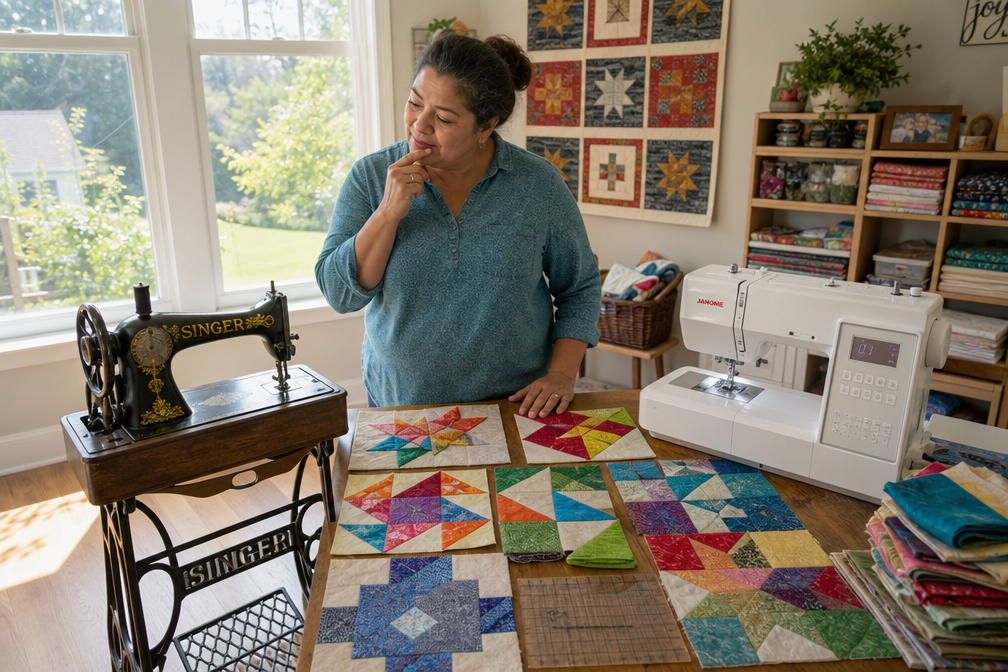
Yes, vintage all-metal sewing machines typically outlast modern plastic-gear machines by decades when properly maintained. Many Singer Featherweights, Singer 201s, and Bernina 830s from the 1950s-1970s remain fully functional in 2026 after 50-70 years of use, while consumer-grade modern machines often require replacement after 5-10 years of regular sewing.
The longevity difference comes down to materials and design philosophy. Pre-1980s manufacturers built machines for multi-generational use with serviceable parts. Modern manufacturers (except high-end brands like Bernina, Pfaff, and industrial models) design for a 5-10 year product lifecycle with planned obsolescence.
Lifespan comparison by construction type:
| Machine Type | Expected Lifespan | Primary Failure Points |
|---|---|---|
| Vintage all-metal (pre-1980) | 50-100+ years | Motor brushes, wiring, belts (all replaceable) |
| Modern high-end ($1,000+) | 20-30 years | Circuit boards, computerized components |
| Modern mid-range ($300-$800) | 10-15 years | Plastic gears, timing mechanisms |
| Modern budget ($100-$300) | 3-7 years | Plastic internal parts, motor failure |
Common mistake: Assuming all old machines last forever. Machines that sat unused for 20+ years often have dried lubricant, rust, and perished rubber parts. A neglected vintage machine may need $100-$200 in restoration, while a well-maintained one just needs a drop of oil.
The durability advantage applies mainly to mechanical vintage machines. Early computerized machines from the 1980s-1990s often have obsolete circuit boards that can’t be replaced, making them less reliable than purely mechanical models.
Are Metal Sewing Machines Better Than Plastic Ones?
Metal sewing machines deliver superior durability, consistent stitch quality under load, and long-term reliability compared to plastic-gear machines, but they cost more and weigh significantly more. For sewers who work with heavy fabrics, quilt multiple layers, or sew several hours weekly, the metal construction justifies the investment.
Performance differences:
- Gear durability: Metal gears maintain precise timing for decades; plastic gears can strip when sewing through denim, canvas, or multiple fabric layers
- Vibration and noise: Metal frames dampen vibration better, producing smoother operation; plastic housings amplify motor noise and can crack from vibration over time
- Stitch consistency: Metal machines maintain tension and stitch length more reliably because components don’t flex under needle pressure
- Repair economics: Metal parts can be machined, polished, or replaced individually; plastic parts often require entire assembly replacement
Weight trade-off: An all-metal vintage Singer weighs 25-35 pounds, making it stable during use but difficult to move. A plastic modern machine weighs 10-18 pounds, offering portability but less stability when sewing thick seams.
Choose metal construction if you sew upholstery, bags, quilts, or garments from heavy fabric, plan to keep your machine 20+ years, or sew more than 10 hours monthly. Choose plastic if you need a lightweight machine for classes, sew mostly lightweight cottons and knits, or have a limited budget (under $300).
Modern exceptions exist: Janome HD3000, Juki TL-2010Q, and similar “heavy-duty” machines use metal internal frames with plastic housings, offering a middle ground around $400-$600.

POWERFUL FOR TOUGH FABRICS: With 50% more power, the SINGER Heavy Duty 4411 is built to handle tough fabrics like denim, canvas, and leather. Its heavy-duty motor ensures professional-grade stitching, making it a reliable choice for heavy-duty projects, while also offering versatility for lighter fabrics like dress-weight materials.

Effortless Beginner-Friendly Sewing – Jumpstart your creative journey with a tailoring machine designed for first timers. The Arctic Crystal simplifies every step from threading to stitch selection, letting you focus on bringing your projects to life.

Effortless Beginner-Friendly Sewing – Jumpstart your creative journey with a tailoring machine designed for first timers. The Cat Fancy simplifies every step from threading to stitch selection, letting you focus on bringing your projects to life.
Which Is Better: Singer Featherweight or New Computerized Machine?
A Singer Featherweight excels at portable straight-stitch sewing with legendary reliability and holds resale value, while a new computerized machine offers versatility with hundreds of stitches, automatic features, and modern convenience. The Featherweight wins for quilters, travelers, and those who primarily sew straight seams; computerized machines win for decorative sewing, embroidery, and beginners who want guided features.
Singer Featherweight strengths:
- Weighs only 11 pounds but sews through multiple quilt layers without stalling
- Produces perfectly consistent 1/4-inch seams (quilter’s favorite)
- Resale value holds steady at $300-$600 depending on condition (often appreciates)
- Requires minimal maintenance (oil every 8-10 hours of sewing)
- No circuit boards or computers to fail
Computerized machine strengths:
- 50-400+ built-in stitches including stretch, decorative, and heirloom patterns
- Automatic needle threader, thread cutter, and tension adjustment
- Digital display shows stitch selection and settings
- Built-in buttonhole functions (often one-step)
- Speed control slider for precise stitching pace
Real-world scenario: A quilter making bed quilts will finish projects faster on a Featherweight because it handles thick batting without hesitation and never skips stitches. A garment sewer making children’s clothes needs the stretch stitches, decorative options, and automatic buttonholes that only a computerized machine provides.
Price reality in 2026: A restored Featherweight costs $350-$500. A quality computerized machine (Brother CS7000i, Janome 4120QDC) costs $250-$400 new. The Featherweight retains value; the computerized machine depreciates to near-zero in 5-10 years.
Common mistake: Buying a Featherweight expecting it to do everything. It only does straight stitch and, on some models, reverse. If you need zigzag for knit fabrics or finishing seams, you need a different vintage model (like Singer 401a) or a modern machine.

Easy to Use for Beginners & Quick Fixes: This handheld sewing machine is incredibly beginner-friendly. No experience? No problem. Get quick repairs done on clothes, pants, curtains, and more in seconds - no experience needed

27 Unique Built-in Stitches: The Brother XM2701 sewing machine includes 27 built-in stitches including decorative, blind hem, zigzag, and stretch stitches and an auto-size buttonhole
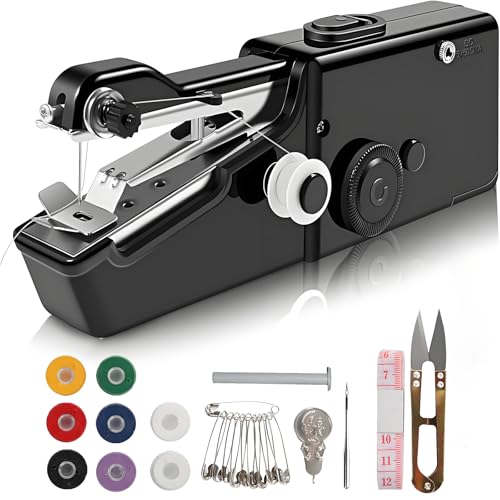
【Simple Operation】Line with the flat edge, the cordless sewing machine can automatically move. Please read the instructions carefully before using it.
How Much Does It Cost to Restore an Old Sewing Machine?
Professional restoration of a vintage sewing machine typically costs $150-$300 for a full service including cleaning, timing adjustment, new belts, and electrical safety checks, while DIY restoration runs $30-$80 for supplies if you have basic mechanical skills. Machines in good cosmetic condition needing only cleaning and lubrication cost $50-$100 to service.
Typical restoration cost breakdown:
- Basic cleaning and oiling (DIY): $15-$25 for sewing machine oil, brushes, and cleaning supplies
- New motor belt: $8-$15
- Electrical cord replacement: $12-$20 (essential for safety on pre-1970s machines)
- Professional timing adjustment: $75-$150 (needed if stitches skip or loop)
- Motor service (brushes, cleaning): $40-$80
- Cosmetic restoration (decal repair, paint): $100-$300 additional
When to DIY vs. hire a professional:
DIY if the machine runs but sounds dry, has visible dust buildup, or hasn’t been used in 5-10 years. YouTube tutorials for specific models (search “[model number] cleaning”) walk through the process. You’ll need sewing machine oil (not WD-40), small screwdrivers, and lint brushes.
Hire a professional if the machine won’t stitch properly, makes grinding noises, has timing issues (needle hits bobbin case), or you’re uncomfortable working with electrical components. A qualified technician can diagnose problems in 15 minutes that might take you hours to troubleshoot.
Red flags that increase cost: Rust on internal parts ($50+ additional for rust removal), broken gears or cams ($100-$200 for parts and labor), or missing parts that require fabrication ($150+). Always ask for an estimate before authorizing work beyond basic cleaning.
Best value approach: Buy a vintage machine that runs but needs cleaning ($50-$150 at estate sales), invest $50 in professional cleaning, and learn basic maintenance yourself. Total investment: $100-$200 for a machine that will last 30+ years.
Why Do Quilters Prefer Vintage Sewing Machines?
Quilters favor vintage sewing machines because they deliver rock-solid straight stitching through multiple fabric layers without skipped stitches, maintain precise 1/4-inch seam allowances critical for piecing accuracy, and feature all-metal construction that doesn’t bog down when sewing through batting and backing. The Singer Featherweight, Singer 201, and Bernina 830 are quilting legends for these exact reasons.
Specific quilting advantages:
- Consistent stitch length: Mechanical cams produce identical stitches regardless of fabric thickness; computerized machines sometimes vary stitch length when fabric resistance changes
- Presser foot pressure: Vintage machines use simple spring-loaded pressure that quilters can adjust with a dial; many modern machines have automatic pressure that doesn’t adapt well to thick batting
- Throat space: While vintage domestic machines don’t have extended throats, their stable feeding mechanism handles quilt sandwiches better than lightweight modern machines that shift under bulk
- No stitch complications: Quilting requires only straight stitch and occasional zigzag; vintage machines excel at these basics without the complexity of 200 unused decorative stitches
Quilter testimonial pattern: Search any quilting forum and you’ll find threads titled “My grandmother’s Singer outperforms my new Janome” or “Why does my Featherweight sew better than my $800 machine?” The answer is always the same: metal gears, mechanical simplicity, and purpose-built straight-stitch excellence.
The 1/4-inch seam factor: Quilting accuracy depends on perfect 1/4-inch seams. Vintage machines with adjustable needle position and a proper 1/4-inch foot maintain this measurement across hundreds of seams. Modern machines with plastic internal parts can develop slight timing variations that throw off seam accuracy by 1/16 inch, enough to make quilt blocks not square up.
Choose vintage for quilting if you piece traditional quilts, work with cotton batting, and value stitch reliability over decorative options. Choose modern if you do free-motion quilting (needs drop feed dogs), want a walking foot for machine quilting, or need the extended throat space of a mid-arm machine.
What Are Common Problems With Antique Sewing Machines?
The most common problems with antique sewing machines include dried or gummy lubricant causing stiff movement, perished rubber belts that slip or break, outdated electrical cords with cracked insulation (fire hazard), and rust on internal parts from improper storage. Most of these issues are fixable with basic maintenance, but timing problems and broken internal parts require professional repair.
Top 5 vintage machine problems and fixes:
Stiff or frozen hand wheel
- Cause: Dried oil and lint buildup in gear mechanisms
- Fix: Disassemble top and bottom, clean with mineral spirits, re-oil with proper sewing machine oil
- Cost: $0-$15 DIY, $75-$125 professional
Skipped stitches
- Cause: Timing off (needle and hook not synchronized), wrong needle, or dull needle
- Fix: Replace needle first (cheapest solution), then check timing (requires technical skill)
- Cost: $2 for needles, $75-$150 for timing adjustment
Electrical issues (motor won’t run, sparks, burning smell)
- Cause: Worn motor brushes, frayed wiring, or failing capacitor
- Fix: Replace motor brushes ($5-$10), rewire with modern cord ($15-$25), or replace motor ($50-$100)
- Cost: $15-$100 depending on issue
Thread tension problems
- Cause: Lint in tension discs, bent tension spring, or incorrect threading path
- Fix: Clean tension assembly with dental floss, check threading diagram for your model
- Cost: $0 DIY, $40-$60 professional cleaning
Rust on metal parts
- Cause: Storage in damp conditions without oil protection
- Fix: Light surface rust removes with fine steel wool and oil; deep rust requires professional restoration
- Cost: $5-$15 DIY for surface rust, $100+ for extensive rust removal
When to walk away: If the machine has broken cast-iron parts (frame cracks), missing proprietary parts no longer manufactured, or extensive rust that has pitted metal surfaces, restoration may cost more than buying a different vintage machine in better condition.
Prevention is cheap: A $5 bottle of sewing machine oil and 10 minutes of maintenance every 3-6 months prevents 80% of vintage machine problems. Store machines with dust covers in climate-controlled spaces, and run them at least once monthly to keep lubricant distributed.
Can Old Sewing Machines Sew Through Thick Fabric Better?
Yes, vintage all-metal sewing machines typically handle thick fabrics like denim, canvas, upholstery, and multiple quilt layers better than modern plastic-gear machines because their metal gears don’t flex under load and their powerful motors maintain consistent speed through heavy material. Industrial-strength vintage models like Singer 201, Singer 401, and Kenmore 158 series are particularly renowned for heavy-fabric performance.
Why vintage machines excel with thick fabric:
- Gear strength: Metal gears transfer full motor power to the needle without slipping; plastic gears can strip when resistance increases
- Motor torque: Older universal motors produce high torque at low speeds, perfect for punching through thick seams; modern computerized motors sometimes stall
- Presser foot pressure: Vintage machines have strong spring-loaded pressure that holds thick fabric firmly; many modern machines have insufficient pressure for heavy materials
- Feed dog height: Older machines often have taller, more aggressive feed dogs that grip heavy fabric better
Real-world thick-fabric test: Try sewing through 4 layers of denim with a flat-felled seam (8 layers total at the overlap). A vintage Singer 201 or 401 will power through without hesitation. A modern $200 machine will likely stall, skip stitches, or produce uneven stitch length.
Needle and thread matter too: Even the best vintage machine needs appropriate tools. Use size 16 or 18 denim needles, heavy-duty thread (Gutermann or Coats & Clark), and slow, steady speed. The machine provides the power, but correct supplies prevent thread breakage and skipped stitches.
Modern exceptions: Heavy-duty modern machines like Janome HD3000 ($400), Singer Heavy Duty 4452 ($250), and Juki TL-2010Q ($550) use reinforced metal frames and stronger motors specifically for thick fabrics. They bridge the gap between vintage durability and modern convenience.
Choose vintage for heavy fabric if you sew bags, upholstery, outdoor gear, or work with canvas and leather regularly. Choose a modern heavy-duty model if you need the thick-fabric power plus modern features like automatic needle threader and multiple stitch options.
Should Beginners Buy Vintage or New Sewing Machines?
Beginners benefit most from new sewing machines with automatic features like needle threaders, tension adjustment, and buttonhole functions that reduce frustration during the learning curve, but mechanically-inclined beginners who want to understand sewing fundamentals may prefer a simple vintage machine that teaches proper threading, tension control, and stitch mechanics. The choice depends on learning style and project goals.
New machines for beginners: advantages
- Automatic needle threader eliminates the #1 beginner frustration
- Pre-set tension works for most fabrics without adjustment
- One-step buttonholes remove a complex technique from the learning curve
- Instructional DVDs and online tutorials abundant for popular models
- Lightweight design (12-15 lbs) easy to move to classes
- Warranty coverage (1-5 years) provides peace of mind
Vintage machines for beginners: advantages
- Mechanical simplicity means fewer things to go wrong
- Forces learning of fundamental skills (threading, tension, timing)
- Straight-stitch focus prevents overwhelming choice paralysis
- Lower cost ($50-$200 for working machine) reduces financial risk
- Teaches troubleshooting and maintenance skills
- Produces professional results once basics are mastered
The best beginner approach: Start with a new mechanical machine (not computerized) in the $150-$300 range like Brother XM2701 or Janome 2212. Learn on modern convenience features, then add a vintage machine later if you discover you love sewing and want the durability for long-term projects.
Common beginner mistake: Buying a vintage machine without testing it first. A non-functional vintage machine creates frustration that kills interest in sewing. If choosing vintage, buy from a dealer who services machines or have it professionally serviced before your first project.
Red flags for beginners: Avoid vintage machines with complex cam systems (multiple stitch patterns), early computerized models (1980s-1990s), or machines missing parts. Stick to simple straight-stitch models like Singer Featherweight, Singer 15-91, or basic Singer 99 if going vintage.
Are Old Sewing Machines Worth Repairing or Should I Buy New?
Vintage sewing machines are worth repairing when restoration costs less than $200 and the machine is a quality all-metal model (Singer 201, 401, Featherweight, Bernina 830, etc.) that will last decades after service, but machines with broken cast parts, missing proprietary components, or repair estimates exceeding $300 are usually better replaced with new or different vintage models. The decision hinges on the machine’s construction quality and your intended use.
Repair decision framework:
Definitely repair if:
- Machine is a sought-after model (Singer Featherweight, 201, 401, Bernina 830)
- Only needs cleaning, oiling, and belt replacement (under $100)
- All parts are present and functional
- Frame and body are solid with no cracks
- You plan to sew regularly for years
Probably repair if:
- Machine needs timing adjustment or motor service ($150-$200 total)
- It’s a family heirloom with sentimental value
- Comparable new machines cost $400+ (high-end Janome, Bernina)
- Parts are still available through specialty suppliers
Don’t repair if:
- Repair estimate exceeds $300
- Machine has broken cast-iron parts (frame, bed)
- Missing proprietary parts no longer manufactured
- Extensive rust requiring professional restoration ($200+)
- You can buy a working vintage machine of same model for less than repair cost
Cost comparison example (2026):
- Repair vintage Singer 401: $150 (cleaning, timing, belt, cord)
- Buy working Singer 401: $200-$300
- Buy new comparable machine: $400-$600 (Janome 4120QDC)
- Result: Repair makes sense if you already own it; buying a working vintage model is more economical than new
Sentimental value exception: If the machine belonged to a grandmother or has family history, repair costs up to $300-$400 are often worth it for the emotional connection, even if economics don’t justify it.
DIY repair consideration: If you’re mechanically inclined, many repairs cost $20-$50 in parts plus your time. YouTube channels like “Vintage Sewing Machine Garage” teach specific repairs. This changes the economics dramatically, a $150 professional repair becomes a $30 DIY project.
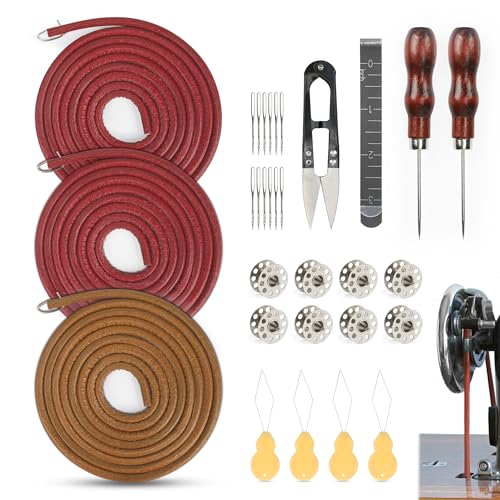
Treadle Sewing Machine Belt : 3 x treadle sewing machine belt with hooks, 8 x sewing machine bobbins, 10 x sewing machines needles, 4 x needle threaders, 1 x hemming clips, 2 x sewing awl, 1 x sewing scissors, a total 31 pieces

COMPLETE SET: Package includes 4 stainless steel bobbin cases for front-loading 15 class sewing machines, providing replacements and spares for uninterrupted sewing projects

2PCS sewing machine motor belt. Its material is nitrile rubber. Its perimeter ranges from 13 inch (330mm) to 15 inch (380mm) because it is stretchable and its diameter is 3/16 inch (5mm)
What Features Do New Sewing Machines Have That Old Ones Don’t?
New sewing machines offer computerized stitch selection with 50-400+ patterns, automatic needle threaders, digital displays, speed control sliders, automatic thread cutters, one-step buttonholes, stretch stitches for knits, and USB connectivity for custom embroidery designs, none of which exist on vintage mechanical machines. These features add convenience and expand creative possibilities but also introduce electronic components that can fail.
Modern features not available on vintage machines:
Convenience features:
- Automatic needle threader (saves eye strain and frustration)
- Automatic thread cutter (snips threads at button press)
- Needle up/down button (positions needle for pivoting)
- Speed control slider (limits maximum speed for precision)
- LED lighting (brighter, cooler than vintage bulbs)
- Free arm (removes for sewing cuffs and sleeves, some vintage machines have this)
Stitch capabilities:
- Stretch stitches for knit fabrics (essential for modern athletic wear)
- Decorative stitches (flowers, scallops, geometric patterns)
- Alphabet stitches for monogramming
- Quilting stitches (stippling, echo patterns)
- Automatic buttonholes (measures button, sews perfect hole)
- Twin needle capability with automatic width adjustment
Digital features:
- LCD screen showing stitch selection and settings
- Memory function (saves custom stitch combinations)
- USB port for downloading embroidery designs
- Automatic tension adjustment (sensors detect fabric thickness)
- Stitch editing (adjust length, width, mirror image)
Trade-off reality: Each electronic feature adds complexity and potential failure points. A computerized machine with 200 stitches has circuit boards, stepper motors, and sensors that can malfunction. A vintage machine with one stitch has a cam and gears that last 50 years.
Who needs modern features:
- Garment sewers working with knits (need stretch stitches)
- Crafters making decorative items (want pattern variety)
- Beginners who benefit from automatic threading and tension
- Sewers with vision challenges (automatic threader, LED lights)
- Embroidery enthusiasts (need computerized embroidery machines)
Who doesn’t need modern features:
- Quilters (straight stitch is 95% of piecing)
- Garment sewers working with wovens (straight stitch and zigzag sufficient)
- Minimalists who value simplicity and reliability
- Sewers who enjoy mechanical troubleshooting
Do Vintage Sewing Machines Need Special Maintenance?
Vintage sewing machines require regular oiling every 8-10 hours of sewing, periodic cleaning of lint from bobbin area and feed dogs, and occasional belt replacement, but these maintenance tasks are simpler and cheaper than servicing computerized machines because vintage models use accessible mechanical parts without sealed components or proprietary software. Most owners can perform routine maintenance with a $5 bottle of oil and basic tools.
Essential vintage machine maintenance schedule:
After every project (or every 8-10 hours):
- Remove bobbin case and brush out lint
- Oil all moving parts visible in bobbin area (2-3 drops)
- Oil top mechanism at marked oil points (check manual)
- Wipe exterior with soft cloth
Every 3-6 months:
- Deep clean bobbin area and feed dogs with brush
- Check belt for cracks or glazing (replace if needed, $8-$15)
- Oil all accessible points per manual (usually 10-15 locations)
- Check electrical cord for cracks (replace if any damage)
Annually:
- Remove top cover and clean internal mechanisms
- Check motor brushes (replace if worn below 1/4 inch)
- Inspect wiring for fraying or damage
- Professional service if machine shows timing issues
Critical maintenance rules:
- Use only sewing machine oil (not WD-40, 3-in-1 oil, or motor oil, these gum up mechanisms)
- Less is more (2-3 drops per point; excess oil attracts lint)
- Run the machine after oiling (distribute oil through mechanisms)
- Never force stuck parts (soak with penetrating oil first)
Maintenance cost comparison:
- Vintage machine annual maintenance: $5-$15 in supplies (DIY)
- Modern machine annual service: $75-$150 (requires technician for computerized components)
- Vintage machine professional service: $75-$125 every 3-5 years (optional if you DIY)
Common maintenance mistakes:
- Over-oiling (causes oil spots on fabric)
- Using wrong oil type (causes gummy buildup)
- Ignoring lint buildup (causes timing issues)
- Storing without dust cover (allows dust in mechanisms)
Advantage of vintage maintenance: You can see what you’re doing. Remove a few screws, and all mechanisms are visible and accessible. Modern machines often have sealed components you can’t service without voiding warranty.
When Is It Better to Buy a New Machine Instead of Vintage?
Buy a new sewing machine instead of vintage when you need stretch stitches for knit fabrics, want embroidery capabilities, require automatic features due to vision or dexterity challenges, sew infrequently and prefer plug-and-play convenience, or work primarily with modern synthetic fabrics that benefit from computerized tension adjustment. New machines also make sense for sewers who lack space to store a heavy vintage machine or don’t want to learn mechanical maintenance.
Scenarios where new wins:
Fabric type requirements:
- Sewing athletic wear, swimsuits, or modern knits (need stretch stitches)
- Working with synthetic fabrics like polyester, spandex, or technical materials
- Sewing sheer or delicate fabrics (benefit from automatic tension)
Physical considerations:
- Vision challenges (automatic needle threader essential)
- Arthritis or hand strength issues (automatic features reduce manual manipulation)
- Need lightweight machine for classes or moving between locations
- Limited storage space (modern machines more compact)
Skill and time factors:
- Complete beginner wanting immediate success (automatic features reduce frustration)
- Sew only occasionally (don’t want to maintain vintage machine)
- No interest in learning mechanical troubleshooting
- Need warranty support and customer service
Project requirements:
- Embroidery or monogramming (requires computerized machine)
- Decorative stitching for crafts or home décor
- Professional garment construction with multiple stitch types
- Buttonholes on every project (automatic buttonhole saves time)
Budget scenarios:
- Can afford $300-$600 for quality new machine with warranty
- Don’t have time to hunt estate sales for vintage machines
- Want to avoid potential restoration costs
The hybrid approach: Many serious sewers own both, a vintage workhorse for straight-stitch projects (quilts, garments, home décor) and a modern machine for specialty stitches and decorative work. A Singer Featherweight ($350) plus a Brother CS7000i ($250) covers 95% of sewing needs for $600 total.
When vintage still wins: If you primarily sew quilts, woven garments, bags, or home décor with straight seams, and you value durability and repairability, vintage remains the better choice even in 2026. The all-metal construction and mechanical simplicity deliver reliability that modern machines under $800 can’t match.
Frequently Asked Questions
Are vintage sewing machines more reliable than new ones?
Yes, vintage all-metal machines are generally more reliable for straight-stitch sewing because they have fewer failure points and metal gears that don’t wear out. Modern machines offer more features but plastic internal parts in budget models (under $500) fail more frequently than vintage metal construction.
What’s the best vintage sewing machine for beginners?
The Singer Featherweight or Singer 15-91 are ideal vintage beginner machines because they’re simple straight-stitch models with straightforward threading, easy-to-find parts, and abundant online tutorials. Both teach fundamental sewing skills without overwhelming complexity.
Can you use modern thread on old sewing machines?
Yes, modern polyester and cotton threads work perfectly on vintage machines. Use size 50 or 60 weight thread for general sewing and adjust tension slightly if needed. Avoid thick decorative threads designed for computerized machines with larger needle eyes.
How do I know if a vintage sewing machine is worth buying?
Check that the hand wheel turns smoothly, all parts are present (bobbin case, presser feet, face plate), there’s no rust on visible metal parts, and the price is under $150 for untested machines or $200-$400 for serviced models. Research the specific model online to verify it’s a quality all-metal machine.
Do vintage sewing machines work with modern needles?
Yes, vintage domestic machines use standard 15×1 needles (also called 130/705H) that are widely available in 2026. Industrial vintage machines may use different needle systems, so verify the needle type before purchasing.
Why are Singer Featherweights so expensive?
Singer Featherweights command $300-$600 prices because they’re lightweight (11 lbs), produce exceptional straight stitches, last indefinitely with minimal maintenance, and have strong collector demand. Their portability and reliability make them valuable to quilters and traveling sewers.
Can old sewing machines sew leather?
Heavy-duty vintage machines like Singer 201, Singer 401, and industrial models can sew thin to medium leather with appropriate needles (size 16-18 leather needles) and thread. Very thick leather requires industrial walking-foot machines. Lightweight vintage machines (Featherweight, Singer 99) struggle with leather.
What’s the difference between Singer 201 and Singer 401?
The Singer 201 (1930s-1950s) is a straight-stitch-only machine with gear-driven mechanism, while the Singer 401 (1950s-1960s) offers multiple stitch patterns via interchangeable cams and has a slant-needle design. Both are all-metal and highly durable; the 401 provides more versatility.
Are computerized sewing machines worth the extra cost?
Computerized machines justify their cost ($300-$1,000+) if you need embroidery, extensive decorative stitches, or automatic features that save time. For straight-stitch sewing (quilting, basic garments), a mechanical machine or vintage model delivers equal or better results at lower cost.
How often should I service a vintage sewing machine?
Oil your vintage machine every 8-10 hours of sewing and perform deep cleaning every 3-6 months. Professional servicing is recommended every 3-5 years or when you notice timing issues, unusual noises, or stitch quality problems. Regular DIY maintenance prevents most problems.
Can I find parts for old sewing machines?
Common vintage models (Singer Featherweight, 201, 401, 15-91) have excellent parts availability through online suppliers like Sewing Parts Online, eBay, and specialty vintage dealers. Obscure brands or models from the 1980s-1990s may have limited parts availability.
What should I avoid when buying a vintage sewing machine?
Avoid machines with broken cast-iron parts, extensive rust, missing proprietary components, early computerized models (1980s-1990s), or unknown brands with no parts availability. Also skip machines priced over $400 unless they’re rare collectibles or professionally restored.
Conclusion
The question “are old sewing machines better than new ones?” doesn’t have a single answer because “better” depends entirely on what you sew and what you value. Vintage all-metal machines deliver unmatched durability, superior straight-stitch performance, and decades of reliable service, making them ideal for quilters, garment sewers working with wovens, and anyone who values repairability and longevity. Modern machines offer convenience features, stitch variety, and specialized capabilities like stretch stitches and embroidery that vintage machines simply can’t provide.
Your next steps:
Assess your sewing style: List the projects you make most often and the stitches you actually use (most sewers use straight stitch 80% of the time)
Try before you buy: Test a vintage machine at a sewing guild meeting or borrow one from a friend to experience the difference in feel and performance
Set a realistic budget: Quality vintage machines run $150-$400 serviced; comparable new mechanical machines cost $250-$600; computerized machines with extensive features start at $400
Consider the hybrid approach: A vintage workhorse for everyday sewing plus a modern machine for specialty stitches gives you the best of both worlds
Learn basic maintenance: Whether you choose vintage or new, understanding how to clean, oil, and troubleshoot your machine extends its life and improves your sewing experience
The vintage vs. new debate ultimately comes down to this: vintage machines are tools built to last generations with straightforward mechanics you can understand and repair, while modern machines are appliances designed for convenience with features that expand creative possibilities but may not outlast their warranty. Choose based on your sewing goals, mechanical comfort level, and whether you value longevity or versatility more highly.