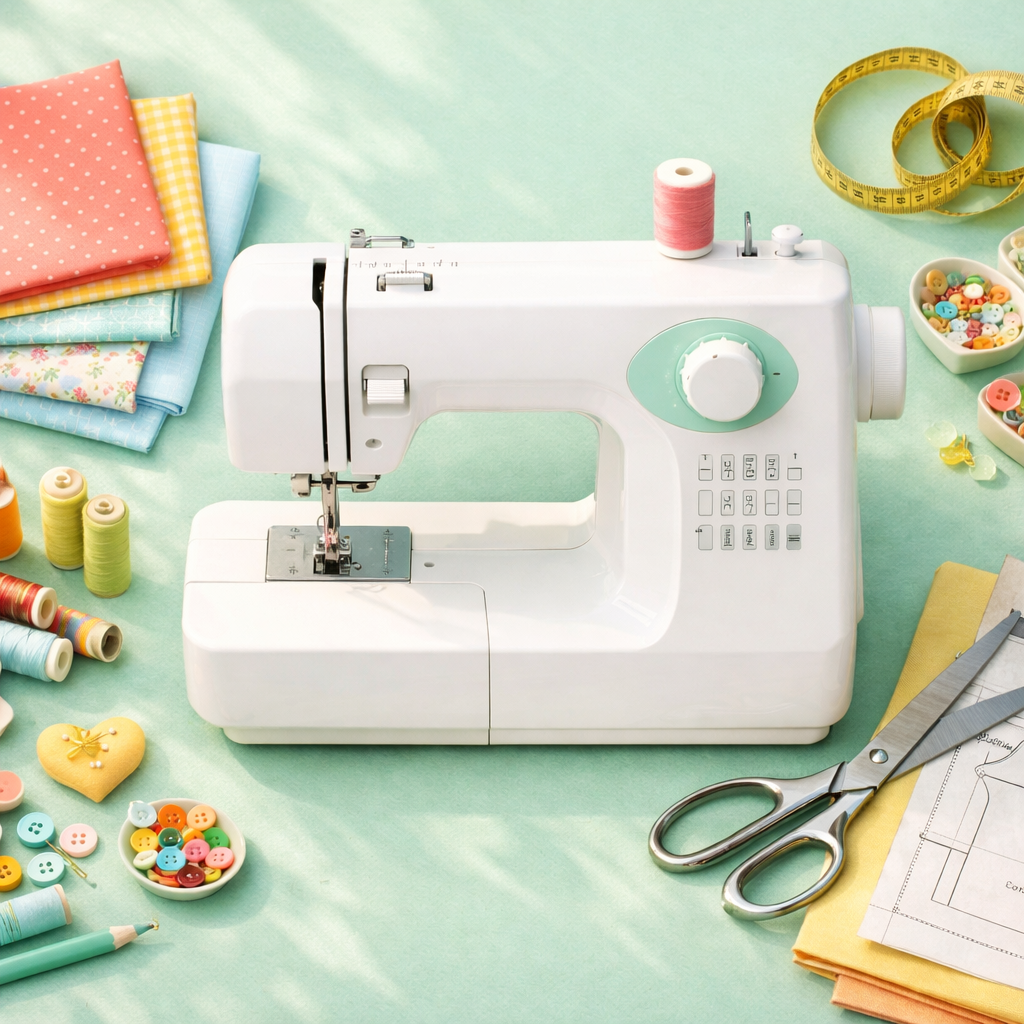
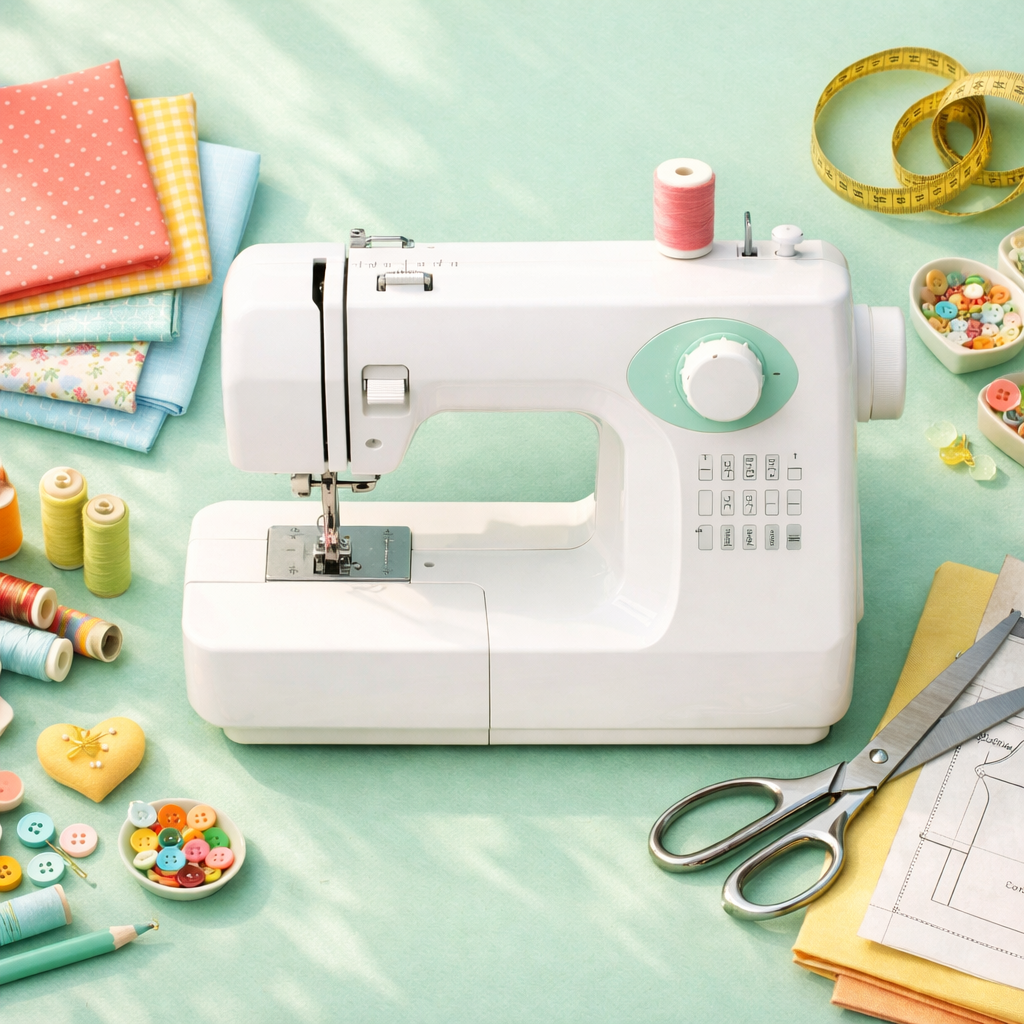
Quick Answer: Most beginners should budget between $150 and $300 for their first sewing machine. This price range offers reliable mechanical or basic computerized models with essential features like adjustable stitch length, multiple stitch options, and a free arm for sewing sleeves and cuffs. Spending less than $100 often means frustrating performance issues, while spending more than $400 as a complete beginner usually wastes money on advanced features you won’t use until you’ve developed your skills.
Key Takeaways
- The sweet spot for beginner machines is $150-$300, offering durability and essential features without overpaying for advanced functions
- Avoid machines under $75, they’re often toy-grade with plastic internal parts that skip stitches and break easily
- Mechanical machines are often better than computerized for beginners because they’re simpler to troubleshoot and repair
- Essential features matter more than stitch count, prioritize adjustable stitch length, a free arm, and metal internal frame over 100+ decorative stitches
- Used machines from quality brands (Singer, Brother, Janome) can be excellent starter options if purchased from $50-$150 and recently serviced
- Plan to keep your beginner machine for 1-3 years before upgrading, depending on how quickly your skills and project ambitions grow
- Common beginner mistakes include buying too cheap, buying too many features, or choosing a machine that’s too heavy to move comfortably
- Where you buy matters, authorized dealers offer better warranty support than third-party marketplace sellers
What Is a Good Price Range for a Beginner Sewing Machine?
A good price range for a beginner sewing machine falls between $150 and $300. This budget gets you a reliable machine from established brands like Brother, Singer, or Janome with metal internal components, consistent stitch quality, and enough features to grow your skills without overwhelming complexity.
Here’s how different price brackets break down:
Under $75: These are typically toy-grade machines with plastic gears and limited stitch quality. They work for occasional repairs but frustrate anyone trying to learn proper sewing technique.
$75-$150: Entry-level machines that can handle basic projects like hemming, simple garments, and home décor. Expect some plastic components and fewer built-in stitches (usually 6-15). Good for testing whether you’ll stick with sewing.
$150-$300: The recommended beginner sweet spot. Machines in this range feature:
- Metal internal frame for stability
- 15-50 built-in stitches including stretch stitches
- Adjustable stitch length and width
- Free arm for circular sewing
- Automatic or drop-in bobbin systems
- Basic buttonhole function
$300-$500: Intermediate territory with computerized features, LCD screens, and more stitch options. Usually overkill for true beginners who haven’t yet discovered which features they’ll actually use.
Over $500: Advanced and professional machines with embroidery functions, extensive stitch libraries, and specialized presser feet. Save this investment for when you know exactly what type of sewing you love.
Choose the $150-$300 range if you’re committed to learning but haven’t yet specialized in quilting, garment construction, or other specific sewing niches. This budget protects your investment while leaving room to discover your preferences.

Effortless Beginner-Friendly Sewing – Jumpstart your creative journey with a tailoring machine designed for first timers. The Cat Fancy simplifies every step from threading to stitch selection, letting you focus on bringing your projects to life.

Effortless Beginner-Friendly Sewing – Jumpstart your creative journey with a tailoring machine designed for first timers. The Pink Sorbet simplifies every step from threading to stitch selection, letting you focus on bringing your projects to life.

Effortless Beginner-Friendly Sewing – Jumpstart your creative journey with a tailoring machine designed for first timers. The Purple Majesty simplifies every step from threading to stitch selection, letting you focus on bringing your projects to life.
What’s the Difference Between Cheap and Expensive Sewing Machines for Beginners?
The main differences between cheap and expensive sewing machines lie in internal construction quality, stitch consistency, and feature durability rather than basic functionality. A $50 machine and a $250 machine both make straight stitches, but the cheaper model uses plastic gears that strip easily, skips stitches on thicker fabrics, and requires constant tension adjustments.
Key construction differences:
| Component | Cheap Machine (Under $100) | Quality Beginner Machine ($150-$300) |
|---|---|---|
| Internal frame | Plastic | Metal or reinforced composite |
| Gears | Plastic (wear quickly) | Metal (last years) |
| Motor | Low torque (struggles with denim) | Higher torque (handles multiple layers) |
| Feed dogs | Basic, sometimes uneven | Precision-cut, consistent fabric feeding |
| Presser foot pressure | Fixed or limited adjustment | Adjustable for different fabric weights |
Performance differences you’ll notice immediately:
- Stitch consistency: Expensive machines maintain even stitch length and tension across different fabrics. Cheap machines produce wavy seams and require constant re-threading.
- Noise level: Quality machines run quieter because of better motor engineering and tighter component tolerances.
- Needle penetration power: Cheap machines stall or skip stitches when sewing through thick seams (like jeans hems). Better machines power through without hesitation.
- Bobbin winding: Budget machines often have wobbly bobbin winders that create uneven tension. Quality machines wind smoothly and consistently.
Features that justify higher prices:
- Automatic needle threader (saves eye strain)
- One-step buttonhole function (vs. four-step manual process)
- Drop-in bobbin with clear cover (easier to monitor thread)
- Adjustable presser foot pressure (crucial for knits and delicates)
- Built-in needle up/down control
- Free arm for sleeves and pant legs
The common mistake: Beginners often think more stitches equal better value. A machine with 100 decorative stitches isn’t better than one with 25 stitches if the construction quality is poor. You’ll use straight stitch, zigzag, and maybe 3-5 others regularly. Focus on build quality over stitch count.
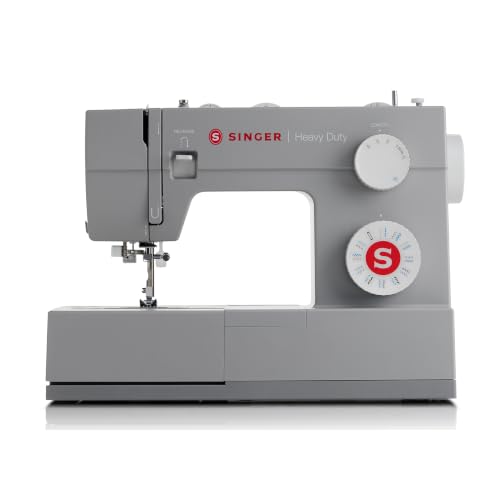
VERSATILE STITCHING WITH 97 APPLICATIONS: Get versatile performance with 23 built-in stitches that deliver 97 stitch applications. Easily handle basic, decorative, and functional sewing techniques, giving you flexibility for everyday projects and creative designs.

STYLISH & DURABLE DESIGN: The SINGER HEAVY DUTY 4423 sewing machine offers a fresh modern color combined with simplicity and strong piercing power for your inspiration and style expression. The heavy-duty metal frame ensures durability, stability, reducing vibrations for precise stitching, while the stainless-steel bedplate allows for smooth fabric feeding. Built to handle frequent use, this machine is designed for sewists of all levels.

✅ COLORFUL & BOLD DESIGN: Express your creativity inside and out with a vibrant rainbow checkered design, this sewing machine adds style to your craft room and inspires you with every stitch.
Best Sewing Machines Under $200 for Beginners
The best beginner sewing machines under $200 in 2026 include the Brother XM2701 ($130-$160), Singer Heavy Duty 4423 ($180-$200), and Janome 2212 ($170-$190). These models offer metal frames, reliable stitch quality, and enough features to complete most beginner and intermediate projects without frustrating mechanical issues.
Top picks and why they work:
Brother XM2701 ($130-$160)
- 27 built-in stitches including decorative options
- Lightweight at 12 pounds (easy to move and store)
- One-step automatic buttonhole
- Free arm for circular sewing
- Best for: Apartment dwellers and those who need portability
Singer Heavy Duty 4423 ($180-$200)
- Metal frame with extra-high sewing speed (1,100 stitches per minute)
- Powerful motor handles denim, canvas, and multiple layers
- 23 built-in stitches
- Stainless steel bedplate for smooth fabric feeding
- Best for: Sewing heavier fabrics, home décor projects, and upholstery repairs
Janome 2212 ($170-$190)
- 12 built-in stitches (fewer but high quality)
- Extremely reliable mechanical operation
- Free arm and drop feed for free-motion work
- Known for lasting 10+ years with basic maintenance
- Best for: Minimalists who want bulletproof reliability over features
What to look for when shopping under $200:
✓ At least 10-15 built-in stitches (straight, zigzag, blind hem, stretch stitches)
✓ Metal internal frame or heavy-duty construction
✓ Free arm capability
✓ Adjustable stitch length and width
✓ Reverse stitch lever for backstitching
✓ At least one automatic buttonhole option
✓ Included accessories: multiple presser feet, bobbins, seam ripper, needles
Red flags even in this price range:
✗ All-plastic construction
✗ No brand name or unknown manufacturer
✗ Fewer than 6 built-in stitches
✗ No reverse stitch function
✗ Fixed stitch length (no adjustment)
✗ Warranty shorter than 1 year
The smart shopping strategy: Wait for seasonal sales (Black Friday, January white sales, back-to-school in August) when these machines often drop $20-$40 below regular prices. Authorized dealers like Joann Fabrics, Amazon, and Walmart frequently run promotions that bring $200+ machines into the under-$200 range.

Effortless Beginner-Friendly Sewing – Jumpstart your creative journey with a tailoring machine designed for first timers. The Arctic Crystal simplifies every step from threading to stitch selection, letting you focus on bringing your projects to life.
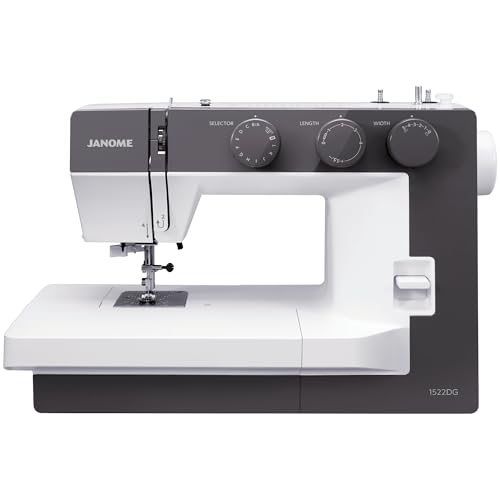
Designed to Stand Out – Complement your love for sewing with a machine that's styled to impress. You'll love the shade of black. A solid metal frame construction backs up the looks with real structural integrity, creating a heavy duty sewing machine.

27 Unique Built-in Stitches: The Brother XM2701 sewing machine includes 27 built-in stitches including decorative, blind hem, zigzag, and stretch stitches and an auto-size buttonhole
Do I Need an Expensive Sewing Machine If I’m Just Starting Out?
No, you don’t need an expensive sewing machine as a beginner. A quality machine in the $150-$300 range provides everything necessary to learn proper technique, complete projects successfully, and determine which sewing specialties interest you before investing in advanced features.
Why expensive machines waste money for beginners:
Starting with a $500+ machine before you understand your sewing preferences is like buying professional chef’s knives before you know whether you prefer baking or grilling. You’ll pay for features you don’t understand and may never use.
Features beginners don’t need yet:
- Embroidery functions ($300-$1,000 premium), Learn basic construction first
- Extensive stitch libraries (200+ stitches), You’ll use fewer than 10 regularly
- Computerized stitch customization, Unnecessary until you’re designing original patterns
- Automatic thread cutting, Nice luxury, not essential for learning
- Large throat space (for quilting), Only matters if you’re committed to quilting
- Dual feed or walking foot built-in, Can be added later as an attachment
What beginners actually need to learn effectively:
- Consistent stitch quality to understand proper tension and technique
- Adjustable stitch length to practice different seam types
- Zigzag capability for finishing seams and sewing knits
- Free arm to practice sewing sleeves, cuffs, and pant hems
- Reverse stitch for securing seam ends
- Basic buttonhole function (even manual 4-step is fine)
The learning curve reality: Most beginners spend their first 3-6 months mastering straight seams, understanding fabric grain, learning to read patterns, and practicing basic techniques like installing zippers and sewing curves. None of these skills require expensive machine features, they require practice and patience.
When expensive makes sense: If you’re transitioning from another fiber craft (quilting by hand, knitting, embroidery) and already know you’ll commit seriously to sewing, or if you have a specific project goal that requires advanced features (like starting a small alterations business), then investing more upfront can be justified.
The common regret: Sewing instructors report that beginners who start with expensive computerized machines often feel overwhelmed by options and spend more time navigating menus than actually sewing. Simpler mechanical machines in the $150-$300 range let you focus on developing hands-on skills rather than learning software interfaces.
What Features Should a Beginner Sewing Machine Have?
A beginner sewing machine should have adjustable stitch length and width, at least 10-15 built-in stitches including straight stitch and zigzag, a free arm for circular sewing, reverse stitch capability, and at least one automatic buttonhole option. These features support learning fundamental techniques without adding unnecessary complexity.
Essential features (non-negotiable):
Adjustable stitch length and width
Lets you customize seams for different fabrics and project types. Longer stitches (3-4mm) for basting and gathering, shorter stitches (1.5-2mm) for permanent seams, and variable widths for different zigzag applications.
Free arm
The bed of the machine converts to a narrow cylinder by removing the accessory tray. Essential for sewing sleeves, pant legs, cuffs, and anything tubular. Without this, you’ll struggle with basic garment construction.
Reverse stitch lever or button
Allows you to backstitch at the beginning and end of seams to lock stitches. Seams without backstitching unravel easily. This feature should be easy to reach while sewing.
Drop-in or front-loading bobbin
Drop-in bobbins with clear covers let you see remaining thread and are easier for beginners to load correctly. Front-loading bobbins work fine but have a slightly steeper learning curve.
Built-in stitches you’ll actually use:
- Straight stitch (your workhorse)
- Zigzag (seam finishing, sewing knits, appliqué)
- Blind hem stitch (invisible hems)
- Stretch stitch (for knit fabrics)
- At least one decorative stitch (optional but fun for learning)
Automatic buttonhole function
One-step buttonholes are easiest, but even four-step manual buttonholes work fine for beginners. This feature saves enormous time compared to hand-sewn buttonholes.
Helpful but not essential features:
- Automatic needle threader, Saves eye strain, especially helpful if you wear glasses
- Adjustable presser foot pressure, Useful for sewing different fabric weights, but many beginners won’t notice its absence initially
- Speed control slider, Lets you limit maximum speed while learning, reducing runaway stitching
- Needle up/down button, Sets whether the needle stops in the up or down position, helpful for pivoting corners
- Built-in light, Most machines include this, but brightness varies
Features to ignore as a beginner:
- Stitch count over 50 (you won’t use them)
- Computerized screens with touch controls (adds complexity)
- Embroidery capabilities (completely different skill set)
- Alphabet stitches for monogramming (novelty feature)
- Extensive memory functions (unnecessary for basic projects)
The decision rule: Choose a machine where you understand what every feature does and can imagine using it within your first year of sewing. If the salesperson’s explanation includes “once you’re more advanced,” you probably don’t need that feature yet.
Is It Worth Buying a Used Sewing Machine as a Beginner?
Yes, buying a used sewing machine can be an excellent choice for beginners if you purchase a quality brand model (Singer, Brother, Janome, Bernina) that has been recently serviced and costs 40-60% less than new. Used machines from the 1970s-1990s often feature all-metal construction superior to modern budget models, though you’ll sacrifice some convenience features.
Best used machine candidates for beginners:
Vintage mechanical Singers (1960s-1980s)
- Models like Singer 401, 500, or 600 series
- All-metal gears and heavy-duty construction
- Simple to maintain and repair
- Typical used price: $50-$150
- Drawback: Heavier (20-30 pounds), no modern convenience features
1990s-2000s Brother or Janome mechanicals
- Models like Brother LS-2125 or Janome 712T
- Reliable, lighter weight than vintage
- Parts still readily available
- Typical used price: $60-$120
- Drawback: Some plastic components, fewer built-in stitches
Where to find quality used machines:
✓ Local sewing machine repair shops, Often sell serviced trade-ins with short warranties
✓ Estate sales, Machines from serious sewers, often well-maintained
✓ Facebook Marketplace or Craigslist, Test before buying
✓ Thrift stores, Hit or miss, but occasionally find gems for $20-$50
What to check before buying used:
- Run the machine, Listen for grinding, clicking, or irregular motor sounds
- Test all stitches, Verify straight stitch, zigzag, and any other built-in stitches work smoothly
- Check tension, Stitches should look balanced on both sides of fabric
- Inspect the bobbin case, Should drop in or load smoothly without force
- Verify reverse stitch works, Essential feature that sometimes breaks
- Look for rust or corrosion, Especially around the needle plate and bobbin area
- Ask about service history, When was it last professionally cleaned and oiled?
Red flags that mean walk away:
✗ Seller can’t demonstrate the machine working
✗ Strong musty smell (indicates moisture damage)
✗ Visible rust on metal parts
✗ Cracked or broken plastic housing
✗ Missing essential parts (foot pedal, power cord, bobbin case)
✗ Price seems too good to be true (under $20 for a name brand usually means it’s broken)
The service investment: Budget an additional $50-$100 to have a used machine professionally serviced after purchase. A technician will clean, oil, time, and adjust tension, essentially making it perform like new. This investment still keeps your total cost well below a new machine.
When used doesn’t make sense: If you have no way to test the machine before buying, live far from repair shops, or feel uncomfortable evaluating mechanical condition, the risk may outweigh the savings. New machines under $200 come with warranties and return policies that eliminate these concerns.
How Much Do Singer Sewing Machines for Beginners Cost?
Singer sewing machines for beginners typically cost between $100 and $250, with popular models like the Singer Start 1304 ($100-$120), Singer 4423 Heavy Duty ($180-$200), and Singer Quantum Stylist 9985 ($220-$250). Singer offers one of the widest price ranges among major brands, from basic 6-stitch models to feature-rich computerized machines.
Singer’s beginner lineup by price tier:
Budget tier ($100-$150):
- Singer Start 1304, 6 built-in stitches, ultra-basic, good for testing interest
- Singer M1500, 10 stitches, lightweight, includes basic accessories
- Singer 1234, 12 stitches, free arm, simple mechanical operation
Mid-range tier ($150-$200):
- Singer Heavy Duty 4411, 11 stitches, metal frame, 1,100 stitches per minute
- Singer Heavy Duty 4423, 23 stitches, powerful motor, handles thick fabrics
- Singer 2277 Tradition, 23 stitches, one-step buttonhole, good all-arounder
Feature-rich tier ($200-$250):
- Singer Quantum Stylist 9985, 960 stitches (overkill for beginners), computerized
- Singer Confidence 7465, 30 stitches, automatic needle threader, LCD screen
Why Singer dominates the beginner market:
- Brand recognition, 170+ years in business, widely trusted
- Wide availability, Sold at Walmart, Target, Amazon, Joann, and specialty dealers
- Extensive support, Easy to find tutorials, replacement parts, and repair services
- Variety, Models for every budget and skill level
Singer’s reputation reality: Modern Singer machines are manufactured by different companies depending on price point. Budget models (under $150) are often made with more plastic components than vintage Singers, while mid-range and higher models maintain better build quality. The Singer name doesn’t automatically mean superior quality in 2026, evaluate each model individually.
Best Singer value for beginners: The Singer Heavy Duty 4423 ($180-$200) offers the best balance of price, durability, and features. Its metal frame and powerful motor handle a wide range of projects, and the 23 built-in stitches cover everything most beginners need without overwhelming complexity.
Singer vs. competitors at similar prices:
At $150-$200, Brother and Janome often offer comparable or better build quality than Singer. Brother machines typically include more built-in stitches at the same price point, while Janome machines are known for exceptional stitch quality and longevity. Singer’s advantage is widespread parts availability and name recognition, which matters if you need local repair services.
What Mistakes Do Beginners Make When Buying Their First Sewing Machine?
The most common mistakes beginners make when buying their first sewing machine are choosing the cheapest option to “test the waters,” buying too many features they don’t understand, ignoring machine weight and portability needs, and purchasing from sellers who don’t offer warranty support or return policies.
Mistake #1: Going too cheap to “see if I like sewing”
Buying a $50-$75 machine to test interest backfires because poor stitch quality and constant mechanical issues make sewing frustrating rather than enjoyable. You can’t determine if you like sewing when your machine skips stitches, jams frequently, and produces crooked seams. This false economy often convinces beginners they’re “bad at sewing” when the problem is equipment failure.
Better approach: Rent a machine from a local sewing shop ($20-$40/week) or borrow from a friend to test interest, then invest in the $150-$300 range once committed.
Mistake #2: Buying based on stitch count
Beginners see “200 built-in stitches!” and assume more equals better value. In reality, you’ll use straight stitch, zigzag, blind hem, and maybe 2-3 decorative stitches regularly. Machines with extensive stitch libraries often sacrifice build quality to hit a price point while appearing feature-rich.
Better approach: Prioritize construction quality (metal frame, metal gears) over stitch count. A machine with 15 high-quality stitches beats one with 100 mediocre stitches.
Mistake #3: Ignoring weight and storage
Buying a 25-pound machine when you live in a small apartment and need to store it in a closet between uses creates friction that reduces how often you actually sew. Conversely, buying an ultra-lightweight machine (under 10 pounds) often means sacrificing stability and power.
Better approach: Consider where you’ll sew and store the machine. If you need portability, look for machines in the 12-15 pound range that balance portability with stability.
Mistake #4: Choosing computerized over mechanical as a first machine
Computerized machines with LCD screens and touch controls seem modern and appealing, but they add complexity that beginners don’t need. When something goes wrong (and it will while learning), mechanical machines are easier to troubleshoot and cheaper to repair.
Better approach: Start with a mechanical machine to learn fundamentals, then upgrade to computerized once you understand what features you actually want.
Mistake #5: Buying from unauthorized sellers
Purchasing from Amazon third-party sellers, eBay, or discount websites often means receiving gray-market machines without valid warranties. When problems arise, the manufacturer won’t honor repairs, and the seller has disappeared.
Better approach: Buy from authorized dealers (brand websites, Joann Fabrics, local sewing shops) even if it costs $20-$30 more. The warranty protection and return policy are worth the premium.
Mistake #6: Not testing before buying
Buying online without ever touching the machine means you can’t evaluate whether the controls feel intuitive, the foot pedal is responsive, or the machine is too loud for your living situation.
Better approach: Visit a local dealer to test machines in your price range, then buy from wherever offers the best price (online or in-store). The hands-on experience informs better decisions.
Mistake #7: Skipping accessories and setup costs
Budgeting exactly $200 for a $200 machine leaves no money for essential extras like extra bobbins ($5-$10), quality thread ($15-$20 for a starter set), fabric scissors ($15-$25), and a seam ripper ($3-$5). You can’t start sewing without these basics.
Better approach: Budget 15-20% beyond the machine price for essential accessories and initial supplies.
Can You Learn to Sew on a $50 Machine?
You can technically learn basic hand-guided sewing on a $50 machine, but you’ll fight constant mechanical issues that make learning proper technique nearly impossible. Machines at this price point use all-plastic internal gears, weak motors, and imprecise tension systems that skip stitches, jam frequently, and produce inconsistent seam quality even when operated correctly.
What $50 machines can (barely) do:
- Straight stitches on lightweight cotton (single layer)
- Simple repairs like hemming dish towels
- Very basic practice with threading and bobbin winding
- Occasional use (a few times per year)
What $50 machines cannot do reliably:
- Sew through thick seams (like jeans hems with multiple layers)
- Maintain consistent tension across different fabrics
- Handle knit or stretchy fabrics without skipping stitches
- Produce professional-looking buttonholes
- Withstand regular use (multiple times per week)
The learning problem: When your machine skips stitches, you can’t tell whether it’s your technique (wrong needle, incorrect threading, improper fabric handling) or equipment failure. This ambiguity prevents you from developing good habits and understanding cause-and-effect relationships in sewing.
Real beginner experience with ultra-budget machines:
“I bought a $45 machine from Walmart to try sewing. After three projects, the bobbin case cracked, the tension became impossible to adjust, and it started making grinding noises. I thought I was terrible at sewing until I borrowed my friend’s $180 Brother and suddenly everything worked perfectly. The cheap machine wasted two months of frustration.”, Common story from sewing forums
When a $50 machine makes sense:
- You’re teaching a child basic sewing concepts (not technique)
- You need a machine for a single specific project (Halloween costume) and won’t use it again
- You’re doing hand-sewing crafts and only need occasional machine stitching for speed
The math that matters: A $50 machine that frustrates you into quitting after one month costs more per use than a $180 machine you happily use for three years. Calculate cost-per-project rather than upfront price.
The minimum viable investment: $100-$120 gets you into entry-level machines from Brother or Singer that, while still budget-tier, have enough quality control to produce consistent stitches and last through the learning phase. This extra $50-$70 makes the difference between success and frustration.
Beginner Sewing Machine vs. Intermediate: What’s the Difference?
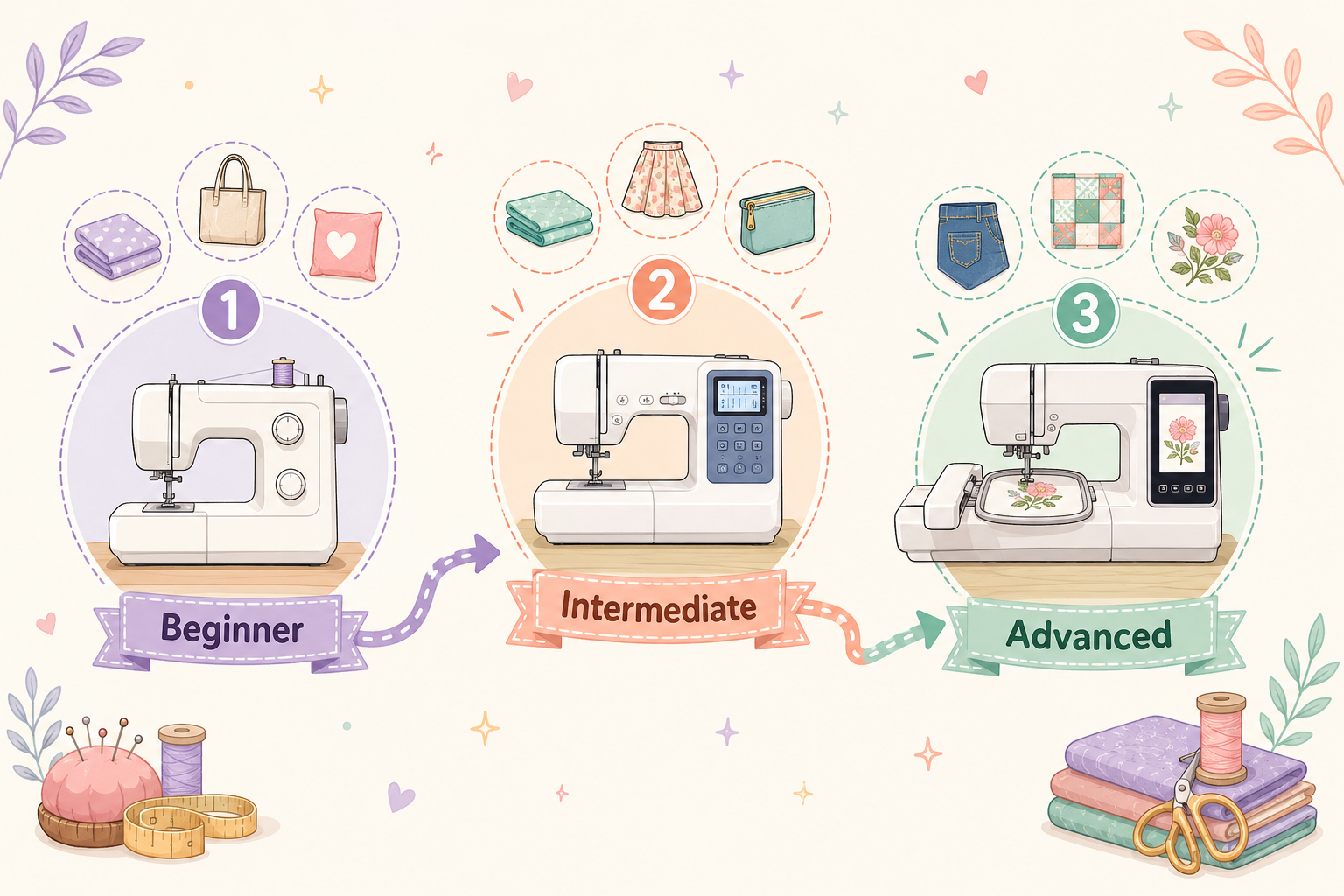
The main differences between beginner and intermediate sewing machines are motor power, stitch precision, specialty features for specific techniques, and build quality that supports daily use. Beginner machines ($150-$300) handle basic garment construction and home décor with adequate stitch quality, while intermediate machines ($300-$600) offer stronger motors for thick fabrics, more precise stitch control, and features like adjustable presser foot pressure and needle positions.
Key capability differences:
| Feature | Beginner Machine | Intermediate Machine |
|---|---|---|
| Motor power | Handles 2-4 layers of cotton | Handles 6-8 layers of denim |
| Stitch precision | Adequate for most projects | Consistent across all fabric types |
| Speed control | Fixed or 2-speed | Variable speed slider |
| Presser foot pressure | Fixed or limited adjustment | Fully adjustable for different weights |
| Needle positions | Center only or 3 positions | 5-13 positions for precise topstitching |
| Automatic features | Basic buttonhole | Multiple buttonhole styles, auto thread cutter |
| Throat space | 6-7 inches | 8-10 inches (better for quilting) |
When you’ve outgrown a beginner machine:
- Your projects consistently involve thick fabrics (canvas, upholstery, leather) that strain the motor
- You’re sewing professionally or for sale and need faster production speed
- You’ve specialized in quilting and need more throat space for large projects
- You’re doing precision work (tailoring, heirloom sewing) where stitch consistency matters visibly
- You’re sewing daily and your beginner machine requires frequent maintenance
What doesn’t change between levels:
Both beginner and intermediate machines use the same basic mechanics (needle, bobbin, feed dogs, tension system). The fundamental skills you learn on a beginner machine transfer completely to intermediate models. You’re not learning a new craft, you’re gaining precision and power.
The upgrade timing mistake: Many beginners think they should upgrade after 6-12 months automatically. Unless your projects are limited by your machine’s capabilities, there’s no reason to upgrade. Some sewers use beginner machines happily for 5+ years because their project types don’t require advanced features.
Signs you’re NOT ready to upgrade yet:
- You’re still learning pattern reading and basic construction
- You haven’t explored all the stitches and features on your current machine
- Your projects turn out well with your current equipment
- You’re sewing less than once per week
- You haven’t identified a specific limitation (like “I can’t sew through thick canvas”)
The intermediate sweet spot: Machines in the $350-$500 range from Brother, Janome, or Bernina offer the best intermediate value. They include features like adjustable presser foot pressure, multiple needle positions, and stronger motors without jumping to advanced/professional pricing.
When Should I Upgrade From a Beginner Sewing Machine?
You should upgrade from a beginner sewing machine when your current machine consistently limits your projects, requires frequent repairs, or lacks specific features you’ve identified as essential for your sewing specialty. Most sewers reach this point after 1-3 years and 30-50 completed projects, though timeline matters less than capability gaps.
Clear upgrade signals:
Your machine struggles with your preferred fabrics
If you’ve discovered you love sewing with denim, canvas, or upholstery fabrics and your machine stalls, skips stitches, or strains audibly, you need more motor power. Forcing a beginner machine through projects it can’t handle causes premature wear and poor results.
You’ve specialized and need specific features
- Quilters need more throat space (8-10 inches) and a walking foot or dual feed system
- Garment sewers need multiple needle positions for precise topstitching
- Bag makers need heavy-duty motors and the ability to sew through thick straps
- Embroidery enthusiasts need machines with embroidery modules
Your machine requires constant maintenance
If you’re cleaning, oiling, and adjusting tension before every project, or visiting the repair shop every 2-3 months, the cost and frustration justify upgrading to a more reliable model.
You’re sewing professionally or for income
Once sewing generates income (alterations business, Etsy shop, custom orders), you need machine reliability and speed that beginner models can’t provide. Downtime costs money, and faster stitching speed increases productivity.
You’ve completed 30+ projects and identified specific limitations
After substantial experience, you know exactly which features you use constantly and which you never touch. This knowledge lets you choose an upgrade that matches your actual needs rather than marketing promises.
Upgrade timing by sewing frequency:
- Occasional sewer (1-2 projects/month): 2-4 years on a beginner machine is normal
- Regular sewer (1-2 projects/week): 1-2 years before outgrowing beginner features
- Daily sewer (near-daily use): 6-12 months before needing more durability
When NOT to upgrade:
- You’re still completing projects successfully with your current machine
- You’re attracted to new features but can’t articulate how they’d improve your work
- You haven’t fully explored your current machine’s capabilities
- The upgrade would strain your budget (keep sewing fun, not stressful)
The smart upgrade path: Keep your beginner machine as a backup even after upgrading. Having a second machine lets you chain-piece quilting projects, keep one threaded with a specialty thread, or continue sewing if your primary machine needs repair.
Budget for upgrades: Plan to spend 1.5-2x what you spent on your beginner machine. If you started with a $200 machine, budget $300-$400 for your upgrade to see meaningful capability improvements.
Are Computerized Sewing Machines Better for Beginners Than Mechanical?
Mechanical sewing machines are generally better for beginners than computerized models because they’re simpler to operate, easier to troubleshoot, more affordable, and teach fundamental sewing mechanics more clearly. Computerized machines add convenience features like automatic thread cutting and stitch memory that beginners don’t need while learning basic technique.
Why mechanical machines suit beginners better:
Simpler troubleshooting
When something goes wrong on a mechanical machine (and it will while learning), the problem is usually visible and fixable: tangled thread, incorrect bobbin placement, wrong needle. Computerized machines add electronic failure points that require professional repair.
Lower cost for equivalent build quality
A $200 mechanical machine typically has better internal construction (metal gears, stronger motor) than a $200 computerized machine because you’re not paying for electronics and LCD screens.
Tactile learning
Mechanical dials and levers for stitch selection, length, and width give beginners a physical sense of how adjustments affect results. Scrolling through digital menus creates distance between action and outcome.
Fewer distractions
Computerized machines with 200+ stitches, alphabet fonts, and customization options overwhelm beginners who should focus on mastering straight seams, proper tension, and fabric handling.
When computerized makes sense for beginners:
You have vision or dexterity challenges
Automatic needle threaders, large LCD displays, and push-button controls can be easier than small mechanical levers if you have arthritis, limited fine motor control, or vision impairment.
You’re specifically interested in embroidery
Embroidery requires computerized machines to load and execute designs. If this is your primary interest from day one, start with a combination sewing/embroidery machine.
You’re upgrading from hand sewing with significant experience
If you’ve been sewing by hand for years and understand fabric, tension, and seam construction, you can skip the “learn on mechanical” phase and go straight to computerized.
Feature comparison for beginners:
Mechanical advantages:
- Immediate tactile feedback
- No software glitches or freezing
- Repairable by local technicians
- Lower purchase price
- No learning curve for digital interfaces
Computerized advantages:
- Automatic thread cutting (saves time)
- Stitch memory (save custom settings)
- Precise stitch length/width in 0.1mm increments
- On-screen tutorials and help
- Automatic tension adjustment (on high-end models)
The hybrid option: Some machines like the Brother CS6000i ($150-$180) offer computerized stitch selection with mechanical simplicity. These bridge models give you digital convenience without overwhelming complexity, a good compromise if you want some modern features.
The honest assessment: Most sewing instructors recommend mechanical machines for beginners not because computerized machines are bad, but because the learning process benefits from simplicity. Once you understand how sewing machines work mechanically, transitioning to computerized is easy. Starting with computerized can create knowledge gaps that cause confusion later.
What If I Outgrow My Beginner Sewing Machine Too Quickly?
If you outgrow your beginner sewing machine quickly (within 6-12 months), you can sell it for 50-70% of your purchase price on Facebook Marketplace or Craigslist, trade it in at sewing machine dealers for credit toward an upgrade, or keep it as a dedicated backup machine for specific tasks. Rapid skill progression is common among committed beginners and doesn’t represent a purchasing mistake.
Resale value reality:
Well-maintained beginner machines from quality brands (Brother, Singer, Janome) retain value well because demand for affordable starter machines stays constant. A $200 machine purchased new typically sells used for $100-$140 after 6-12 months of light use.
Maximizing resale value:
- Keep the original box and manual
- Include all accessories (presser feet, bobbins, power cord)
- Clean the machine thoroughly before listing
- Demonstrate it working in your listing photos/video
- Price 50-60% of current new price for quick sale
Trade-in programs:
Many local sewing machine dealers offer trade-in credit toward upgrades. You’ll get less than private-party sale value (typically 30-40% of original price), but the convenience and immediate credit can be worth it. Call local dealers and ask about their trade-in policies before buying your first machine, some offer better programs than others.
The backup machine strategy:
Many experienced sewers keep their beginner machine even after upgrading because:
- It serves as a backup if the primary machine needs repair
- You can dedicate it to a specific thread color or specialty task
- It’s portable for classes or sewing groups
- Family members or guests can use it
- You can loan it to friends interested in learning
Preventing rapid outgrowth:
If you suspect you’ll progress quickly (you’re already experienced in related crafts, have daily sewing time, or are taking intensive classes), consider starting in the $250-$350 range rather than $150-$200. This extra investment buys intermediate features that accommodate faster skill growth.
The “outgrew too fast” mindset shift:
Outgrowing your beginner machine quickly isn’t a problem, it’s a success signal. It means you’ve learned efficiently, discovered your passion, and are ready for the next level. The $100-$150 you “lose” on resale is tuition for discovering what features you actually need in your upgrade.
When to sell vs. keep:
Sell if:
- You need the money to fund your upgrade
- You have limited storage space
- The machine has limitations that frustrate you
- You won’t realistically use two machines
Keep if:
- You have space to store it
- You might teach someone else to sew
- You like having a backup
- It has sentimental value as your first machine
Where to Buy Affordable Beginner Sewing Machines Online
The best places to buy affordable beginner sewing machines online in 2026 are Amazon (for selection and fast shipping), Joann Fabrics (for frequent coupons and in-store support), Walmart (for budget options), and manufacturer websites like Brother or Singer (for warranty assurance and occasional direct sales). Each retailer offers different advantages depending on your priorities.
Top online retailers compared:
Amazon
- Price range: $100-$400 for beginner models
- Advantages: Extensive reviews, fast Prime shipping, easy returns, price tracking tools
- Disadvantages: Some third-party sellers offer gray-market machines without valid warranties
- Best for: Researching models through reviews and comparing prices
- Pro tip: Buy only from “Ships from and sold by Amazon.com” or authorized brand storefronts to ensure warranty validity
Joann Fabrics (joann.com)
- Price range: $120-$350 for beginner models
- Advantages: Frequent 40-50% off coupons, in-store pickup, local support for questions
- Disadvantages: Smaller selection than Amazon, coupons often exclude sale items
- Best for: Combining online prices with in-store testing and support
- Pro tip: Sign up for email list to receive weekly coupons; stack with clearance sales
Walmart (walmart.com)
- Price range: $80-$250 for beginner models
- Advantages: Lowest prices on budget brands, free shipping over $35, in-store returns
- Disadvantages: Limited selection of quality brands, less expert support
- Best for: Ultra-budget shopping when price is the primary concern
- Pro tip: Check in-store availability to test before buying online
Manufacturer direct (brother-usa.com, singer.com, janome.com)
- Price range: $150-$500 (full range)
- Advantages: Guaranteed authentic machines, full warranty, occasional exclusive sales
- Disadvantages: Rarely the lowest price, no third-party price competition
- Best for: Warranty assurance and access to full model lineup
- Pro tip: Sign up for email lists to receive notification of direct sales (usually 20-30% off)
Costco (costco.com, members only)
- Price range: $150-$300 (limited selection)
- Advantages: Extended warranty through Costco, excellent return policy, occasional bundles with accessories
- Disadvantages: Very limited model selection, membership required
- Best for: Members who value Costco’s return policy and warranty extension
- Pro tip: Sewing machines appear seasonally (usually fall/winter); check regularly
What to verify before buying online:
✓ Warranty validity, Confirm the seller is authorized and the warranty will be honored
✓ Return policy, Understand the window (30-90 days) and who pays return shipping
✓ What’s included, Verify accessories, presser feet, and instruction manual are included
✓ Shipping protection, Sewing machines are heavy and fragile; ensure adequate packaging
✓ Customer service access, Check whether the seller offers post-purchase support
Seasonal sales timing:
- Black Friday/Cyber Monday (November), Deepest discounts, 30-50% off
- January white sales, Good deals on home goods including sewing machines
- Back to school (August), Moderate discounts targeting students
- Spring cleaning sales (March-April), Clearance of older models
Price tracking strategy:
Use CamelCamelCamel (for Amazon) or Honey browser extension to track price history and set alerts. Beginner sewing machines fluctuate $30-$60 throughout the year. If you’re not in a hurry, waiting 4-6 weeks for a sale often saves 20-30%.
The authorized dealer importance:
Buying from unauthorized sellers (random Amazon third-party, eBay, discount websites) may void your warranty even on new machines. Manufacturers track serial numbers and only honor warranties for machines sold through authorized channels. The $20-$30 savings isn’t worth losing warranty protection on a $200 machine.
Frequently Asked Questions
How much should I spend on my first sewing machine?
Spend $150-$300 on your first sewing machine to get reliable construction, essential features, and consistent stitch quality without paying for advanced functions you won’t use as a beginner. This range offers the best balance of quality and value for learning.
Is a $100 sewing machine good enough for beginners?
A $100 sewing machine can work for beginners if it’s from a quality brand like Brother or Singer on sale, but machines at this price point often have plastic components and limited features that may frustrate learning. Budget $150-$200 if possible for better reliability.
What’s the difference between a $150 and $300 sewing machine?
The main differences between $150 and $300 sewing machines are internal construction quality (more metal components at $300), motor power for thick fabrics, number of built-in stitches, and convenience features like automatic needle threaders. Both price points can handle beginner projects successfully.
Should I buy a new or used sewing machine as a beginner?
Buy a used sewing machine if you can test it before purchase and have access to repair services, especially vintage models from the 1970s-1990s with all-metal construction. Buy new if you want warranty protection, modern convenience features, and guaranteed reliability.
Do I need a computerized sewing machine as a beginner?
No, beginners don’t need computerized sewing machines. Mechanical machines are simpler to operate, easier to troubleshoot, and teach fundamental sewing mechanics more clearly. Computerized features become valuable after you’ve mastered basic technique.
How long will a beginner sewing machine last?
A quality beginner sewing machine from brands like Brother, Singer, or Janome typically lasts 5-10 years with proper maintenance (regular cleaning, oiling, and occasional professional servicing). Budget machines under $100 often last only 1-3 years with regular use.
What features do I really need in a beginner sewing machine?
Essential features for beginners include adjustable stitch length and width, at least 10-15 built-in stitches, a free arm for circular sewing, reverse stitch capability, and at least one automatic buttonhole option. Prioritize these over high stitch counts or decorative features.
Can I sew jeans with a beginner sewing machine?
Most beginner sewing machines in the $150-$300 range can sew jeans using denim needles (size 90/14 or 100/16) and going slowly through thick seams. Machines under $100 often struggle with multiple layers of denim. The Singer Heavy Duty series handles jeans particularly well.
When should I upgrade from my beginner sewing machine?
Upgrade when your machine consistently limits your projects, struggles with your preferred fabrics, requires frequent repairs, or lacks specific features you’ve identified as essential for your sewing specialty. Most sewers upgrade after 1-3 years and 30-50 completed projects.
Where’s the best place to buy a beginner sewing machine?
The best places to buy beginner sewing machines are Amazon (for selection and reviews), Joann Fabrics (for coupons and in-store support), manufacturer websites (for warranty assurance), and local authorized dealers (for hands-on testing and local service). Always verify the seller is authorized to ensure warranty validity.
Are expensive sewing machines easier to use for beginners?
No, expensive sewing machines are not necessarily easier for beginners. They often include advanced features and computerized controls that add complexity without improving basic learning. Mid-range machines ($150-$300) typically offer the best balance of ease-of-use and capability for beginners.
What’s the minimum I should spend on a sewing machine that won’t frustrate me?
Spend at minimum $120-$150 for a sewing machine that won’t frustrate you with constant mechanical issues. This budget gets you into entry-level machines from Brother or Singer with adequate build quality to produce consistent stitches while you learn proper technique.
Conclusion
Deciding how much to spend on a beginner sewing machine comes down to balancing quality, features, and budget in the $150-$300 sweet spot. This range delivers reliable mechanical construction, essential features for learning, and enough durability to support your growth without wasting money on advanced functions you won’t use for years.
The most important takeaway: don’t go too cheap. Machines under $100 create frustration that convinces beginners they’re bad at sewing when the real problem is equipment failure. Investing an extra $50-$100 makes the difference between giving up after one month and discovering a lifelong hobby.
Your next steps:
- Set your budget at $150-$300 for new machines or $75-$150 for quality used models
- Identify your priorities, portability, power for thick fabrics, or simplicity
- Research 3-5 specific models in your budget using reviews on Amazon, YouTube tutorials, and sewing forums
- Test in person if possible at Joann Fabrics, local dealers, or sewing machine shops
- Buy from authorized dealers to ensure warranty validity
- Budget 15-20% extra for essential accessories (thread, scissors, extra needles, bobbins)
- Start sewing immediately with simple projects like pillowcases or tote bags to build confidence
Remember that your first machine is a learning tool, not a lifetime commitment. Whether you use it for one year or ten, the skills you develop transfer to any future machine. Focus on finding a reliable model that lets you practice technique without fighting mechanical issues, and you’ll be creating beautiful projects within weeks.
The perfect beginner machine isn’t the one with the most features or the lowest price, it’s the one that makes you excited to sit down and sew.