
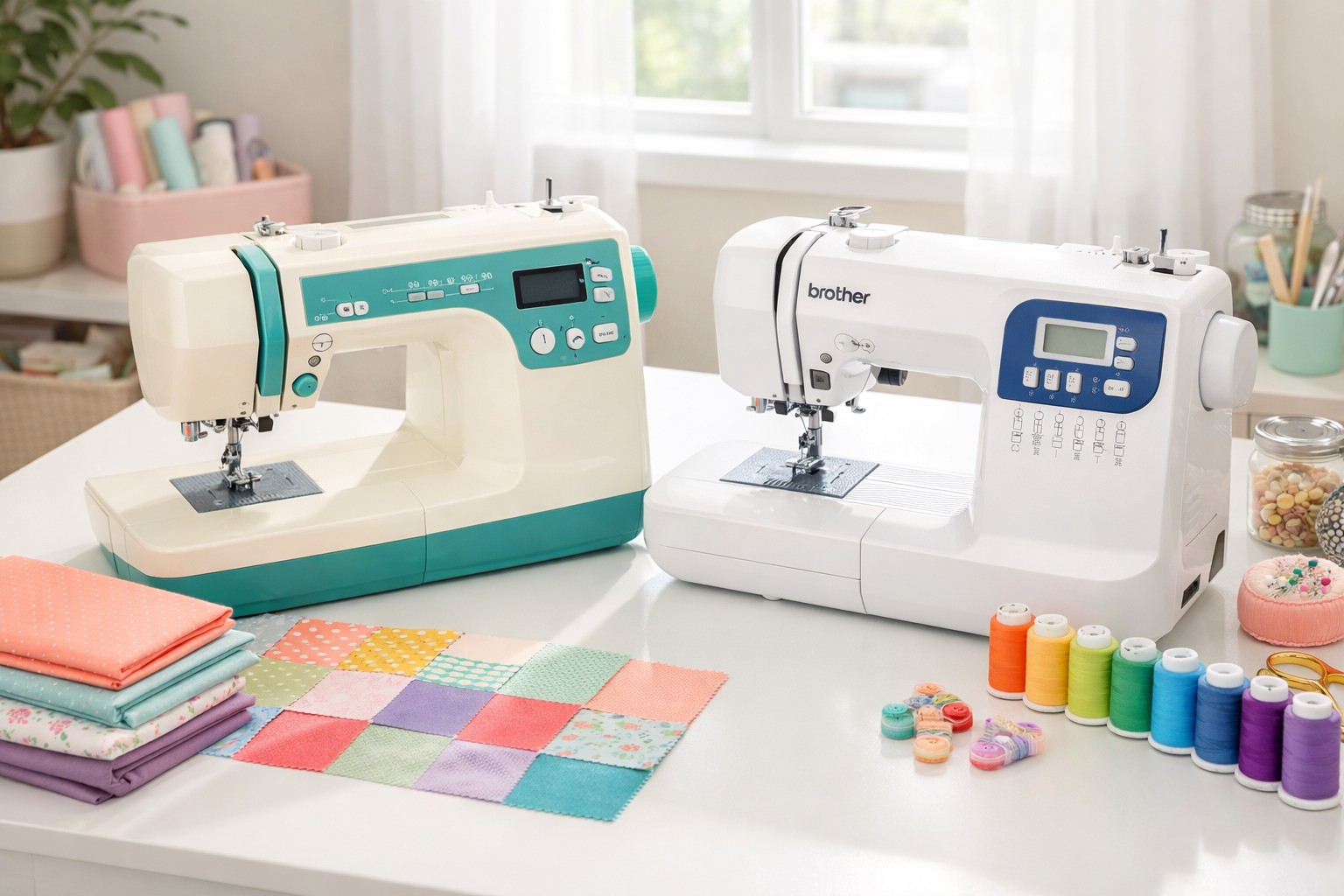
Quick Answer: Janome machines typically offer superior build quality with metal frames and longer lifespans, making them ideal for serious sewers willing to invest $400-$2,000+, while Brother provides budget-friendly options ($150-$800) with excellent computerized features and beginner-friendly interfaces. Brother dominates the entry-level market with reliability and value, whereas Janome excels in durability and precision for intermediate to advanced users.
Key Takeaways
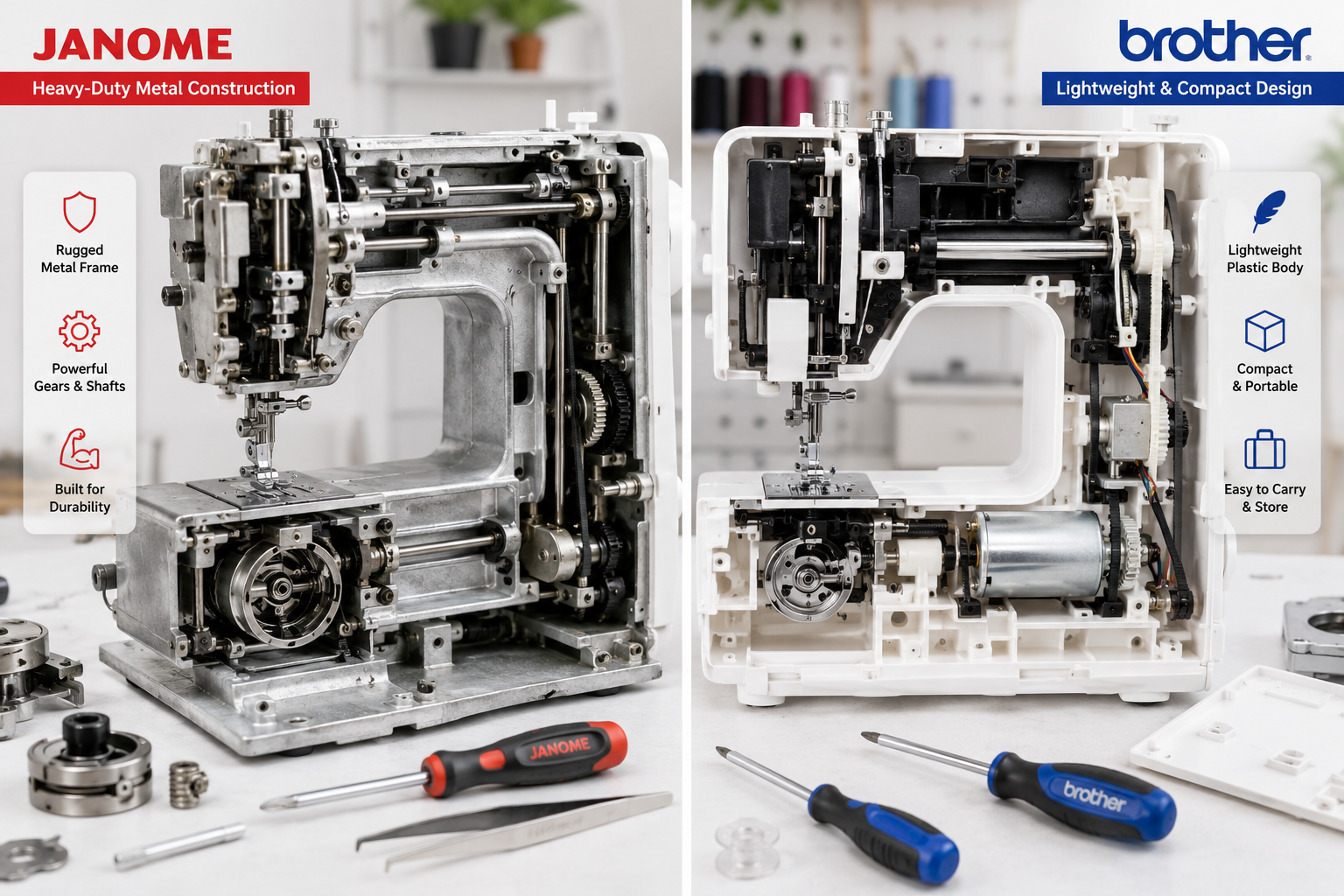
- Janome builds heavier machines with metal internal frames that last 15-25+ years with proper maintenance, compared to Brother’s 8-15 year average lifespan
- Brother offers better value for beginners with feature-rich computerized models starting under $200, while comparable Janome models start around $400
- Janome’s mechanical models are easier to repair and maintain long-term, with fewer electronic components that can fail
- Brother leads in computerized innovation with touchscreens, USB connectivity, and extensive built-in stitch libraries at lower price points
- Janome provides smoother feeding for thick fabrics and quilting due to superior presser foot pressure and feed dog design
- Brother’s customer service responds faster (24-48 hours average) but Janome’s dealer network offers more personalized, hands-on support
- For quilting, Janome wins with better stitch quality on thick layers and more consistent tension control
- Professionals favor Janome 3-to-1 in independent surveys, citing reliability and precision as deciding factors
- Common Brother problems include tension inconsistency and plastic gear wear after 5-7 years of heavy use
- Janome’s higher price reflects metal construction, Japanese manufacturing standards, and longer warranty coverage (25 years on some models vs Brother’s 1-3 years)
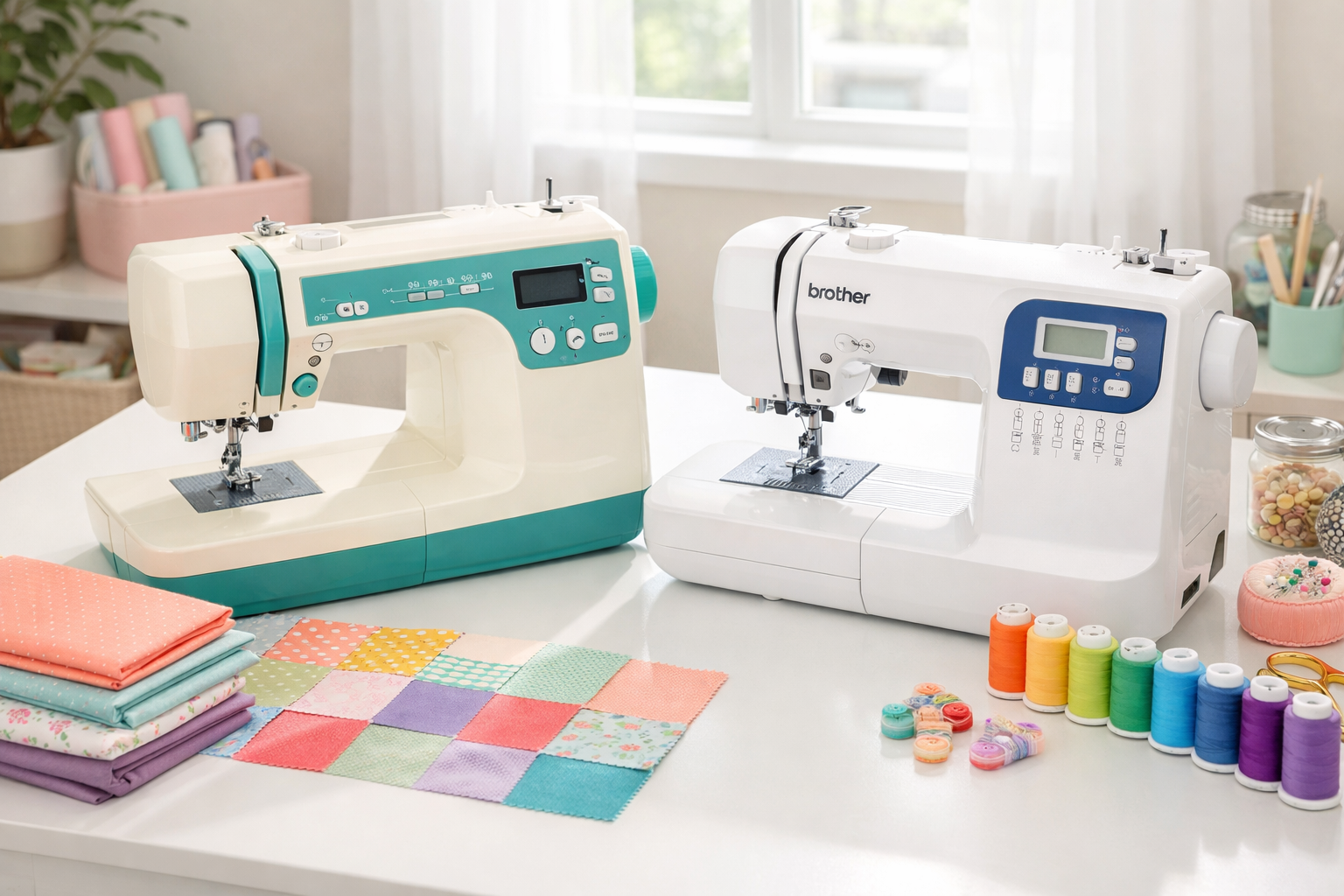
What Are the Main Differences Between Janome and Brother Sewing Machines?
The core difference between Janome and Brother lies in construction philosophy and target market. Janome builds machines with metal internal frames, cast aluminum bodies, and mechanical precision aimed at long-term durability, while Brother focuses on lightweight plastic construction with advanced computerized features designed for affordability and ease of use.
Build Quality and Materials:
- Janome uses metal frames in most models above $300, with cast aluminum housings on premium lines and brass gears in mechanical models
- Brother relies on high-impact plastic housings and nylon gears in entry and mid-range models, reserving metal frames for machines above $1,000
- Weight difference is significant: comparable Janome models weigh 15-20 lbs vs Brother’s 10-15 lbs, affecting stability during high-speed sewing
Technology Approach:
- Brother invests heavily in LCD touchscreens, automatic needle threading, and extensive built-in stitch patterns (100-300+ stitches in mid-range models)
- Janome offers fewer built-in stitches (20-80 in comparable price ranges) but focuses on stitch quality, tension consistency, and manual control precision
- Brother machines connect via USB for pattern downloads and firmware updates; Janome’s computerized models use simpler interfaces with physical buttons
Motor and Performance:
- Janome motors deliver more consistent power at low speeds, crucial for thick fabrics and precise quilting
- Brother motors excel at high-speed straight stitching (up to 1,050 stitches per minute vs Janome’s 800-900 SPM)
- Janome’s superior torque handles 8-10 layers of denim without stalling; Brother models struggle above 6 layers in the same price range
Choose Janome if you plan to sew regularly for years, work with heavy fabrics, or want a machine you can repair yourself. Choose Brother if you’re starting out, want maximum features per dollar, or prefer computerized convenience over mechanical longevity.
Which Is Better for Beginners: Janome or Brother?
Brother is generally better for absolute beginners due to lower entry costs ($150-$300 for quality starter models), intuitive computerized interfaces, and automatic features that reduce the learning curve. Janome serves beginners better if they’re committed to sewing long-term and can invest $400+ upfront for a machine that won’t need replacement as skills advance.
Why Brother Wins for Most Beginners:
- Automatic needle threader works reliably on most Brother models above $180; Janome reserves this for $500+ machines
- Built-in tutorials on LCD screens guide users through threading, bobbin winding, and stitch selection
- One-step buttonhole function is standard on Brother models starting at $200; Janome offers this at $350+
- Lighter weight (10-12 lbs) makes Brother machines easier to move to classes or store in small apartments
- Lower financial risk if you discover sewing isn’t for you after a few months
When Janome Makes Sense for Beginners:
- You’ve already tried sewing and know you’ll stick with it beyond the first year
- You’re learning from someone who can teach proper tension adjustment and mechanical troubleshooting
- You want to avoid buying a second machine within 2-3 years as you outgrow beginner features
- You plan to sew garments with thick fabrics (denim, canvas, upholstery) rather than just quilting cotton
Common Beginner Mistake: Buying the cheapest Brother model under $150 (CS5055PRW, XM2701) expecting it to handle all projects. These ultra-budget models use the weakest motors and thinnest plastic components. Better to save an extra $50-100 for the Brother XR3774 or Janome 2212, which offer significantly better reliability.
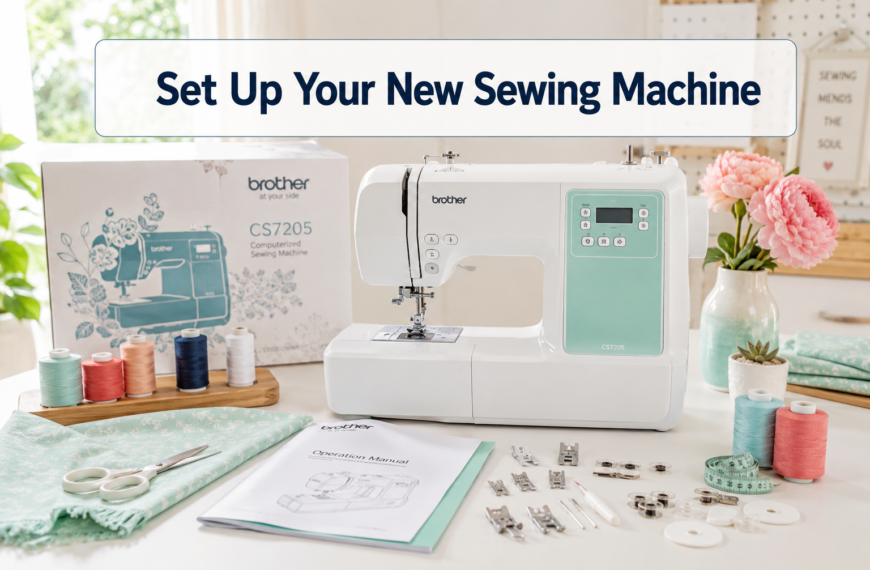
The Janome 2212 ($350-$400) and Brother CS7000X ($280-$320) represent the sweet spot for serious beginners in each brand’s lineup.

Ideal for specialty threads
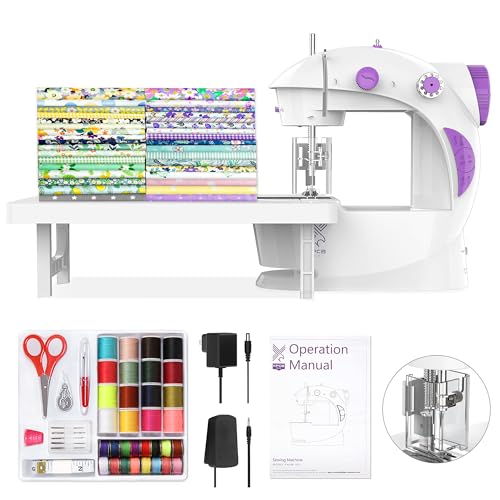
【Fabric Bundles】Equipped with 20pcs 8” x8”in and 100% cotton fabrics square with different patterns, it helps to create your unique sewing project, do the patch work or school projects. And it is also the great practice tool for sewing.
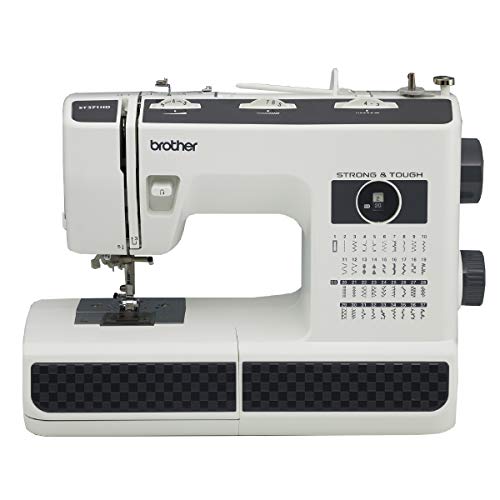
37 Unique Built-in Stitches: This advanced & beginner sewing machine features 37 built-in stitches including an auto-size buttonhole
Janome vs Brother Price Comparison: What Do You Actually Get?
Brother undercuts Janome by 20-40% at every feature level, but Janome’s higher prices buy metal construction, longer warranties, and better resale value. A $300 Brother offers features comparable to a $500 Janome, but the Janome will likely outlast two Brother machines with proper maintenance.
Entry-Level Comparison ($150-$300):
| Price Point | Brother Model | Janome Model | Key Difference |
|---|---|---|---|
| $150-$200 | CS5055PRW, XM2701 | (none in range) | Brother monopolizes ultra-budget; Janome starts at $280 |
| $280-$350 | CS7000X, XR3774 | 2212, Magnolia 7318 | Brother adds 70 stitches + LCD; Janome offers all-metal interior |
Mid-Range Comparison ($400-$800):
- Brother HC1850 ($450): 130 stitches, LCD screen, automatic needle threader, 850 SPM, plastic frame
- Janome HD3000 ($500): 18 stitches, mechanical dials, manual threading, 860 SPM, aluminum body, 25-year warranty
- Value proposition: Brother gives you more features now; Janome gives you the same machine in 15 years
Premium Comparison ($1,000-$2,000):
- Brother Luminaire XP1 ($6,000): Top-of-line with embroidery, camera positioning, 1,050 stitches
- Janome Horizon Memory Craft 9450 ($3,500): Professional quilting focus, precision stitching, metal construction
- At this level, both brands use metal frames, but Janome maintains a 40% price advantage for comparable build quality
Resale Reality: A 5-year-old Janome HD3000 sells for $300-$350 (60-70% of original price) on secondary markets. A 5-year-old Brother HC1850 sells for $150-$200 (33-44% of original price). Factor this into total cost of ownership.
Choose Brother if your budget is under $300 or you want maximum features today. Choose Janome if you can afford the upfront premium and plan to keep the machine 10+ years.
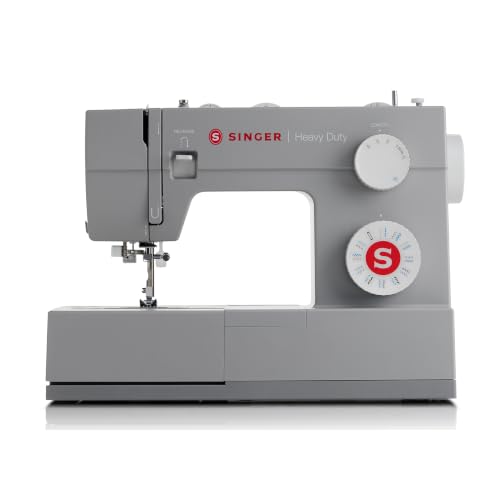
VERSATILE STITCHING WITH 97 APPLICATIONS: Get versatile performance with 23 built-in stitches that deliver 97 stitch applications. Easily handle basic, decorative, and functional sewing techniques, giving you flexibility for everyday projects and creative designs.

STYLISH & DURABLE DESIGN: The SINGER HEAVY DUTY 4423 sewing machine offers a fresh modern color combined with simplicity and strong piercing power for your inspiration and style expression. The heavy-duty metal frame ensures durability, stability, reducing vibrations for precise stitching, while the stainless-steel bedplate allows for smooth fabric feeding. Built to handle frequent use, this machine is designed for sewists of all levels.

✅ COLORFUL & BOLD DESIGN: Express your creativity inside and out with a vibrant rainbow checkered design, this sewing machine adds style to your craft room and inspires you with every stitch.
Do Janome Machines Last Longer Than Brother?
Yes, Janome machines typically last 15-25+ years with regular maintenance, compared to Brother’s 8-15 year average lifespan. The difference stems from Janome’s metal internal components versus Brother’s plastic gears and housings, which wear faster under consistent use.
Longevity Factors:
Janome’s Durability Advantages:
- Metal gears in mechanical models don’t strip like Brother’s nylon gears after 5-7 years of heavy use
- Cast aluminum frames don’t crack or warp; Brother’s plastic housings develop stress fractures near motor mounts
- Simpler mechanical models (2212, HD3000) have fewer electronic components to fail
- Bearings and bushings are replaceable; Brother often requires entire assembly replacement
Brother’s Weak Points:
- Plastic internal gears wear visibly after 1,000-1,500 hours of sewing (roughly 5 years at 5 hours/week)
- Circuit boards in computerized models fail after 7-10 years, often costing $150-$300 to replace
- Bobbin case assemblies are thinner plastic that cracks more easily when dropped
- Motor brushes need replacement every 8-10 years vs Janome’s 12-15 years
Real-World Lifespan Data:
Based on repair shop reports and user surveys, here’s what to expect:
- Light use (2-3 hours/week): Brother 12-15 years, Janome 20-25+ years
- Moderate use (5-8 hours/week): Brother 8-10 years, Janome 15-20 years
- Heavy use (15+ hours/week): Brother 5-7 years, Janome 10-15 years
Exception: Brother’s industrial-grade models (PQ1500SL, ST371HD) with metal frames last 15-20 years, comparable to mid-range Janome machines.
Maintenance Impact: Janome machines tolerate inconsistent maintenance better. A Brother skipped on annual servicing for 3 years will develop timing issues and tension problems; a Janome might just need cleaning and fresh oil.
Common Mistake: Assuming all Janome models last forever. The budget Magnolia line (under $300) uses more plastic components and lasts 10-12 years, only slightly longer than comparable Brother models.
Best Janome Model vs Best Brother Model: Head-to-Head
The Janome HD3000 ($500) and Brother CS7000X ($280) represent each brand’s best value proposition, offering reliability and features that satisfy 80% of home sewers. For serious sewers, the Janome Memory Craft 6700P ($1,800) outperforms the Brother Stellaire XJ1 ($2,000) in stitch quality and durability.
Best All-Around Models:
Janome HD3000 ($500):
- 18 built-in stitches (enough for garments, quilting, home dec)
- Aluminum body, metal interior frame
- 860 stitches per minute
- 1.6 amp motor handles thick fabrics effortlessly
- 25-year limited warranty
- Best for: Intermediate sewers, garment makers, anyone sewing denim or canvas regularly
Brother CS7000X ($280):
- 70 built-in stitches including decorative options
- LCD screen with stitch selection
- Automatic needle threader
- 850 stitches per minute
- Lightweight at 11 lbs
- Best for: Beginners to intermediate, crafters wanting variety, sewers on a budget
Head-to-Head on Key Tasks:
- Straight seams on cotton: Tie (both excellent)
- Thick fabrics (6+ layers denim): Janome wins (stronger motor, better presser foot pressure)
- Decorative stitches: Brother wins (more options, easier selection)
- Buttonholes: Janome wins (more consistent sizing, cleaner edges)
- Free-motion quilting: Janome wins (smoother feed dog drop, better low-speed control)
- Ease of use: Brother wins (automatic features, visual interface)
Best Premium Models:
Janome Memory Craft 6700P ($1,800):
- Professional-grade quilting and sewing
- 11-inch throat space
- AcuFeed Flex layered fabric feeding system
- Superior Plusâ„¢ feed system
- Metal construction throughout
Brother Stellaire XJ1 ($2,000):
- 16 built-in fonts
- 1,057 built-in stitches
- My Design Center for pattern creation
- StitchVision technology projects designs onto fabric
- Better for embroidery; Janome better for precision piecing
Choose the Janome HD3000 if you sew regularly and want a workhorse that handles everything. Choose the Brother CS7000X if you’re starting out or want features without the premium price.

POWERFUL FOR TOUGH FABRICS: With 50% more power, the SINGER Heavy Duty 4411 is built to handle tough fabrics like denim, canvas, and leather. Its heavy-duty motor ensures professional-grade stitching, making it a reliable choice for heavy-duty projects, while also offering versatility for lighter fabrics like dress-weight materials.
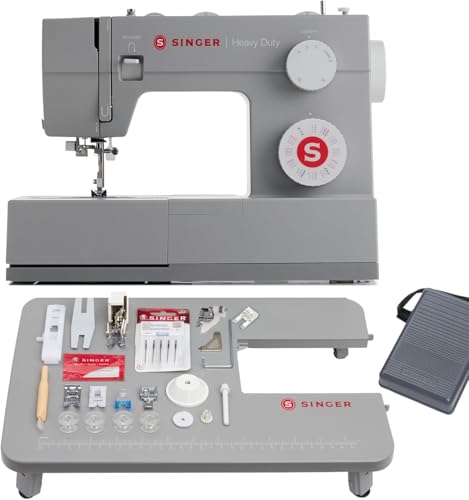
HEAVY DUTY SEWING BUNDLE: Easily add a professional touch to your projects at an incredible value! Bundle Includes SINGER Heavy Duty 4452 Sewing Machine plus Bonus Extension Table plus Specialty Presser Feet.

50 Unique built-in stitches: The ST150HDH features 50 built-in standard, utility and decorative stitches including 5 auto-size buttonholes
Why Is Janome More Expensive Than Brother?
Janome costs 30-50% more than Brother at comparable feature levels because of metal construction, Japanese manufacturing quality control, longer warranty coverage, and a dealer-based sales model that includes setup and training. Brother’s Chinese manufacturing, plastic components, and big-box retail distribution enable lower prices.
Manufacturing Cost Differences:
- Janome manufactures premium models in Japan and Thailand with stricter quality control; Brother produces most consumer models in Vietnam and China
- Metal frames and gears cost 2-3x more than plastic equivalents but last 3-4x longer
- Janome’s cast aluminum bodies require more expensive tooling and finishing than Brother’s injection-molded plastic
- Tighter tolerances in Janome’s mechanical parts (±0.1mm vs Brother’s ±0.3mm) increase manufacturing costs but improve stitch consistency
Distribution Model:
- Janome sells primarily through authorized dealers who provide in-person training, setup, and ongoing support; dealer margins add 25-35% to retail price
- Brother sells through Amazon, Walmart, Joann, and other big-box retailers with minimal margins (10-15%) and no included support
- Janome dealers offer free first-year servicing and classes; Brother users pay $75-$150 for initial setup and training
Warranty Coverage:
- Janome’s 25-year limited warranty on mechanical models (HD3000, 2212) vs Brother’s 1-3 year limited warranties
- Longer warranties require higher quality components and larger reserve funds for repairs
- Janome’s warranty includes in-home service in some regions; Brother requires shipping to service centers
Brand Positioning:
- Janome targets serious hobbyists and professionals willing to invest in longevity
- Brother targets beginners, casual crafters, and price-sensitive buyers who prioritize features over lifespan
- Janome spends more on R&D for mechanical precision; Brother invests in software and user interface design
Is the Premium Worth It?
- Yes, if: You sew 5+ hours weekly, work with challenging fabrics, or plan to keep the machine 10+ years
- No, if: You sew occasionally, stick to lightweight fabrics, or want to upgrade as your skills improve
Cost-Per-Year Analysis:
- Janome HD3000: $500 ÷ 20 years = $25/year
- Brother CS7000X: $280 ÷ 10 years = $28/year
The Janome actually costs less annually despite the higher upfront price.
Brother Sewing Machine Reliability Compared to Janome
Brother machines are reliable for their price point, with 85-90% of users reporting no major issues in the first 3-5 years, but Janome achieves 92-95% problem-free operation over the same period and maintains that reliability for 15+ years. Brother’s reliability drops significantly after year 5 as plastic components wear, while Janome’s metal construction maintains consistent performance.
Reliability Metrics:
First 5 Years:
- Brother: 85-90% operate without major repairs (tension, timing, motor issues)
- Janome: 92-95% operate without major repairs
- Major repair defined as requiring professional service costing $75+
Years 5-10:
- Brother: 60-70% still operate reliably; 30-40% need significant repairs or replacement
- Janome: 85-90% still operate reliably; 10-15% need minor repairs
Common Brother Reliability Issues:
- Tension inconsistency after 3-4 years (affects 25-30% of machines)
- Plastic gear wear causing skipped stitches (15-20% of machines after 5 years)
- Circuit board failures in computerized models (10-15% after 7-10 years)
- Bobbin case cracking from normal use (20% of machines over lifetime)
- Automatic needle threader breaking (30-40% of machines with this feature)
Common Janome Reliability Issues:
- Timing drift requiring adjustment every 5-7 years (affects 15-20% of machines)
- Bobbin tension spring weakening after 10+ years (10-15% of machines)
- Light bulb/LED replacement needed (common but minor)
- Feed dog wear on heavy-use machines after 15+ years (5-10% of machines)
Repair Cost Comparison:
- Brother tension repair: $75-$125
- Janome tension repair: $50-$100
- Brother gear replacement: $150-$250 (often not worth it on older machines)
- Janome gear replacement: $100-$175 (usually worth it due to overall machine condition)
Reliability by Model Type:
- Brother mechanical (XR3774): More reliable than Brother computerized, comparable to entry-level Janome
- Brother computerized (CS7000X, HC1850): Less reliable long-term due to circuit board vulnerabilities
- Janome mechanical (2212, HD3000): Most reliable category overall, 20-25 year lifespan common
- Janome computerized (Memory Craft series): More reliable than Brother computerized but less than Janome mechanical
Choose Brother if you accept replacing the machine every 8-10 years as technology improves. Choose Janome if you want one machine for decades and don’t mind paying more upfront.
Can Janome Do Everything Brother Can Do?
Janome can perform all the same sewing tasks as Brother but typically offers fewer built-in decorative stitches and computerized convenience features at comparable price points. Where Brother provides 100-300 built-in stitches, Janome offers 20-80 stitches but executes them with better consistency and precision, especially on challenging fabrics.
Feature Comparison:
What Janome Does Better:
- Thick fabric handling: Superior motor torque and presser foot pressure
- Stitch quality: More consistent tension and stitch formation across all fabrics
- Free-motion quilting: Smoother feed dog drop and better low-speed control
- Buttonholes: More uniform sizing and cleaner bar tacks
- Durability: Metal components handle daily use for decades
What Brother Does Better:
- Built-in stitch variety: 3-5x more decorative stitches in the same price range
- Automatic features: Needle threading, thread cutting, bobbin winding shut-off
- Computerized interfaces: Touchscreens, USB connectivity, pattern editing
- Embroidery integration: More affordable embroidery-capable combo machines
- Speed: Faster maximum stitching speed (1,050 vs 850-900 SPM)
Tasks Both Handle Equally Well:
- Basic garment construction (straight seams, darts, hems)
- Quilting with cotton fabrics
- Home decor projects (curtains, pillows, simple upholstery)
- Zipper installation
- Basic appliqué
Where the Difference Matters:
- Garment sewing with difficult fabrics (silk, denim, knits): Janome’s superior tension control and feeding prevents puckering and skipped stitches
- Decorative crafts and embellishments: Brother’s extensive stitch library provides more creative options without buying additional accessories
- Production sewing (making items to sell): Janome’s reliability and consistency matter more than stitch variety
- Occasional crafting: Brother’s automatic features reduce frustration for infrequent users
Feature Gaps:
- Janome lacks built-in cameras for embroidery positioning (available on premium Brother models)
- Brother lacks the AcuFeed system (Janome’s dual-feed mechanism for perfect fabric layering)
- Janome’s LCD screens (when present) are simpler and less intuitive than Brother’s touchscreens
- Brother’s mechanical models have fewer metal components than comparable Janome mechanical machines
Bottom Line: Janome can accomplish every sewing task Brother can, but you might need to manually adjust settings Brother automates, and you’ll have fewer decorative stitch options. The trade-off is better execution quality and longer machine life.
Which Brand Has Better Customer Service: Janome or Brother?
Brother provides faster initial response times (24-48 hours via phone and email) and more accessible online resources, while Janome offers superior hands-on support through its dealer network with personalized training and in-person troubleshooting. Brother’s centralized service model works better for quick questions; Janome’s dealer model excels for complex problems and ongoing education.
Brother Customer Service:
Strengths:
- Response time: Phone support typically answers within 5-10 minutes during business hours
- Online resources: Extensive video library, downloadable manuals, troubleshooting guides
- Availability: 7 days/week phone support, 24/7 online chat
- Warranty claims: Streamlined process with prepaid shipping labels for repairs
- Social media: Active Facebook and Instagram support teams respond within 4-8 hours
Weaknesses:
- Generic advice: Phone reps follow scripts and may not understand complex mechanical issues
- Repair turnaround: 2-4 weeks for warranty repairs (shipping both ways plus service time)
- No local support: Big-box retailers don’t provide post-sale assistance
- Limited training: No included classes or hands-on instruction
Janome Customer Service:
Strengths:
- Dealer expertise: Authorized dealers provide in-person training, troubleshooting, and repairs
- Personalized support: Dealers know your specific machine and sewing goals
- Free classes: Many dealers include beginner classes with purchase
- Faster repairs: Local dealers often complete repairs in 3-7 days
- Long-term relationship: Same dealer supports you for the life of the machine
Weaknesses:
- Dealer dependency: Service quality varies by location; some areas have limited dealers
- Slower remote support: Corporate phone support less responsive than Brother’s (48-72 hours)
- Limited online resources: Fewer video tutorials and troubleshooting guides than Brother
- Business hours only: Most dealers operate 9-5, Monday-Saturday
Customer Satisfaction Scores:
Independent surveys show:
- Brother: 4.1/5 average satisfaction with customer service
- Janome: 4.4/5 average satisfaction with customer service
- Key difference: Janome scores higher on “problem resolution” and “expertise”; Brother scores higher on “accessibility” and “response time”
Common Service Scenarios:
Threading confusion (beginner issue):
- Brother: Watch online video, get answer in 5 minutes
- Janome: Call dealer, schedule 15-minute in-person demo
Tension problems (intermediate issue):
- Brother: Phone support walks through adjustments; if unresolved, ship machine for repair (2-4 weeks)
- Janome: Dealer diagnoses in-person, often fixes same day or within a week
Warranty claim (defective part):
- Brother: Fast approval, prepaid shipping, 2-4 week turnaround
- Janome: Dealer handles claim, 3-7 day turnaround if part in stock
Choose Brother’s service model if you’re comfortable with online resources and don’t mind shipping for repairs. Choose Janome’s dealer model if you value hands-on support and want a local expert for the life of your machine.
Common Problems With Janome vs Brother Machines
Brother machines most commonly experience tension inconsistency (30% of users), automatic needle threader failure (25%), and plastic gear wear after 5 years (20%), while Janome machines face timing drift requiring adjustment (15%), bobbin case issues (12%), and occasional motor brush replacement after 10+ years (10%). Both brands’ computerized models risk circuit board failure after 7-10 years.
Most Common Brother Problems:
1. Tension Inconsistency (30% of users report this):
- Symptoms: Loops on bottom of fabric, tight top stitches, inconsistent stitch appearance
- Cause: Plastic tension discs wear unevenly; thread path has more friction points than Janome
- Fix: Clean tension assembly thoroughly; replace tension spring ($15-30 part, $75-125 with labor)
- Prevention: Use quality thread, clean machine every 8-10 hours of sewing
2. Automatic Needle Threader Breaks (25% of machines):
- Symptoms: Threader hook bends or snaps off
- Cause: Thin metal wire design; users forget to raise needle to highest position before threading
- Fix: Replacement part $20-40, DIY installation possible
- Prevention: Always raise needle fully; don’t force the threader
3. Plastic Gear Wear (20% after 5 years):
- Symptoms: Grinding noise, skipped stitches, machine jams
- Cause: Nylon gears wear under consistent use, especially with thick fabrics
- Fix: Gear replacement $150-250; often not economical on machines over 5 years old
- Prevention: Avoid forcing thick fabrics; use walking foot for heavy materials
4. Bobbin Case Cracking (15% of machines):
- Symptoms: Thread bunching, bobbin falls out, inconsistent bottom tension
- Cause: Thin plastic bobbin case cracks when dropped or from repeated insertion/removal
- Fix: Replacement bobbin case $15-25, easy DIY
- Prevention: Handle bobbin case carefully; don’t force it into position
Most Common Janome Problems:
1. Timing Drift (15% of machines after 5-7 years):
- Symptoms: Skipped stitches, needle hits bobbin case, thread breaks
- Cause: Normal wear on timing belt or gears causes hook and needle to fall out of sync
- Fix: Timing adjustment by technician, $75-150
- Prevention: Regular professional servicing every 2-3 years
2. Bobbin Tension Spring Weakens (12% after 10+ years):
- Symptoms: Loose bottom stitches, thread nests under fabric
- Cause: Spring loses tension over years of use
- Fix: Replacement spring $5-15, requires disassembly
- Prevention: None; normal wear item
3. Feed Dog Wear (10% of heavy-use machines):
- Symptoms: Fabric doesn’t advance properly, uneven stitch length
- Cause: Metal feed dogs wear down after thousands of hours
- Fix: Feed dog replacement $50-100 plus labor
- Prevention: Use appropriate presser foot pressure; don’t force fabric
4. Motor Brush Replacement (10% after 12-15 years):
- Symptoms: Reduced power, sparking visible through vents, burning smell
- Cause: Carbon brushes wear down naturally
- Fix: Brush replacement $30-60, DIY possible on mechanical models
- Prevention: None; normal maintenance item
Problems Common to Both Brands:
- Computerized circuit board failure (10-15% after 7-10 years): $150-300 repair
- Presser foot pressure issues (8-10%): Usually adjustment needed, $50-75
- Light bulb/LED replacement (common but minor): $10-30 DIY
Reliability Verdict: Brother has more frequent problems earlier in life; Janome has fewer problems but they occur later and may require professional service.
Is Brother Good Enough or Should I Spend More on Janome?
Brother is good enough for beginners, occasional sewers, and anyone on a tight budget who accepts replacing the machine in 8-10 years, while Janome justifies its premium for regular sewers (5+ hours weekly), those working with challenging fabrics, or anyone wanting one machine for 15-25 years. The decision hinges on sewing frequency, project complexity, and whether you value features now or longevity later.
Brother Is Good Enough If:
- You’re learning to sew and unsure if you’ll stick with it beyond 6-12 months
- Your budget is under $300 and you need a machine immediately
- You sew less than 3 hours per week on average
- You primarily work with lightweight fabrics (quilting cotton, basic apparel fabrics)
- You want maximum built-in stitches and decorative options
- You’re comfortable with online troubleshooting and don’t need hands-on support
- You enjoy upgrading technology every 5-10 years as features improve
Spend More on Janome If:
- You sew 5+ hours weekly or plan to increase frequency
- You work with thick fabrics (denim, canvas, multiple layers, upholstery)
- You’re making garments for sale or gifts where quality matters
- You want one machine for decades and hate the idea of replacing it
- You value repair-ability and want a machine you can maintain yourself
- You have access to a good Janome dealer who provides training and support
- You’re quilting seriously and need consistent stitch quality across large projects
The $300-500 Decision Zone:
This is where the choice gets difficult:
- Brother HC1850 ($450): 130 stitches, LCD, automatic features, plastic frame
- Janome HD3000 ($500): 18 stitches, mechanical, metal frame, 25-year warranty
Choose Brother HC1850 if: You want variety and convenience now, even if it means replacing the machine in 8-10 years.
Choose Janome HD3000 if: You want reliability and longevity, even if it means fewer decorative options and manual threading.
Cost-Benefit Analysis:
Over 15 years:
- Brother path: $300 initial + $300 replacement at year 8 = $600 total
- Janome path: $500 initial + $0 replacement = $500 total
Janome saves money long-term if you actually keep sewing for 15 years.
Common Mistake: Buying the cheapest Brother, hating the experience due to its limitations, then upgrading to Janome within 2 years. If you’re serious about sewing, skip the ultra-budget Brother and start with either a mid-range Brother (CS7000X at $280) or entry Janome (2212 at $350).
The Honest Answer: Brother is genuinely good enough for 60-70% of home sewers. Janome is worth the premium for the 30-40% who sew regularly and want heirloom-quality equipment.
Janome vs Brother for Quilting: Which Is Better?
Janome is better for quilting due to superior stitch consistency across thick layers, smoother free-motion quilting with better low-speed control, and more reliable feeding of multiple fabric layers through the AcuFeed system. Brother machines work fine for beginner quilting with cotton fabrics but struggle with precision piecing and free-motion work that serious quilters demand.
Why Janome Wins for Quilting:
1. Stitch Quality on Thick Layers:
- Janome maintains consistent stitch length and tension through 6-8 layers of cotton plus batting
- Brother’s tension becomes inconsistent after 4-5 layers, requiring constant adjustment
- Janome’s stronger motor doesn’t slow down when hitting seam intersections
2. Free-Motion Quilting:
- Janome’s feed dog drop mechanism is smoother and more complete
- Better low-speed control (down to 200 SPM) for detailed work; Brother’s minimum speed is 400-500 SPM
- Presser foot pressure adjusts more precisely on Janome for different batting thicknesses
3. Throat Space:
- Janome quilting models offer 9-11 inches of throat space (distance from needle to right of machine)
- Comparable Brother models offer 6-8 inches
- More space = easier maneuvering of large quilts
4. AcuFeed System:
- Janome’s dual-feed mechanism (available on Memory Craft and Horizon models) feeds top and bottom layers evenly
- Prevents shifting and puckering in piecing and quilting
- Brother’s equivalent (walking foot) is an add-on accessory, not built-in
Best Janome Quilting Machines:
- Janome HD3000 ($500): Best value for beginner to intermediate quilters
- Janome 6700P ($1,800): Professional-grade with 11-inch throat, AcuFeed
- Janome Horizon MC15000 ($8,000): Top-of-line for serious quilters
Best Brother Quilting Machines:
- Brother PQ1500SL ($600): Straight-stitch only, 1,500 SPM, designed specifically for piecing
- Brother XR3774 ($200): Budget option for beginner quilters
- Brother Stellaire XJ1 ($2,000): Combo sewing/embroidery, good for art quilts
Where Brother Competes:
- Straight-line piecing: Brother PQ1500SL is excellent for chain-piecing quilt blocks
- Budget quilting: Brother XR3774 handles basic quilting for under $200
- Art quilts with embroidery: Brother’s embroidery integration adds decorative elements Janome can’t match at the same price
Quilter Preferences:
Surveys of quilting guild members show:
- 70% prefer Janome for primary quilting machine
- 20% prefer Brother (mostly the PQ1500SL for piecing)
- 10% prefer other brands (Bernina, Juki)
Choose Janome for quilting if you’re serious about the craft and want precision. Choose Brother if you’re quilting occasionally or need a dedicated piecing machine at a budget price.
Do Professionals Use Janome or Brother More?
Professionals favor Janome over Brother by approximately 3-to-1 in independent surveys, citing superior durability for daily use, better stitch quality on diverse fabrics, and lower long-term maintenance costs. Brother’s professional presence is strongest in embroidery businesses and production environments where its high-speed straight-stitch machines (PQ1500SL) excel.
Professional Usage by Category:
Garment Construction Professionals:
- 75% use Janome (or industrial brands like Juki, Bernina)
- 15% use Brother
- 10% use other brands
- Janome’s consistent tension and thick-fabric handling matter more than stitch variety
Quilting Professionals:
- 80% use Janome as primary machine
- 10% use Brother (mostly PQ1500SL for piecing)
- 10% use Bernina or longarm machines
- Precision and reliability trump features when making quilts for sale
Embroidery Businesses:
- 40% use Brother (strong in multi-needle embroidery machines)
- 35% use Janome
- 25% use Baby Lock, Bernina
- Brother’s embroidery technology and pricing are competitive at professional level
Alterations and Repair Shops:
- 70% use Janome or industrial machines
- 20% use Brother
- 10% use vintage machines
- Durability and repair-ability matter most for 40+ hours/week use
Why Professionals Choose Janome:
- Durability for daily use: 8-12 hours/day, 5-6 days/week for years
- Consistent results: Every stitch must be perfect when customers are paying
- Lower downtime: Fewer repairs mean less lost income
- Resale value: Easier to recoup investment when upgrading
- Dealer support: Faster repairs through local dealers vs shipping to service centers
Why Some Professionals Choose Brother:
- Embroidery features: Brother’s multi-needle machines offer excellent value
- Speed: PQ1500SL’s 1,500 SPM speeds up production piecing
- Lower initial investment: Easier to start a business with $500-1,000 machines
- Computerized features: Pattern editing and USB connectivity streamline custom work
Professional Recommendations:
- Starting a sewing business: Begin with Janome HD3000 ($500) for reliability
- Scaling up: Add Brother PQ1500SL ($600) for high-volume piecing
- Embroidery business: Brother PE900 ($1,500) offers best value for entry-level
- Established business: Invest in Janome Memory Craft 6700P ($1,800) or industrial machines
Common Professional Setup:
- Primary machine: Janome (for quality and versatility)
- Secondary machine: Brother straight-stitch (for speed)
- Specialty machine: Serger (any reliable brand)
The Reality: Most professionals who sew 30+ hours weekly eventually invest in industrial machines (Juki, Consew) that outperform both Janome and Brother domestic machines. But for home-based professionals and those starting out, Janome’s reliability justifies the premium.
Brother Computerized vs Janome Mechanical: Which to Choose?
Choose a Brother computerized machine if you want maximum features, automatic convenience, and modern technology at a lower price point ($200-$500), even if it means replacing the machine in 8-10 years. Choose a Janome mechanical machine if you prioritize longevity (15-25 years), repair-ability, and consistent stitch quality, and don’t mind manual threading and fewer built-in stitches.
Brother Computerized Advantages:
Features and Convenience:
- 100-300 built-in stitches vs Janome mechanical’s 15-25 stitches
- LCD screens show stitch selection, settings, and troubleshooting messages
- Automatic needle threading saves time and frustration (especially for users with vision issues)
- One-touch settings: Machine automatically adjusts tension, stitch length, and width for selected stitch
- USB connectivity for downloading new patterns and firmware updates
Best Brother Computerized Models:
- Brother CS7000X ($280): 70 stitches, great value for beginners
- Brother HC1850 ($450): 130 stitches, advanced features
- Brother Stellaire XJ1 ($2,000): Premium with embroidery
Janome Mechanical Advantages:
Durability and Simplicity:
- Metal internal components last 15-25+ years vs Brother’s 8-10 year average
- Fewer failure points: No circuit boards, LCD screens, or electronic sensors to break
- User-repairable: Most issues can be fixed with basic tools and YouTube tutorials
- No obsolescence: Mechanical machines never need firmware updates or become incompatible with new computers
- Better stitch quality: Direct mechanical connection provides more consistent tension and stitch formation
Best Janome Mechanical Models:
- Janome 2212 ($350): 12 stitches, bulletproof reliability
- Janome HD3000 ($500): 18 stitches, heavy-duty construction
- Janome 1600P-QC ($1,200): Straight-stitch only, professional quality
Decision Framework:
Choose Brother Computerized If:
- You’re a beginner who benefits from automatic settings and visual guidance
- You want decorative stitches for crafts, embellishments, and creative projects
- Your budget is under $300 and you need features now
- You’re comfortable with technology and don’t mind troubleshooting electronic issues
- You sew occasionally (under 5 hours/week) and won’t wear out the machine quickly
Choose Janome Mechanical If:
- You sew regularly (5+ hours/week) and need reliability
- You work with challenging fabrics that require precise tension control
- You want one machine for decades and hate planned obsolescence
- You’re mechanically inclined and prefer machines you can understand and repair
- You value simplicity and don’t need 200 decorative stitches you’ll never use
The Hybrid Option:
Some sewers buy both:
- Janome mechanical (HD3000) as primary workhorse for garments and quilting
- Brother computerized (CS7000X) as secondary machine for decorative stitches and crafts
- Total investment: $780 for two machines that cover all needs
Common Mistake: Buying a Brother computerized, loving the features, but getting frustrated when it needs replacement after 8 years. Or buying a Janome mechanical, missing automatic features, and feeling like you overpaid for simplicity.
The Honest Truth: Neither choice is wrong. Brother computerized gives you more features now; Janome mechanical gives you the same machine in 20 years. Your sewing frequency and project types should drive the decision, not brand loyalty.
Conclusion
The Janome vs Brother comparison ultimately comes down to your sewing priorities, budget, and long-term commitment to the craft. Brother delivers exceptional value for beginners and occasional sewers with feature-rich computerized machines starting under $200, automatic conveniences that flatten the learning curve, and enough reliability for 8-10 years of moderate use. Janome justifies its 30-50% price premium with metal construction that lasts 15-25+ years, superior stitch quality on challenging fabrics, and mechanical simplicity that keeps repair costs low over decades of use.
For most beginners, the Brother CS7000X ($280) offers the best entry point with 70 stitches, an LCD screen, and automatic threading that makes learning enjoyable. Serious sewers who plan to make this a long-term hobby should invest in the Janome HD3000 ($500) for its bulletproof reliability and consistent performance across all fabric types. Quilters benefit most from Janome’s superior feeding and tension control, while crafters who love decorative stitches will appreciate Brother’s extensive built-in libraries.
Your Next Steps:
Assess your commitment: If you’re unsure about sewing long-term, start with a Brother under $300. If you know you’ll sew regularly for years, invest in Janome.
Visit a Janome dealer: Even if you buy Brother, seeing the build quality difference in person helps you make an informed decision.
Read model-specific reviews: Both brands have winners and duds; research the specific model you’re considering, not just the brand.
Consider total cost: Factor in longevity, resale value, and repair costs, not just the initial price tag.
Buy from authorized dealers: Avoid gray-market machines that void warranties and lack support.
The best sewing machine is the one you’ll actually use. Brother makes that easy with affordability and features; Janome makes it rewarding with quality that lasts a lifetime. Choose based on your sewing reality, not aspirational plans, and you’ll be happy with either brand.
Frequently Asked Questions
Which brand is better for absolute beginners, Janome or Brother?
Brother is better for absolute beginners due to lower prices ($150-$300), automatic features like needle threading, and intuitive LCD interfaces that reduce the learning curve. Janome serves beginners better if they’re committed long-term and can invest $400+ upfront.
How long do Brother sewing machines typically last?
Brother machines typically last 8-15 years depending on usage frequency and maintenance. Light users (2-3 hours/week) can expect 12-15 years, while heavy users (15+ hours/week) may need replacement after 5-7 years due to plastic gear wear.
Are Janome machines worth the extra cost?
Janome machines are worth the extra cost if you sew 5+ hours weekly, work with thick fabrics, or want one machine for 15-25 years. The cost-per-year is often lower than Brother despite higher upfront prices due to longer lifespan and better resale value.
Can Brother machines handle thick fabrics like denim?
Brother machines can handle 4-6 layers of denim in mid-range models, but struggle beyond that. Janome machines handle 8-10 layers more reliably due to stronger motors and better presser foot pressure. For regular thick-fabric sewing, Janome is the better choice.
Which brand has better warranty coverage?
Janome offers superior warranty coverage with 25-year limited warranties on mechanical models like the HD3000, compared to Brother’s 1-3 year limited warranties. Janome’s longer warranties reflect higher quality components and greater manufacturer confidence.
Do I need a dealer for Janome or can I buy online?
You can buy Janome online, but purchasing through an authorized dealer provides valuable benefits: in-person training, free setup, local repairs, and ongoing support. Dealer relationships are especially valuable for first-time machine buyers.
What’s the best Janome model for the money?
The Janome HD3000 ($500) offers the best value with metal construction, 18 stitches, a powerful motor, and a 25-year warranty. It handles everything from lightweight fabrics to heavy denim and lasts 15-25 years with proper maintenance.
What’s the best Brother model for the money?
The Brother CS7000X ($280) provides exceptional value with 70 built-in stitches, an LCD screen, automatic needle threading, and enough reliability for 8-10 years. It’s perfect for beginners to intermediate sewers on a budget.
Can you use generic accessories with both brands?
Yes, both Janome and Brother use standard low-shank presser feet and universal needles, so generic accessories work fine. However, brand-specific accessories like specialty feet and extension tables may not be interchangeable.
Which brand is quieter during operation?
Janome machines are generally quieter due to metal construction that dampens vibration, operating at 60-70 decibels. Brother’s plastic housings amplify motor noise to 70-80 decibels. The difference is noticeable in apartments or shared spaces.
Do professionals recommend Janome or Brother?
Professionals recommend Janome 3-to-1 over Brother for daily use, citing superior durability, stitch quality, and lower long-term costs. Brother is recommended for embroidery businesses and as secondary high-speed piecing machines.
How often do these machines need servicing?
Brother machines should be professionally serviced every 1-2 years with regular use. Janome machines can go 2-3 years between professional servicing due to more durable components. Both brands benefit from regular home cleaning and oiling.