
Quick Answer: Most home sewing machines last 5 to 25 years depending on build quality, usage frequency, and maintenance. Budget machines ($100-$300) typically last 5-10 years with moderate use, mid-range machines ($300-$800) can last 10-20 years, and high-end or vintage all-metal machines often exceed 25 years or even generations with proper care. Industrial machines built for commercial use routinely last 20-40 years.
Key Takeaways
- Budget machines ($100-$300) typically last 5-10 years with regular home use
- Mid-range machines ($300-$800) can last 10-20 years when properly maintained
- High-end and industrial machines often exceed 25 years, with some vintage models still running after 50+ years
- Build quality matters more than price alone, all-metal internal frames outlast plastic components
- Regular maintenance extends lifespan significantly, cleaning, oiling, and annual servicing can double a machine’s useful life
- Usage intensity affects longevity, a machine used daily wears faster than one used weekly
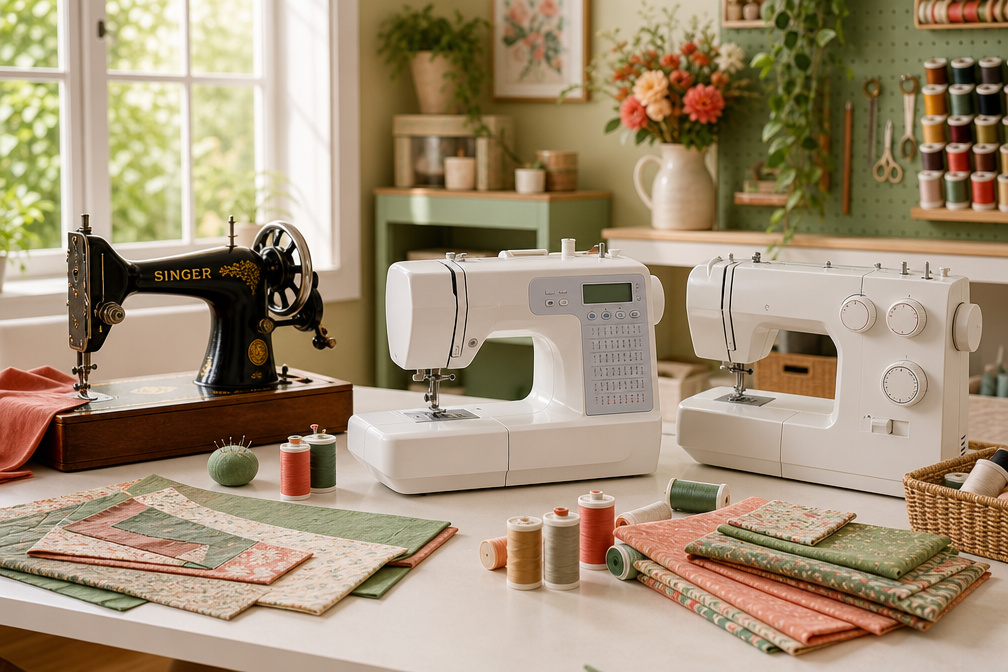
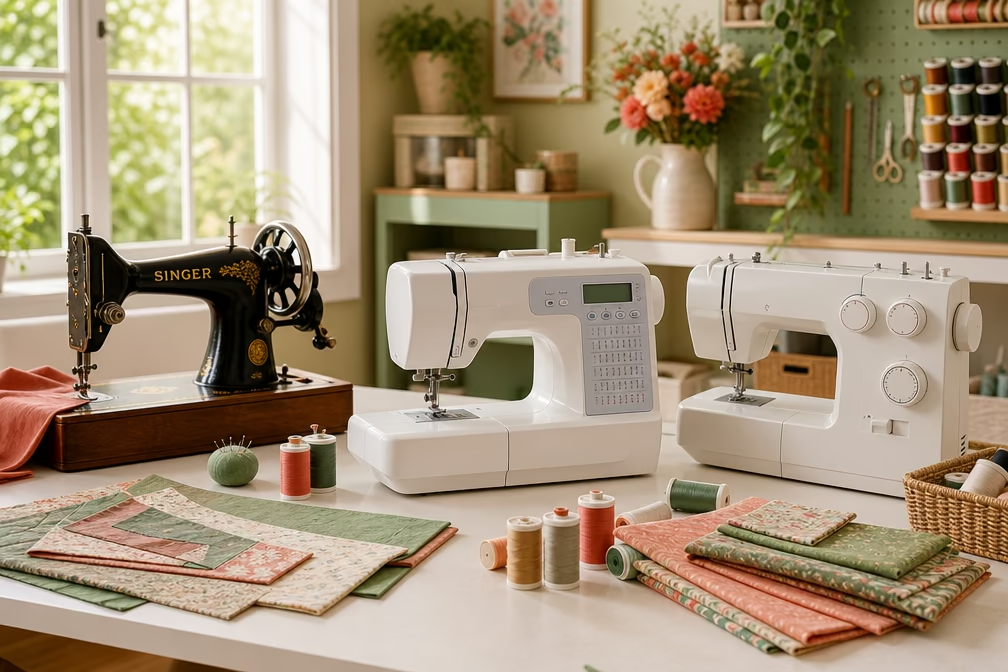
- Vintage all-metal machines often outlast modern plastic models due to superior construction
- Repair costs after 10 years often approach 50-70% of replacement cost, making replacement more economical
- Brand reputation correlates with longevity, Singer, Bernina, Janome, and Brother consistently produce longer-lasting machines
- Warning signs of failure include unusual noises, skipped stitches, tension problems, and motor struggles
What Is the Average Lifespan of a Sewing Machine?
The average sewing machine lasts between 5 and 25 years, with the wide range determined primarily by construction quality, frequency of use, and maintenance habits. A typical home sewing machine used for occasional projects (2-5 hours per week) will last 10-15 years before requiring major repairs or replacement.
Lifespan by machine category:
- Entry-level machines (under $200): 5-8 years with light use
- Mid-range home machines ($200-$600): 10-15 years with regular maintenance
- Premium home machines ($600-$2,000): 15-25 years with proper care
- Industrial machines ($1,500-$5,000+): 20-40 years in commercial settings
- Vintage all-metal machines (pre-1970s): 50+ years, often still functional
The key factor isn’t just age but total hours of operation. A machine used 2 hours per week for 15 years accumulates roughly 1,560 hours of use, while a professional seamstress using the same machine 40 hours per week would reach that threshold in less than a year.
Common mistake: Assuming all machines should last decades. Modern budget machines with plastic internal components are designed for lighter use and shorter lifespans than vintage all-metal models. Expecting a $150 machine to last 30 years sets unrealistic expectations.
How Long Do Singer Sewing Machines Last Compared to Brother?
Singer and Brother machines have comparable lifespans when comparing similar price points and model types, typically lasting 10-20 years for mid-range home models. Vintage Singer machines (pre-1970s) with all-metal construction often outlast modern machines from both brands, while contemporary Singer and Brother models perform similarly in durability tests.
Brand-specific durability patterns:
Singer:
- Vintage models (1950s-1960s): 50+ years, many still operational
- Modern budget models ($100-$300): 5-10 years
- Mid-range models ($300-$800): 10-15 years
- Heavy-duty models (4400 series): 15-20 years
- Known for: Strong motor performance, but increased plastic components in recent decades
Brother:
- Computerized models: 8-12 years (electronics can fail before mechanics)
- Mechanical models ($200-$500): 10-15 years
- Industrial models: 20-30 years
- Known for: Reliable electronics, good customer service, lighter construction than vintage machines
Choose Singer if: You prioritize motor power and plan to sew heavy fabrics regularly, or you’re buying a vintage all-metal model.
Choose Brother if: You want computerized features and value user-friendly interfaces, accepting that electronics may have shorter lifespans than purely mechanical components.
The reality is that build quality within each brand varies more by model than by brand name. A $150 Singer and a $150 Brother will perform similarly, while a $600 Singer Heavy Duty and a $600 Brother ST371HD will both outlast their budget counterparts.
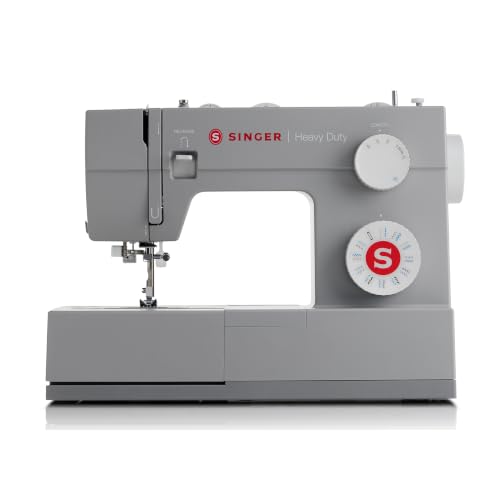
VERSATILE STITCHING WITH 97 APPLICATIONS: Get versatile performance with 23 built-in stitches that deliver 97 stitch applications. Easily handle basic, decorative, and functional sewing techniques, giving you flexibility for everyday projects and creative designs.

POWERFUL FOR TOUGH FABRICS: With 50% more power, the SINGER Heavy Duty 4411 is built to handle tough fabrics like denim, canvas, and leather. Its heavy-duty motor ensures professional-grade stitching, making it a reliable choice for heavy-duty projects, while also offering versatility for lighter fabrics like dress-weight materials.
Do Expensive Sewing Machines Last Longer Than Cheap Ones?
Expensive sewing machines generally last significantly longer than cheap ones, but the relationship isn’t perfectly linear. A $1,000 machine doesn’t necessarily last twice as long as a $500 machine, but it typically features superior construction materials, better motors, and more durable internal components that extend its useful life by 50-100% or more.
What you’re paying for in higher-priced machines:
- Metal internal frames instead of plastic housings
- Stronger motors (60-100+ watts vs. 40-60 watts in budget models)
- Metal gears instead of plastic drive mechanisms
- Better bearings that reduce friction and wear
- Replaceable parts rather than sealed units
- Longer warranties (5-25 years vs. 1-2 years for budget models)
Price-to-longevity breakdown:
| Price Range | Expected Lifespan | Construction Quality |
|---|---|---|
| Under $150 | 3-7 years | Mostly plastic, basic motor |
| $150-$300 | 5-10 years | Mixed plastic/metal, adequate motor |
| $300-$800 | 10-20 years | Metal frame, quality motor |
| $800-$2,000 | 15-30 years | All-metal construction, powerful motor |
| $2,000+ | 20-40+ years | Professional-grade, serviceable components |
Important caveat: Price doesn’t guarantee longevity if you’re paying for features rather than build quality. A $700 computerized machine with 200 stitch patterns may not outlast a $400 mechanical workhorse if the electronics fail. Similarly, brand markup can inflate prices without improving durability.
Edge case: Some budget machines are surprisingly durable for light use. If you sew 2-3 hours per month, a well-maintained $200 machine might serve you for 15 years, while someone sewing 20 hours per week would wear it out in 2-3 years.

STYLISH & DURABLE DESIGN: The SINGER HEAVY DUTY 4423 sewing machine offers a fresh modern color combined with simplicity and strong piercing power for your inspiration and style expression. The heavy-duty metal frame ensures durability, stability, reducing vibrations for precise stitching, while the stainless-steel bedplate allows for smooth fabric feeding. Built to handle frequent use, this machine is designed for sewists of all levels.

27 Unique Built-in Stitches: The Brother XM2701 sewing machine includes 27 built-in stitches including decorative, blind hem, zigzag, and stretch stitches and an auto-size buttonhole

Effortless Beginner-Friendly Sewing – Jumpstart your creative journey with a tailoring machine designed for first timers. The Purple Majesty simplifies every step from threading to stitch selection, letting you focus on bringing your projects to life.
How Much Does It Cost to Repair a Sewing Machine vs. Buying New?
Basic sewing machine repairs typically cost $75-$200 for common issues like timing adjustments, tension repairs, or cleaning, while major repairs (motor replacement, computerized board failure) can run $150-$400. As a general rule, if repair costs exceed 50% of the machine’s current replacement value, buying new is more economical.
Common repair costs in 2026:
- Basic tune-up/cleaning: $75-$125
- Timing adjustment: $100-$150
- Tension assembly replacement: $80-$150
- Motor replacement: $150-$300
- Computerized board repair: $200-$400
- Feed dog replacement: $100-$175
- Complete overhaul: $250-$500
Decision framework for repair vs. replace:
Repair makes sense when:
- The machine is less than 10 years old and mid-range or better quality
- Repair costs are under 40% of replacement value
- The machine has sentimental value or rare features
- It’s a high-end or industrial model ($1,000+ original price)
- Only routine maintenance is needed
Replace makes sense when:
- The machine is over 15 years old and budget-tier
- Repair costs exceed 50% of a comparable new machine
- Multiple systems are failing simultaneously
- Parts are no longer available
- You’ve outgrown the machine’s capabilities
Real-world example: A 12-year-old Brother CS6000i (originally $150, now worth about $80 used) needs a $175 motor replacement. Buying a new comparable machine for $180 makes more financial sense. However, a 15-year-old Bernina 1008 (originally $800, still worth $400-$500 used) needing a $200 timing adjustment is worth repairing.
Common mistake: Neglecting regular $75-$125 annual servicing, then facing a $300+ repair bill when multiple issues compound. Preventive maintenance is always cheaper than emergency repairs.

Packing list: The sewing machine tool kit includes 1 curved nose tweezers, 1 double headed lint brush, 1 needle board screwdrivers, 4 flat head cross head screwdrivers, 2 seam rippers, 12 silicone brushes, 21 pieces in total;For daily cleaning and maintenance of sewing machines.

Packing list: The sewing machine tool kit includes 1 curved nose tweezers, 1 double headed lint brush, 2 needle board screwdrivers, 4 flat head cross head screwdrivers, 2 seam rippers, 4 silicone brushes, 14 pieces in total; Different styles of screwdrivers and brushes, a sufficient number of tools are enough to meet your daily needs for cleaning and repairing your sewing machine
Why Did My Sewing Machine Break After Only 2 Years?
A sewing machine breaking after just 2 years typically results from one or more of these factors: inadequate maintenance (lack of cleaning and oiling), using the machine beyond its designed capacity (heavy fabrics on a lightweight machine), manufacturing defects, or simply purchasing a very low-quality model not built for longevity.
Most common causes of premature failure:
1. Lack of maintenance (40% of early failures)
- Lint buildup in bobbin area causing timing issues
- Dried-out oil leading to increased friction and wear
- Dust accumulation in motor and moving parts
- Never changing needles (dull needles stress the machine)
2. Misuse or overuse (30% of early failures)
- Sewing thick materials (denim, canvas, leather) on machines rated for light fabrics
- Running the machine continuously without cooling breaks
- Using incorrect needles or thread for the fabric
- Forcing fabric through instead of letting the feed dogs work
3. Manufacturing defects (20% of early failures)
- Weak plastic gears that strip under normal use
- Poorly calibrated timing from the factory
- Defective motors or electrical components
- Substandard quality control on budget models
4. Environmental factors (10% of early failures)
- Storing in damp conditions causing rust
- Extreme temperature fluctuations affecting plastic components
- Electrical surges damaging computerized components
If your machine failed within 2 years:
- Check your warranty, most machines have 1-2 year coverage, some up to 25 years
- Document the failure with photos and descriptions for warranty claims
- Review your usage patterns, were you pushing the machine beyond its specifications?
- Consider your maintenance routine, did you clean and oil it regularly?
Edge case: Some ultra-budget machines ($50-$100) are essentially disposable and may not be designed to last beyond 1-2 years of even light use. These are often sold as “beginner” machines but can discourage new sewers when they fail quickly.

How to Make Your Sewing Machine Last Longer
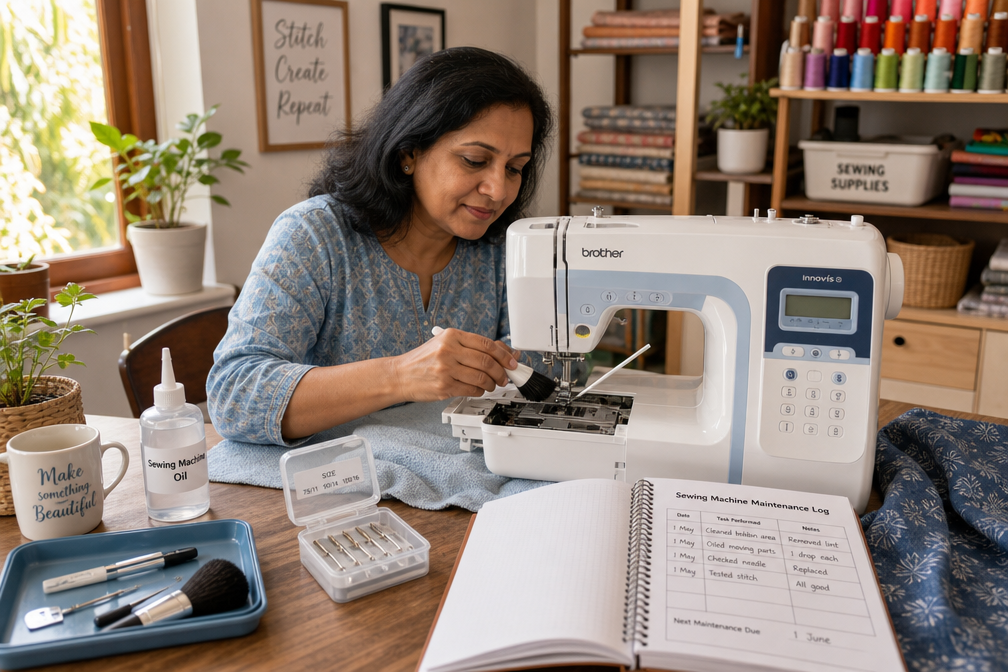
Regular maintenance is the single most effective way to extend your sewing machine’s lifespan, potentially doubling its useful life from 10 years to 20+ years. The three pillars of longevity are consistent cleaning, proper lubrication, and professional servicing every 1-2 years.
Essential maintenance routine:
After every project (or every 8-10 hours of use):
- Remove lint and thread debris from bobbin area with a small brush
- Wipe down exterior with a soft, dry cloth
- Check for loose threads wrapped around moving parts
- Inspect needle for burrs or bending (replace if needed)
Monthly (for regular users):
- Deep clean bobbin case and feed dogs
- Oil moving parts according to manual (typically 2-3 drops of sewing machine oil)
- Check tension discs for thread buildup
- Test stitch quality on scrap fabric
Annually:
- Professional servicing and tune-up ($75-$125)
- Timing check and adjustment if needed
- Motor inspection and cleaning
- Replace worn belts or parts
Best practices that extend lifespan:
✅ Use the right needle for your fabric, universal needles for wovens, ballpoint for knits, leather needles for heavy materials
✅ Change needles every 8-10 hours of sewing, dull needles stress the machine and cause skipped stitches
✅ Use quality thread, cheap thread sheds lint and can gum up tension discs
✅ Cover your machine when not in use to prevent dust accumulation
✅ Let the machine rest, if sewing for hours, give it 10-minute breaks to cool down
✅ Use the correct presser foot pressure, too much pressure wears feed dogs faster
✅ Store in a climate-controlled space, avoid basements, garages, or attics with temperature extremes
What NOT to do:
❌ Using WD-40 or 3-in-1 oil (these attract lint and gum up mechanisms) ❌ Forcing thick fabrics through without proper needles and settings ❌ Ignoring unusual noises or performance issues ❌ Storing with the needle down (puts constant tension on springs) ❌ Over-oiling (excess oil attracts dust and creates sludge)
Time investment vs. lifespan gain: Spending 10 minutes on maintenance after each project and $100 annually on professional servicing can extend a $500 machine’s life from 10 years to 20 years, saving you $500 in replacement costs, a 5:1 return on your maintenance investment.
Are Vintage Sewing Machines More Durable Than Modern Ones?
Vintage sewing machines, particularly those manufactured between the 1950s and 1970s with all-metal construction, are generally more durable than most modern machines in the budget and mid-range categories. These older machines were built with cast iron or steel frames, metal gears, and simpler mechanical systems that can last 50-100+ years with proper maintenance.
Why vintage machines often outlast modern ones:
Construction advantages:
- All-metal internal components, no plastic gears to strip or crack
- Cast iron or steel frames, virtually indestructible compared to plastic housings
- Simpler mechanical systems, fewer parts to fail, easier to repair
- Designed for repair, parts are accessible and often still available
- Heavier weight, provides stability and indicates solid construction
Modern machine disadvantages (budget/mid-range):
- Plastic internal components, cost-effective but less durable
- Planned obsolescence, designed for 10-15 year lifespans, not generations
- Computerized components, electronics fail before mechanical parts
- Sealed units, harder to repair, often requiring complete replacement
- Proprietary parts, discontinued models become unrepairable
However, modern machines have advantages too:
- More stitch variety and automated features
- Quieter operation
- Lighter weight for portability
- Better lighting and ergonomics
- Improved tension systems
The durability comparison by category:
| Machine Type | Typical Lifespan | Repairability |
|---|---|---|
| Vintage all-metal (1950s-1970s) | 50-100+ years | Excellent |
| Modern industrial | 20-40 years | Very good |
| Modern high-end home ($1,000+) | 20-30 years | Good |
| Modern mid-range ($300-$800) | 10-20 years | Moderate |
| Modern budget (under $300) | 5-10 years | Poor |
Choose vintage if: You primarily do straight stitching and basic zigzag, value durability over features, and don’t mind the weight and noise. Models like the Singer 15-91, Singer Featherweight 221, and Singer 401 are legendary for longevity.
Choose modern if: You need computerized features, embroidery capabilities, or hundreds of stitch patterns, and you’re willing to replace the machine every 10-20 years.
Edge case: Not all vintage machines are superior. Cheap vintage machines with plastic components from the 1980s-1990s often perform worse than modern budget machines. The “golden age” of durable construction was roughly 1950-1975.
What Are the Signs My Sewing Machine Is Dying?
A sewing machine approaching the end of its useful life typically shows multiple warning signs including unusual noises (grinding, squealing, or clicking), inconsistent stitch quality, frequent thread breaks, timing problems, and motor struggles. One or two minor issues can often be repaired, but when several symptoms appear simultaneously, replacement may be more economical than repair.
Critical warning signs:
Mechanical symptoms:
- Grinding or metal-on-metal sounds, indicates worn bearings or gears
- Loud clicking or clunking, timing is off or parts are loose
- Squealing, belt is worn or motor bearings are failing
- Excessive vibration, internal components are loose or worn
- Difficulty turning handwheel, internal friction or seized parts
Stitch quality problems:
- Frequent skipped stitches despite needle changes
- Inconsistent stitch length, feed dogs or timing issues
- Loops on bottom of fabric, tension system failure
- Thread shredding or breaking repeatedly with quality thread
- Puckered seams on all fabrics and settings
Motor and power issues:
- Motor struggles with normal fabrics
- Burning smell from motor or electronics
- Intermittent power, starts and stops randomly
- Overheating after short use periods
- Speed control problems, can’t maintain consistent speed
Structural problems:
- Cracked plastic housing, indicates stress or impact damage
- Loose or wobbly parts that can’t be tightened
- Rust on internal components, indicates moisture damage
- Stripped screw holes, plastic housing is degrading
Decision matrix:
One symptom + machine under 10 years = Repair likely worthwhile
Two symptoms + machine 10-15 years = Get repair estimate, compare to replacement cost
Three+ symptoms + machine over 15 years = Replacement usually more economical
Immediate replacement indicators:
- Motor failure on a machine over 10 years old
- Cracked frame or housing
- Computerized board failure on a budget machine
- Multiple simultaneous failures requiring $300+ in repairs
Common mistake: Continuing to use a failing machine, which can damage fabric projects and create safety hazards. If you notice burning smells or electrical issues, stop using the machine immediately.
Is a Sewing Machine Worth Repairing After 10 Years?
A sewing machine is worth repairing after 10 years if it’s a mid-range or premium model ($400+ original price), the repair costs less than 50% of a comparable replacement, and the machine still meets your sewing needs. Budget machines (under $300 original price) are typically not worth major repairs after 10 years, as replacement costs are similar to repair costs.
Repair worthiness assessment:
Definitely worth repairing:
- High-end machines ($1,000+ original price) like Bernina, Pfaff, or Juki
- Industrial machines regardless of age
- Vintage all-metal machines in good condition
- Machines with sentimental value
- Repairs under $150 for any machine you’re still happy using
Probably worth repairing:
- Mid-range machines ($400-$800) needing repairs under $200
- Machines under 15 years old with only one major issue
- Models with features you can’t find in current models
- Machines you’ve maintained well and know the history of
Probably not worth repairing:
- Budget machines (under $300 original price) needing repairs over $150
- Any machine where repair costs exceed 60% of replacement value
- Machines with multiple simultaneous failures
- Models you’ve outgrown in terms of features or capabilities
Calculate the repair decision:
- Determine current replacement cost for a comparable new machine
- Get a detailed repair estimate (not just a guess)
- Calculate repair as percentage of replacement: (Repair cost ÷ Replacement cost) × 100
- Consider remaining lifespan: Will the repair give you 5+ more years?
Example calculations:
Scenario A: 12-year-old Janome DC2014 (originally $600, comparable new model $650)
- Repair needed: Timing adjustment and cleaning ($150)
- Repair percentage: 23% of replacement cost
- Decision: Repair, low cost relative to replacement, quality machine
Scenario B: 11-year-old Brother LS2125i (originally $120, comparable new model $140)
- Repair needed: Motor replacement ($180)
- Repair percentage: 129% of replacement cost
- Decision: Replace, repair costs more than new machine
Scenario C: 15-year-old Bernina 1008 (originally $800, comparable new model $1,200)
- Repair needed: Complete overhaul ($400)
- Repair percentage: 33% of replacement cost
- Decision: Repair, high-quality machine, reasonable repair cost
Don’t forget to factor in:
- Warranty on repairs (typically 30-90 days)
- Warranty on new machines (1-25 years depending on brand)
- Your attachment to the machine, sometimes worth a premium
- Availability of parts, older machines may face future repair challenges
How Long Do Industrial Sewing Machines Last vs. Home Machines?
Industrial sewing machines typically last 20-40 years in commercial settings with daily use, significantly outlasting home machines which average 5-25 years. This longevity difference stems from industrial machines’ all-metal construction, more powerful motors (400-1,000 watts vs. 60-100 watts for home machines), and design for continuous operation rather than intermittent use.
Key differences affecting lifespan:
Industrial machines:
- Built for 8-12 hours daily operation
- All-metal construction throughout
- Powerful motors (400-1,000+ watts)
- Single-purpose design, optimized for one task, fewer parts to fail
- Serviceable components, designed for repair and part replacement
- Expected lifespan: 20-40 years with proper maintenance
- Cost: $1,500-$5,000+ new
Home machines:
- Built for intermittent use (2-10 hours per week)
- Mixed plastic and metal construction (except high-end models)
- Smaller motors (60-100 watts)
- Multi-function design, more complex, more potential failure points
- Some sealed components, harder to repair
- Expected lifespan: 5-25 years depending on quality
- Cost: $100-$2,000 for most models
Usage intensity comparison:
An industrial machine in a garment factory running 8 hours daily, 5 days per week accumulates roughly 2,000 hours annually. A home machine used 5 hours weekly accumulates only 260 hours annually. Despite the industrial machine’s 8× higher usage, it often lasts 2-3× longer in years, meaning it handles 15-20× more total operating hours over its lifetime.
When to consider an industrial machine for home use:
- You sew professionally or semi-professionally from home
- You regularly work with heavy fabrics (canvas, denim, upholstery)
- You need consistent, high-quality straight stitching
- You have dedicated space (industrial machines are heavy and require tables)
- You’re willing to sacrifice stitch variety for durability
When to stick with a home machine:
- You sew recreationally (under 10 hours per week)
- You need multiple stitch types and patterns
- You work with varied fabric weights
- You need portability
- You have limited space
Edge case: Some high-end home machines ($1,500-$3,000) like Bernina 7 Series or Juki TL-2010Q approach industrial durability while maintaining home machine versatility, offering a middle ground for serious hobbyists.
What Brands of Sewing Machines Are Most Reliable Long-Term?
The most reliable long-term sewing machine brands based on longevity data and user reports are Bernina, Juki, Janome, and vintage Singer (pre-1980), with these brands consistently producing machines that last 15-30+ years. Brother, modern Singer, and Pfaff occupy the mid-tier reliability range (10-20 years), while ultra-budget brands like Michley, Magicfly, and unbranded Amazon machines typically last 3-8 years.
Brand reliability rankings for longevity:
Tier 1, Exceptional longevity (20-40+ years):
- Bernina, Swiss-made, all-metal construction, 10-25 year warranties
- Juki, Industrial and semi-industrial models, legendary durability
- Vintage Singer (1950s-1970s), All-metal, still running after 50+ years
- Pfaff (high-end models), German engineering, built to last
Tier 2, Very good longevity (15-25 years):
- Janome, Consistent quality across price points
- Baby Lock, Reliable mechanics, good customer support
- Elna, Swiss heritage, solid construction
- Husqvarna Viking, Quality construction, good parts availability
Tier 3, Good longevity (10-20 years):
- Brother, Reliable for the price, good mid-range options
- Modern Singer, Variable quality by model, decent mid-range machines
- Kenmore (vintage), Rebranded quality machines, parts still available
Tier 4, Moderate longevity (5-10 years):
- Singer (budget models), Adequate for light use
- Brother (budget models), Good starter machines, limited lifespan
- Necchi, Inconsistent quality in recent years
Tier 5, Limited longevity (3-8 years):
- Ultra-budget brands, Michley, Magicfly, Varmax, Kpcb
- Unbranded Amazon machines, Often rebranded generic models
- Toy machines, Not designed for serious sewing
Reliability factors beyond brand:
- Model matters more than brand, a $150 Singer and a $1,500 Singer have vastly different lifespans
- Manufacturing era, vintage models (1950s-1970s) from most brands outlast modern equivalents
- Price point, within any brand, higher-priced models typically last longer
- Warranty length, indicates manufacturer confidence (1 year vs. 25 years)
Brand-specific notes:
Bernina: Known for 25-year warranties on high-end models, exceptional customer service, and parts availability for decades-old machines. Expect to pay $1,000-$8,000+.
Juki: Industrial heritage means even their home models are built tough. The TL-2010Q is legendary for longevity. $600-$2,000 for home models.
Janome: Excellent value proposition, mid-range prices with high-end durability. The HD3000 and 1600P are workhorses. $300-$1,500 for most models.
Brother: Best for budget-conscious buyers who maintain machines well. The CS6000i and ST371HD offer good value. $150-$800 for most home models.
Common mistake: Assuming brand name alone guarantees quality. A $150 Singer Stylist is not comparable to a $1,500 Singer Quantum Stylist, despite sharing the Singer name.
Common Mistakes That Shorten Sewing Machine Lifespan
The most common mistakes that dramatically shorten sewing machine lifespan are neglecting regular cleaning and oiling, using incorrect needles for the fabric type, forcing thick materials through machines not designed for them, and skipping professional servicing. These errors can reduce a machine’s life from 15 years to 5 years or less.
Top 10 lifespan-shortening mistakes:
1. Never cleaning the bobbin area (reduces lifespan by 40-50%)
- Lint buildup causes timing issues and increased friction
- Can lead to complete timing failure requiring expensive repairs
- Fix: Clean after every 8-10 hours of sewing
2. Using the wrong needles (reduces lifespan by 20-30%)
- Dull or incorrect needles stress the machine and cause skipped stitches
- Bent needles can damage timing and hook mechanisms
- Fix: Change needles every 8-10 hours, use correct type for fabric
3. Forcing thick fabrics through (reduces lifespan by 30-40%)
- Strains motor and gears beyond design specifications
- Can strip plastic gears or burn out motors
- Fix: Use machines rated for heavy fabrics, or hand-crank thick seams
4. Skipping professional servicing (reduces lifespan by 30-50%)
- Small issues compound into major failures
- Timing drifts out of adjustment gradually
- Fix: Annual servicing for regular users, every 2 years for occasional users
5. Using cheap thread (reduces lifespan by 15-25%)
- Sheds excessive lint that clogs mechanisms
- Can gum up tension discs
- Fix: Use quality thread from reputable brands
6. Over-oiling or using wrong lubricant (reduces lifespan by 20-30%)
- Attracts dust and creates sludge
- WD-40 and 3-in-1 oil damage plastic parts
- Fix: Use only sewing machine oil, 2-3 drops in specified locations
7. Storing in poor conditions (reduces lifespan by 25-35%)
- Humidity causes rust on metal parts
- Temperature extremes crack plastic components
- Fix: Store in climate-controlled space, use a cover
8. Ignoring warning signs (reduces lifespan by 40-60%)
- Small problems become catastrophic failures
- Continued use damages additional components
- Fix: Address unusual noises or performance issues immediately
9. Using incorrect presser foot pressure (reduces lifespan by 10-20%)
- Excessive pressure wears feed dogs faster
- Insufficient pressure causes fabric slippage and motor strain
- Fix: Adjust pressure for fabric weight
10. Running continuously without breaks (reduces lifespan by 15-25%)
- Motors overheat and wear faster
- Increased friction on all moving parts
- Fix: Take 10-minute breaks after 60-90 minutes of continuous sewing
Cumulative effect:
These mistakes compound. A machine that could last 15 years with proper care might last only 4-5 years if you commit multiple errors simultaneously. Conversely, avoiding these mistakes can extend a 10-year machine to 20+ years.
Quick prevention checklist:
✅ Clean bobbin area after each project ✅ Change needles every 8-10 hours ✅ Use quality thread ✅ Oil moving parts monthly ✅ Professional service annually ✅ Store with cover in stable environment ✅ Address problems immediately ✅ Use machine within its design specifications ✅ Take cooling breaks during long sessions ✅ Keep manual handy and follow manufacturer guidelines
How Often Should You Service a Sewing Machine to Extend Its Life?
You should service a sewing machine professionally once per year if you sew regularly (5+ hours per week) or every 2 years for occasional use (under 5 hours per week). Professional servicing typically costs $75-$125 and can double your machine’s lifespan by catching small issues before they become major failures, making it one of the most cost-effective maintenance investments.
Servicing schedule by usage level:
Heavy use (20+ hours per week):
- Professional servicing: Every 6 months
- Deep cleaning: Weekly
- Oiling: Weekly
- Examples: Professional seamstresses, small business owners, quilters working on large projects
Regular use (5-20 hours per week):
- Professional servicing: Annually
- Deep cleaning: After each project or monthly
- Oiling: Monthly
- Examples: Serious hobbyists, frequent quilters, home-based crafters
Occasional use (1-5 hours per week):
- Professional servicing: Every 18-24 months
- Deep cleaning: Every 2-3 projects or quarterly
- Oiling: Every 2-3 months
- Examples: Casual sewers, seasonal crafters, occasional menders
Light use (under 1 hour per week):
- Professional servicing: Every 2-3 years
- Deep cleaning: Every 6 months
- Oiling: Every 6 months
- Examples: Occasional button replacement, rare hemming projects
What professional servicing includes:
- Complete disassembly and cleaning of bobbin area and feed dogs
- Timing check and adjustment
- Tension system cleaning and calibration
- Motor inspection and cleaning
- Belt inspection and replacement if needed
- Lubrication of all moving parts
- Electrical system check (for computerized machines)
- Test sewing and quality verification
- Identification of worn parts that may need future replacement
Cost-benefit analysis:
Scenario: $500 mid-range machine with proper servicing
- Annual servicing cost: $100
- Extended lifespan: 15 years (vs. 8 years without servicing)
- Total servicing investment: $1,500 over 15 years
- Replacement savings: $500 (7 extra years of use)
- Net benefit: Break-even, but you keep a machine you know and trust
Scenario: $1,200 high-end machine with proper servicing
- Annual servicing cost: $125
- Extended lifespan: 25 years (vs. 12 years without servicing)
- Total servicing investment: $3,125 over 25 years
- Replacement savings: $1,200 (13 extra years of use)
- Net loss: $1,925, but you avoid the hassle of replacement and learning a new machine
The real value isn’t just financial, it’s avoiding the frustration of machine failure mid-project and maintaining consistent stitch quality.
Signs you need servicing NOW (don’t wait for scheduled service):
- Unusual noises (grinding, clicking, squealing)
- Skipped stitches despite needle changes
- Inconsistent stitch length
- Thread tension problems on all settings
- Difficulty turning handwheel
- Motor struggles with normal fabrics
DIY servicing limitations:
You can handle basic cleaning and oiling, but professional technicians can:
- Adjust timing (requires specialized knowledge)
- Calibrate computerized systems
- Identify worn parts before they fail
- Access internal components safely
- Provide warranty on their work
Common mistake: Waiting until the machine breaks to get it serviced. Preventive maintenance is always cheaper than emergency repairs.
When Should I Replace My Sewing Machine Instead of Fixing It?
You should replace your sewing machine instead of fixing it when repair costs exceed 50-60% of a comparable new machine’s price, when the machine is over 15 years old and experiencing multiple failures, when parts are no longer available, or when you’ve outgrown its capabilities. For budget machines (under $300 original price), replacement usually makes more sense than any repair over $150.
Clear replacement indicators:
Financial triggers:
- Repair estimate exceeds 60% of replacement cost
- Multiple repairs needed simultaneously totaling $300+
- Second major repair within 12 months
- Machine worth less than $200 and needs $150+ repair
Age and condition triggers:
- Budget machine over 10 years old
- Mid-range machine over 20 years old
- Multiple systems failing (motor, timing, electronics)
- Visible structural damage (cracked frame, stripped screw holes)
Practical triggers:
- Parts no longer manufactured or available
- No qualified repair technicians in your area
- Machine doesn’t meet your current sewing needs
- Repair turnaround time exceeds 4-6 weeks
Capability triggers:
- You’ve outgrown the machine’s features
- You need heavier-duty construction for your projects
- You require features not available on your current machine
- Your sewing has become professional/commercial
Decision flowchart:
Step 1: Get a detailed repair estimate Step 2: Research comparable new machine prices Step 3: Calculate repair as percentage of replacement cost
If under 40%: Repair (assuming machine meets your needs) If 40-60%: Consider machine age, quality, and your attachment If over 60%: Replace
Special considerations:
Repair even if expensive when:
- High-end machine ($1,500+ original price)
- Vintage all-metal machine in otherwise good condition
- Significant sentimental value
- Rare features not available in modern machines
- Industrial machine (always worth repairing)
Replace even if repair is cheap when:
- You’ve outgrown the machine’s capabilities
- You’re constantly frustrated with its limitations
- It’s a safety hazard (electrical issues, sharp edges)
- You’ve already invested heavily in previous repairs
Real-world replacement scenarios:
Scenario A, Replace:
- 13-year-old Brother LS2125i (originally $120)
- Needs motor replacement ($180)
- Comparable new machine: $140
- Decision: Replace, repair costs more than new machine
Scenario B, Repair:
- 8-year-old Janome HD3000 (originally $450)
- Needs timing adjustment and cleaning ($150)
- Comparable new machine: $500
- Decision: Repair, only 30% of replacement cost, quality machine
Scenario C, Replace:
- 16-year-old Singer Stylist (originally $200)
- Needs motor ($180) and timing adjustment ($120) = $300 total
- Comparable new machine: $250
- Decision: Replace, multiple issues, repair exceeds replacement cost
Scenario D, Repair:
- 20-year-old Bernina 1008 (originally $800)
- Needs complete overhaul ($450)
- Comparable new machine: $1,400
- Decision: Repair, high-quality machine, repair is 32% of replacement
Environmental consideration:
Repairing extends the life of existing machines and reduces waste. If repair costs are close to replacement costs (within 10-15%), consider repairing for environmental reasons, especially for quality machines that can last another decade with proper care.
Common mistake: Emotional attachment to a machine that’s costing more to maintain than it’s worth. Sometimes the best decision is to retire a beloved machine and invest in one that better serves your current needs.
Conclusion
How long do sewing machines last? The answer depends on build quality, usage patterns, and maintenance habits, but most home machines last 5-25 years while industrial models can exceed 40 years. Budget machines ($100-$300) typically serve 5-10 years, mid-range models ($300-$800) last 10-20 years, and high-end or vintage all-metal machines often exceed 25 years with proper care.
The key to maximizing your machine’s lifespan is consistent maintenance: clean the bobbin area after every project, oil moving parts monthly, change needles every 8-10 hours of sewing, and invest in professional servicing annually for regular users or every 2 years for occasional sewers. These simple habits can double your machine’s useful life.
When deciding between repair and replacement, use the 50-60% rule: if repair costs exceed half the price of a comparable new machine, replacement usually makes more financial sense. However, high-end machines ($1,000+) and vintage all-metal models are almost always worth repairing due to their superior construction and longevity potential.
Your next steps:
Assess your current machine: How old is it? What’s its original price range? Are you maintaining it properly?
Implement a maintenance routine: Start with basic cleaning after each project and schedule professional servicing if you haven’t had it done in over a year.
Set realistic expectations: A $150 machine won’t last 30 years, but a $600 machine with proper care can easily serve you for 15-20 years.
Plan for the future: If your machine is over 10 years old, start researching replacement options so you’re not caught off-guard when it finally fails.
Invest appropriately: If you sew regularly (5+ hours per week), invest in a mid-range or better machine ($400+) that will serve you for decades rather than replacing budget machines every 5-7 years.
Remember, the most expensive sewing machine is the one that breaks mid-project. Whether you’re nursing a vintage Singer through its sixth decade or shopping for your first machine, understanding lifespan expectations helps you make informed decisions that keep you sewing for years to come.


